
We had a nice Shabbos in our dispersed camping location above Lake City, Colorado. We’re parked at 9,000 feet above sea level. We had mild headaches as a result of acclimating to the reduced oxygen up here.
On Shabbos afternoon, and there was a knock at the door. I answered the door to a pair of older women who wanted to have a theological conversation. I declined their overture. “The only sure things in life are death and taxes” goes the famous saying, but it seems missionaries should be included as well.
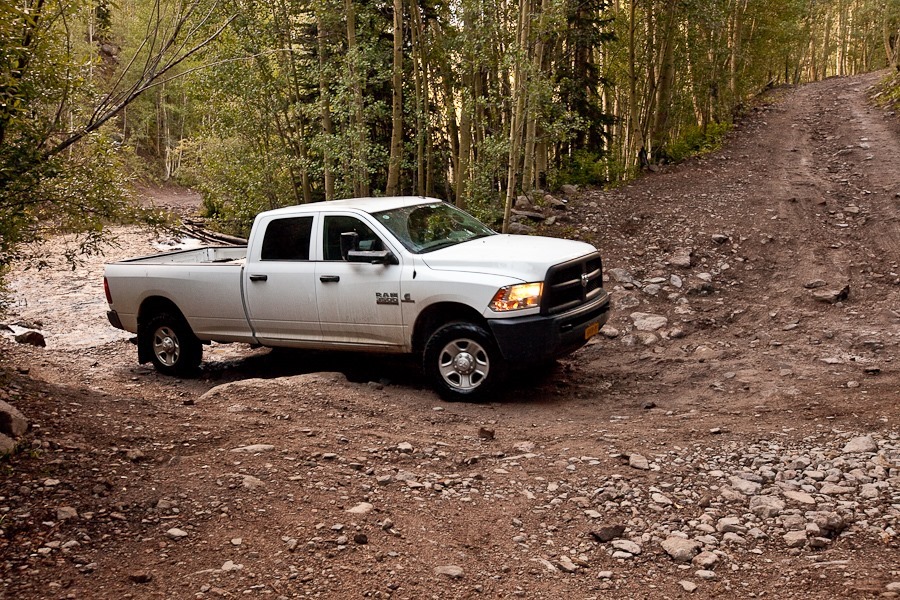
We left our RV parked at our campsite and drove our truck up to the trail to Uncompahgre Peak. The road included two stream crossings:

Most of the trail was narrow and rocky, so careful tire placement was critical to avoid scraping the underside of our truck. Even with a four wheel drive pickup truck, it took nearly an hour to cover the five miles:
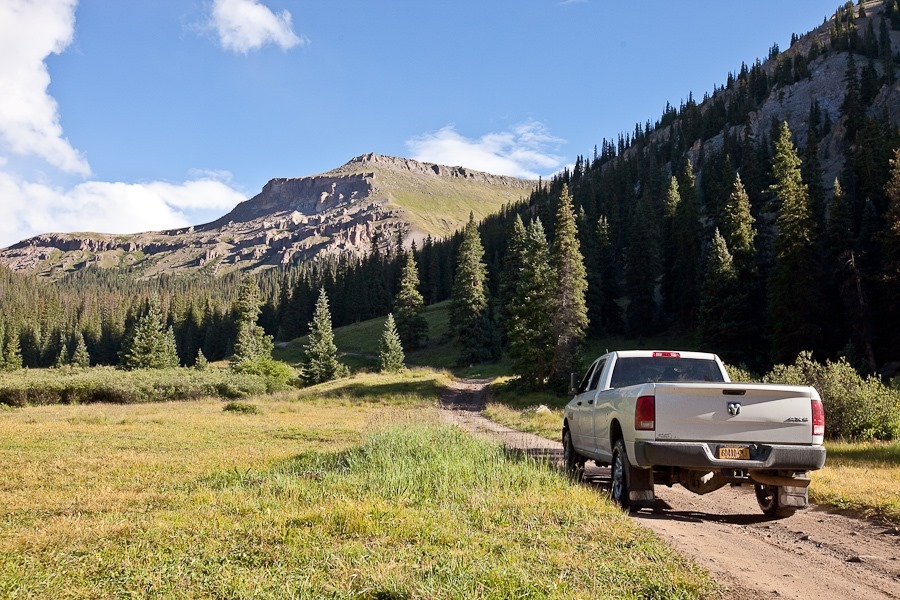
We had great views as we approached the trailhead:
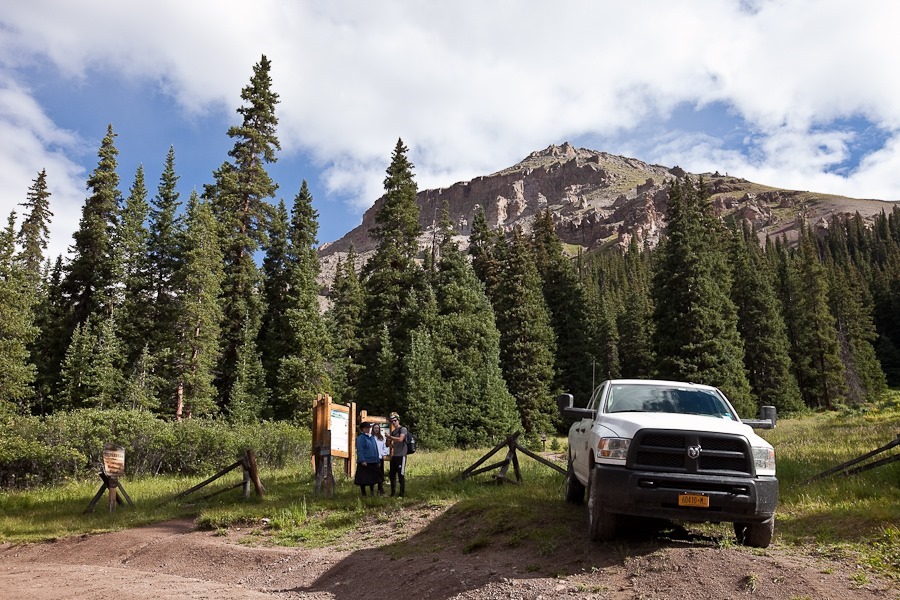
At last we reached the beginning of the trailhead at 11,400 feet of elevation:
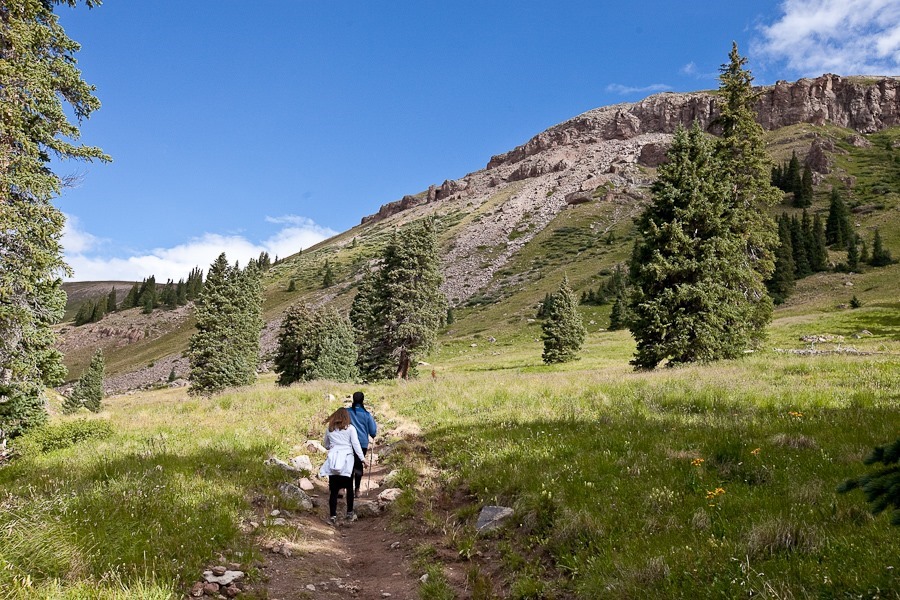
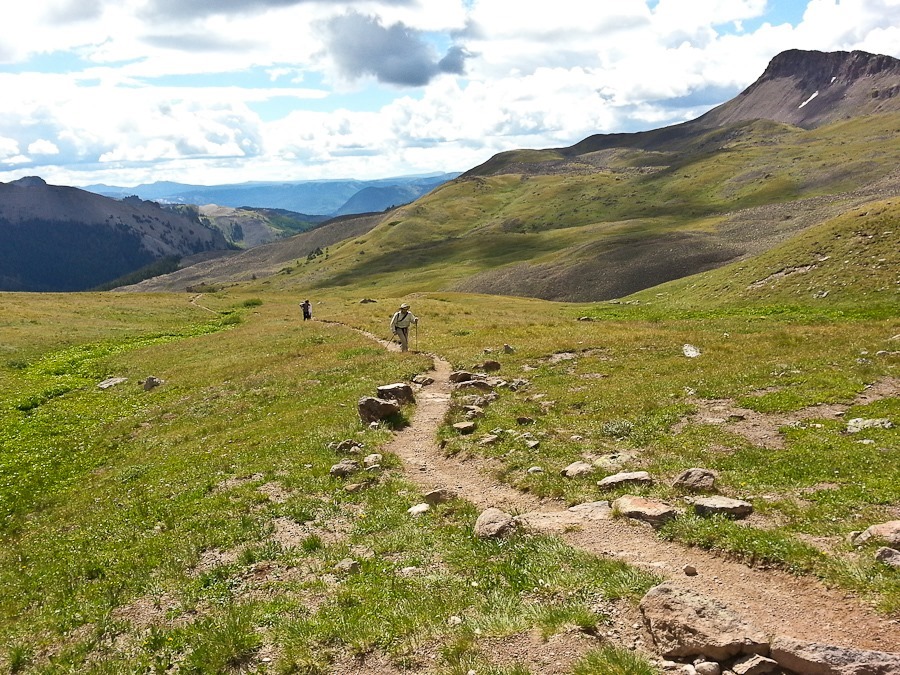
Thanks to already being at 9,000 feet of elevation since Thursday, we only suffered minor altitude sickness as we ascended the trail:
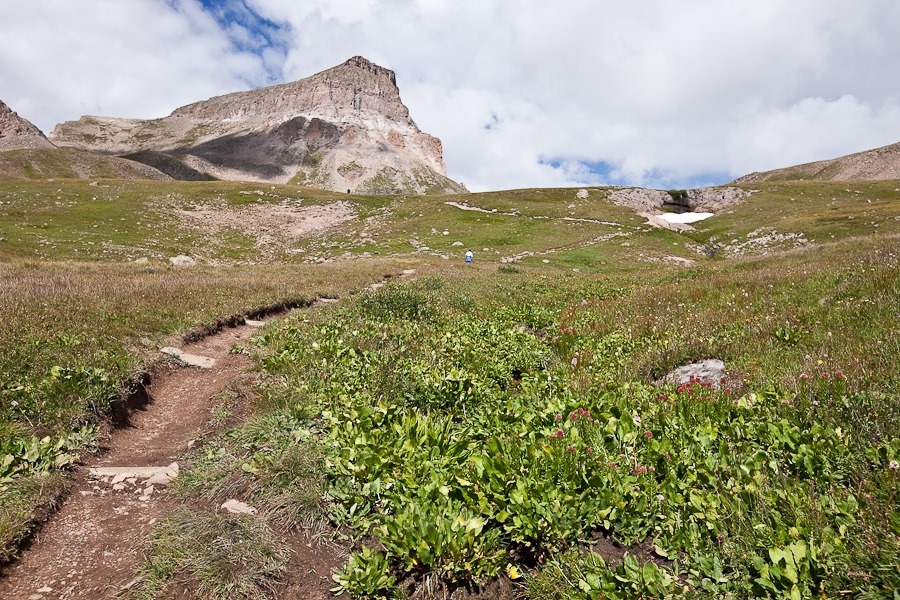
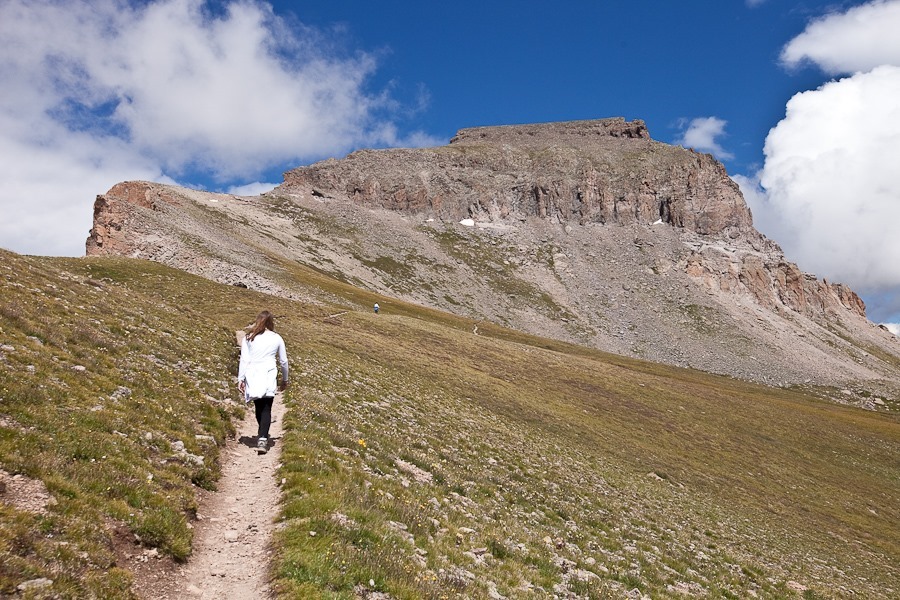
After a short while we could see Uncompahgre Peak in the distance. With a summit elevation of 14,321 feet above sea level, Uncompahgre Peak is the highest mountain in the San Juans, the 9th highest mountain in the Continental US, and less than 200 feet lower than the tallest mountain in the Continental US, California’s Mount Whitney at 14,505 feet:
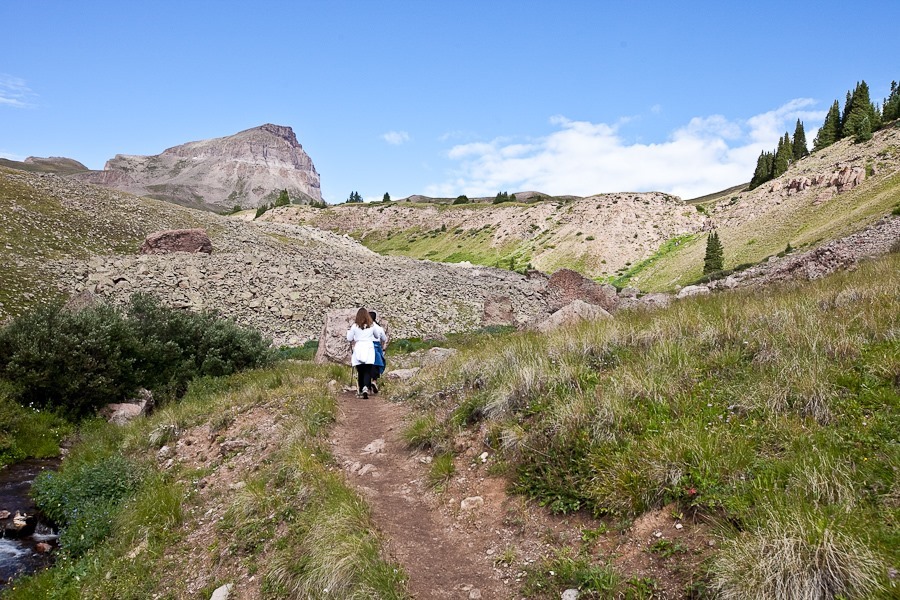
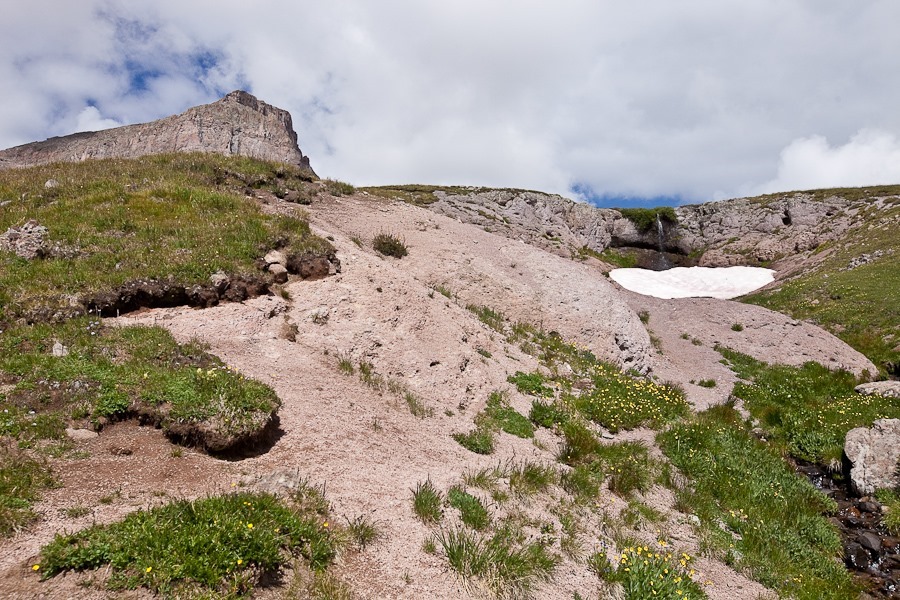
The trail almost immediately climbed above the “tree line”, the altitude above which trees cannot grow. We passed trickling streams cascading over stone ledges, their frigid waters supplied by melting fields of snow:
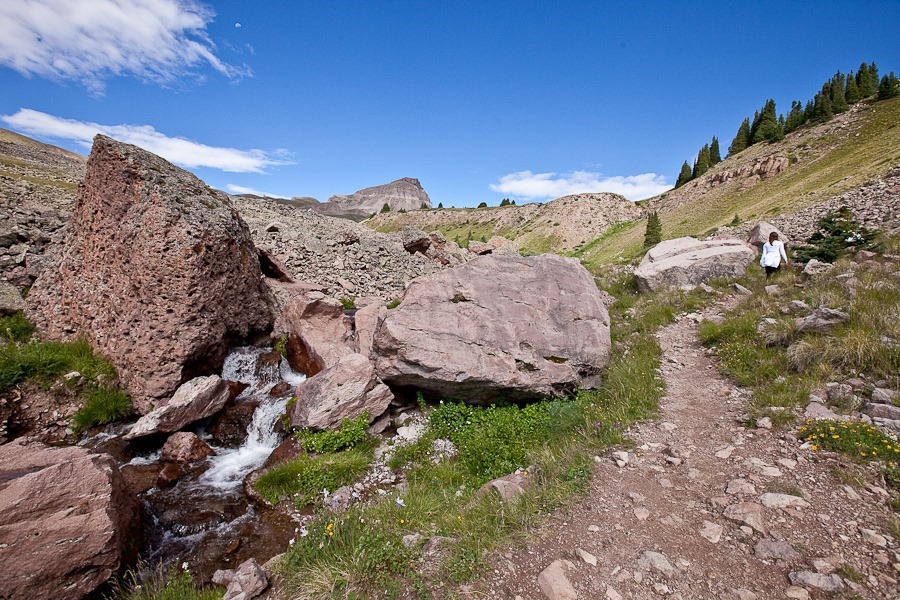
A bewildering variety of wildflowers swayed in the wind, enticing butterflies with their scent and color in a desperate effort to be pollinated before September snows set in:
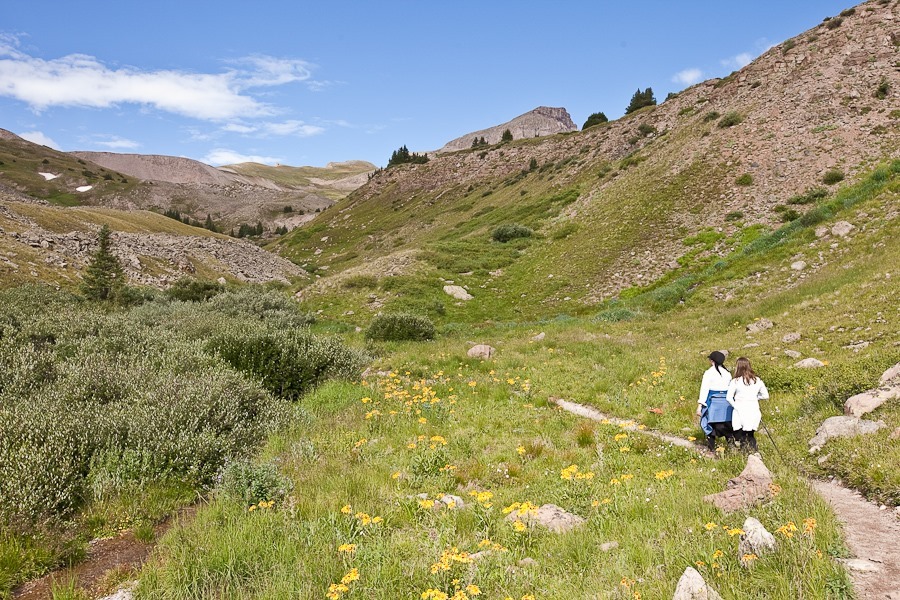
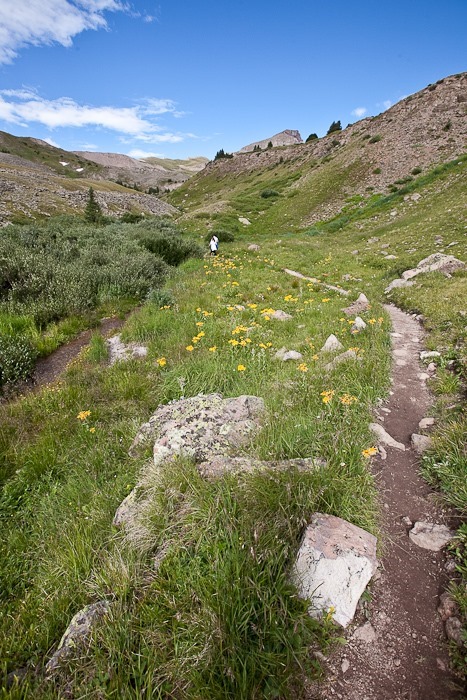
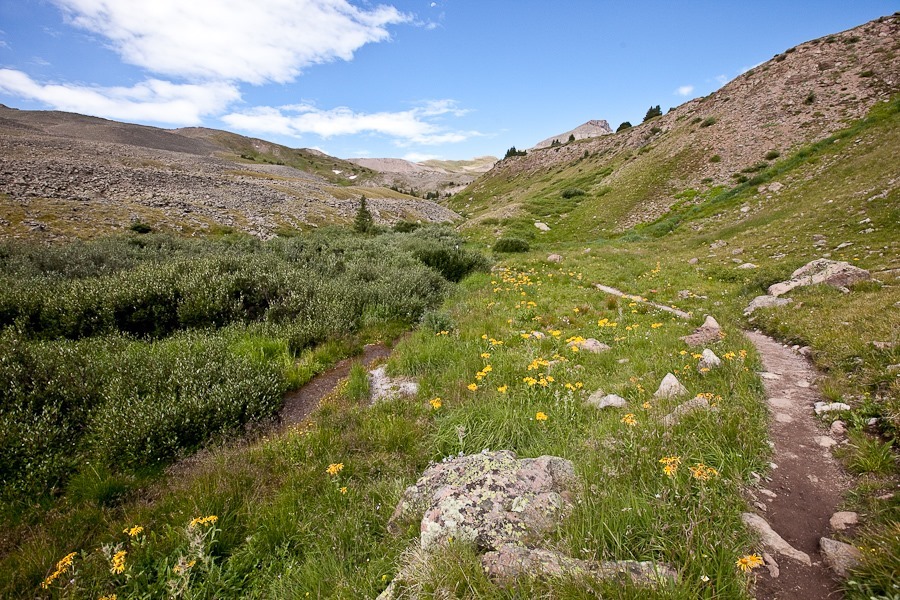
As we continued to climb, even a relatively slow hiking pace brought out rapid breathing since the air at this altitude contains only 60% of the oxygen found at sea level:
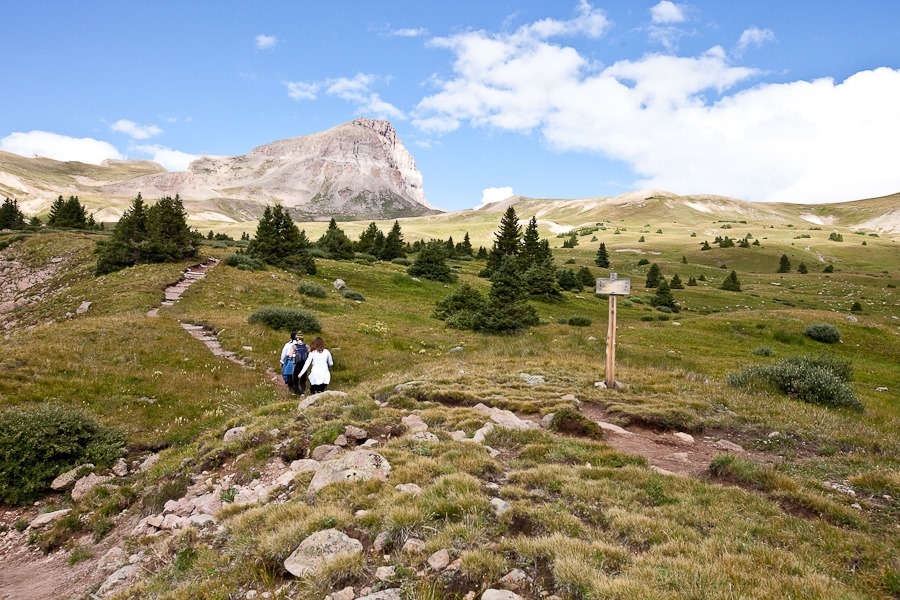
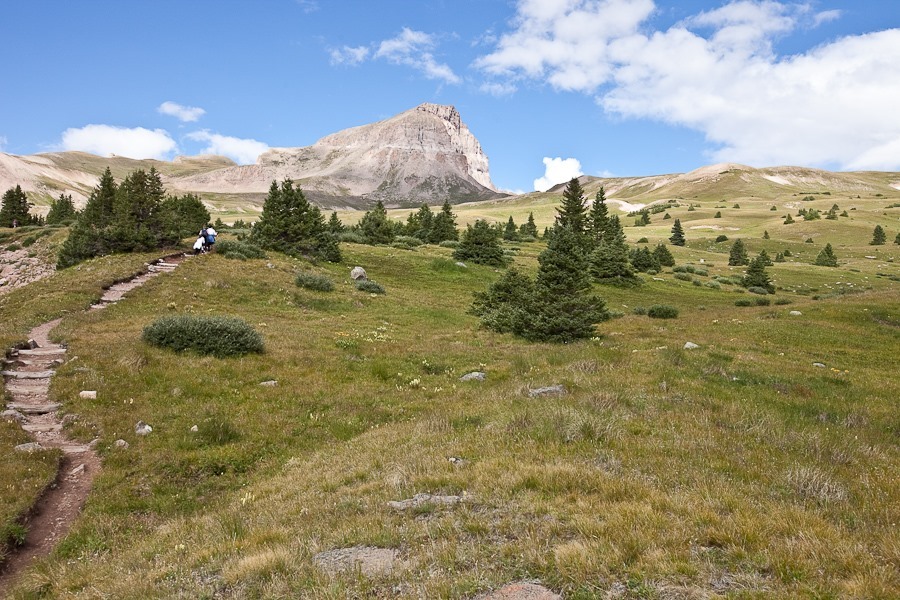
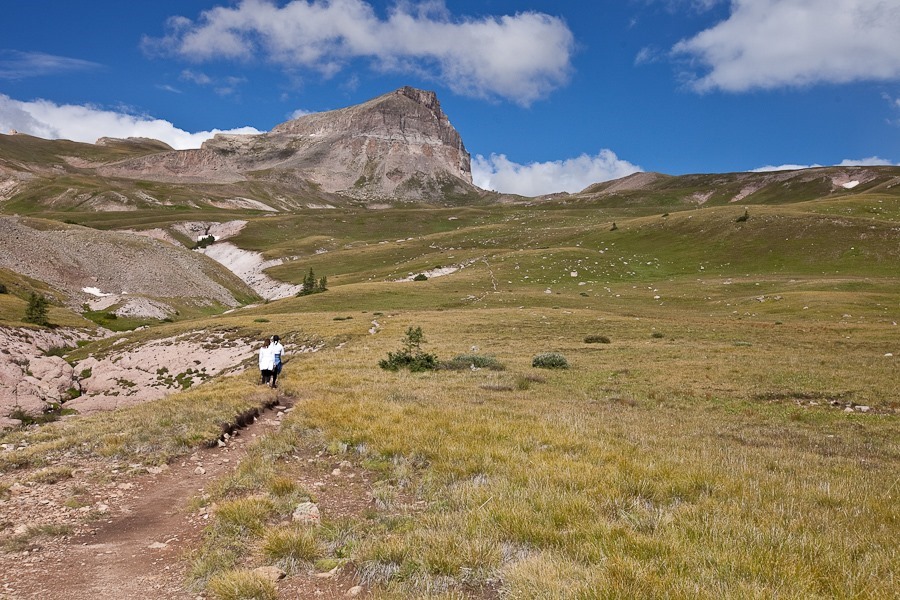
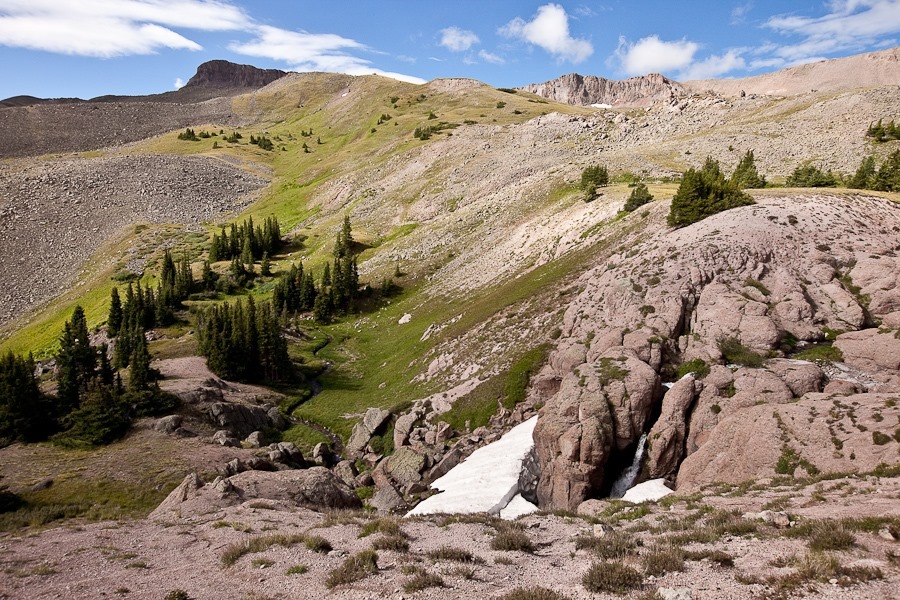
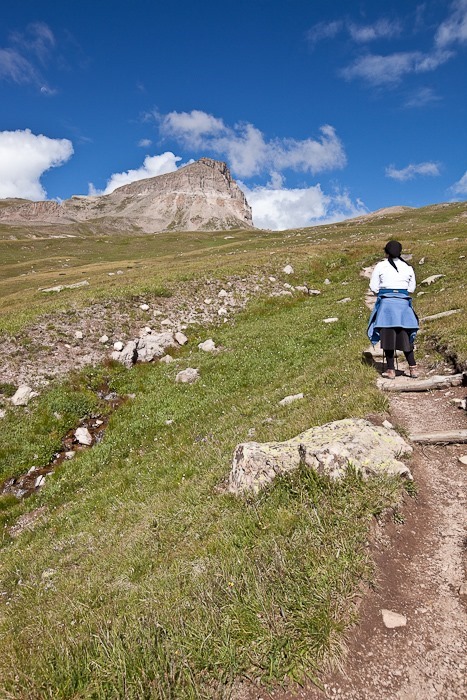
Up and up we climbed. As we approached the peak, the grade of the trail increased, then increased again:
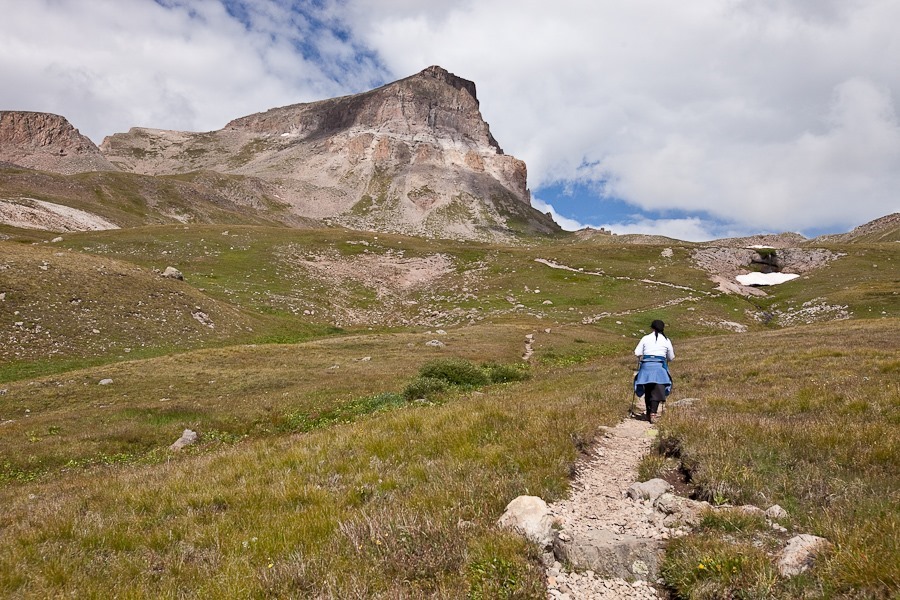
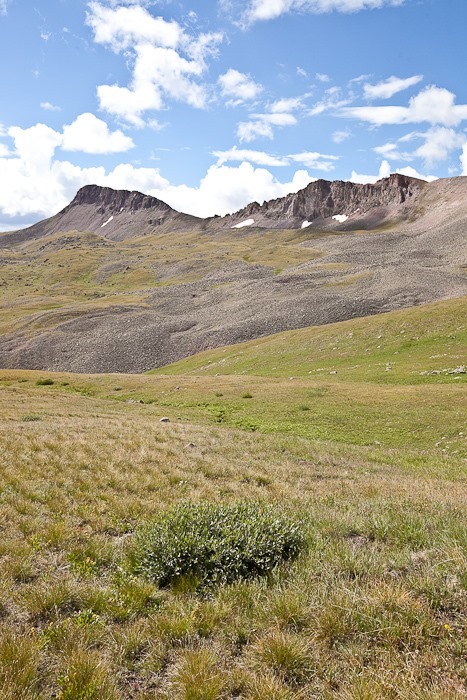
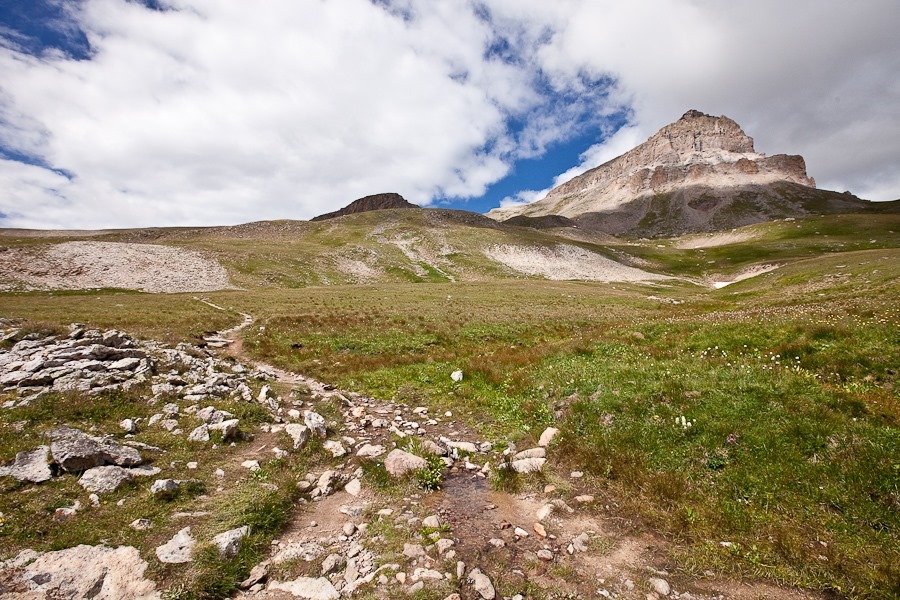
Looking back down the trail, we could see this peak, so insignificant around here that it doesn’t even have a name:
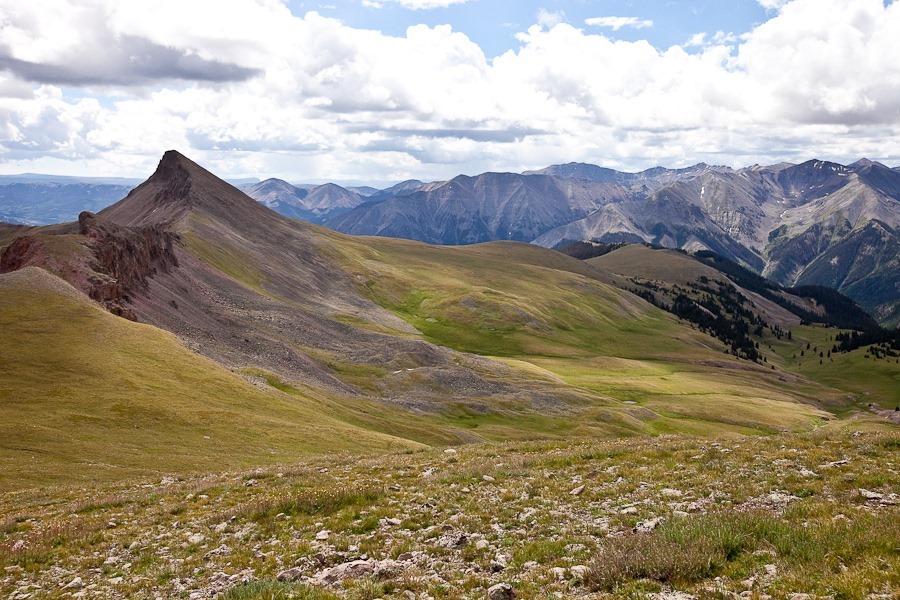
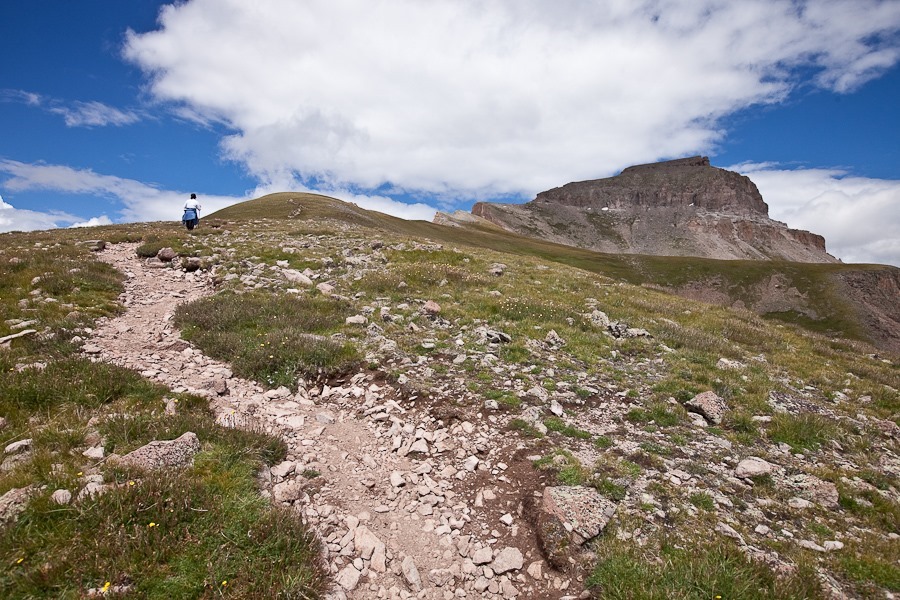
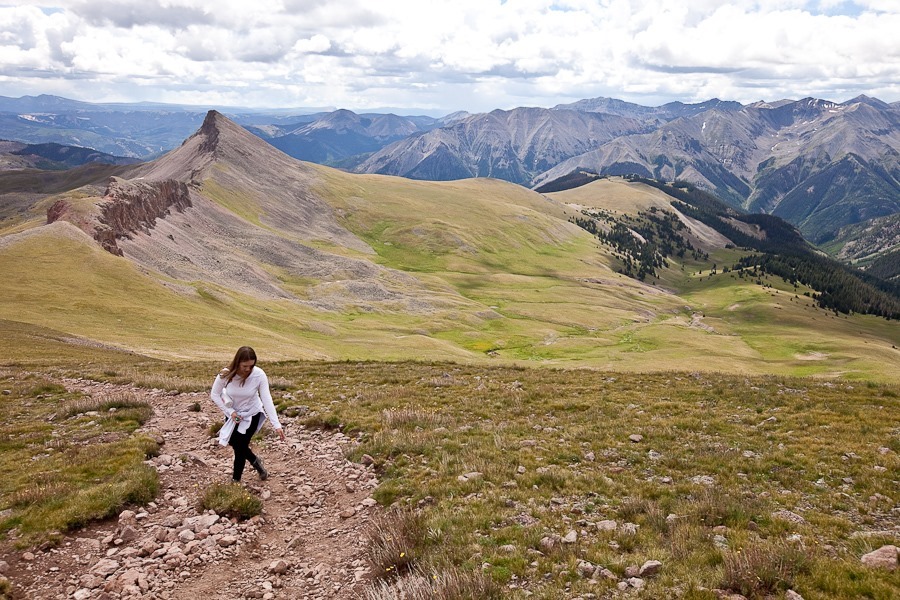
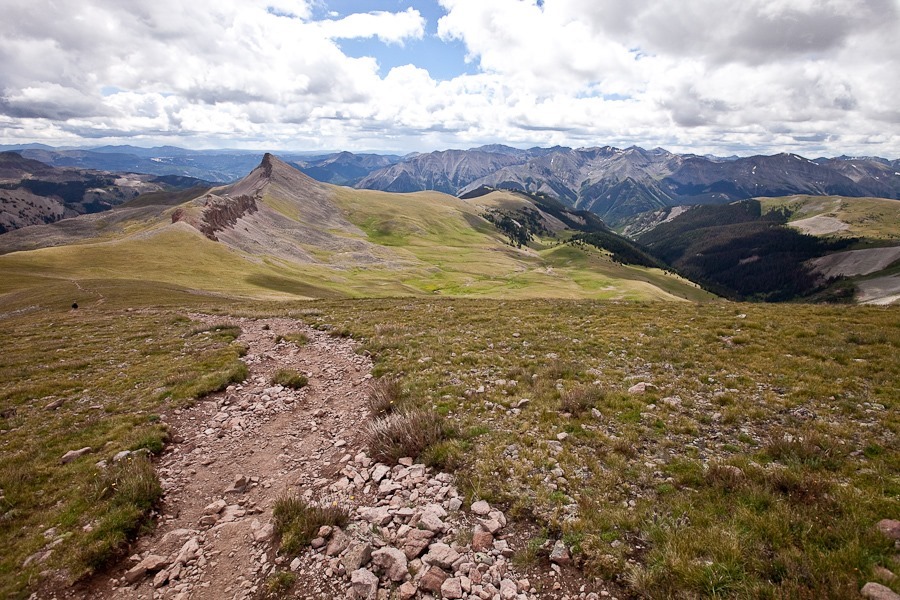
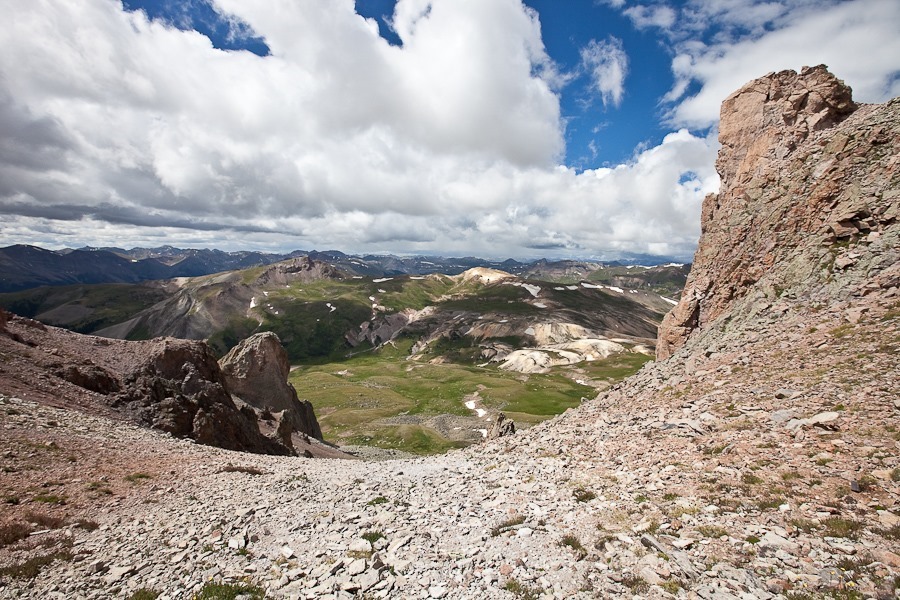
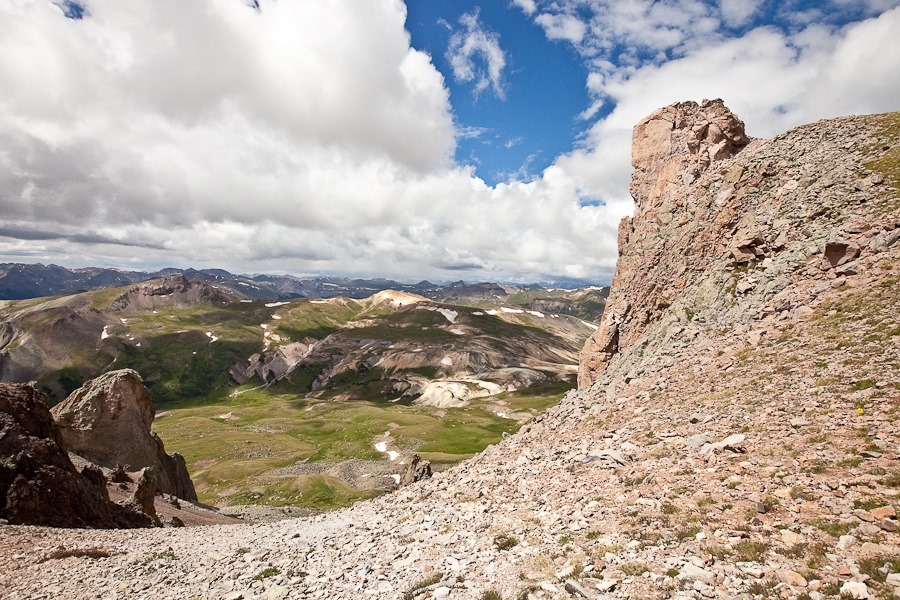
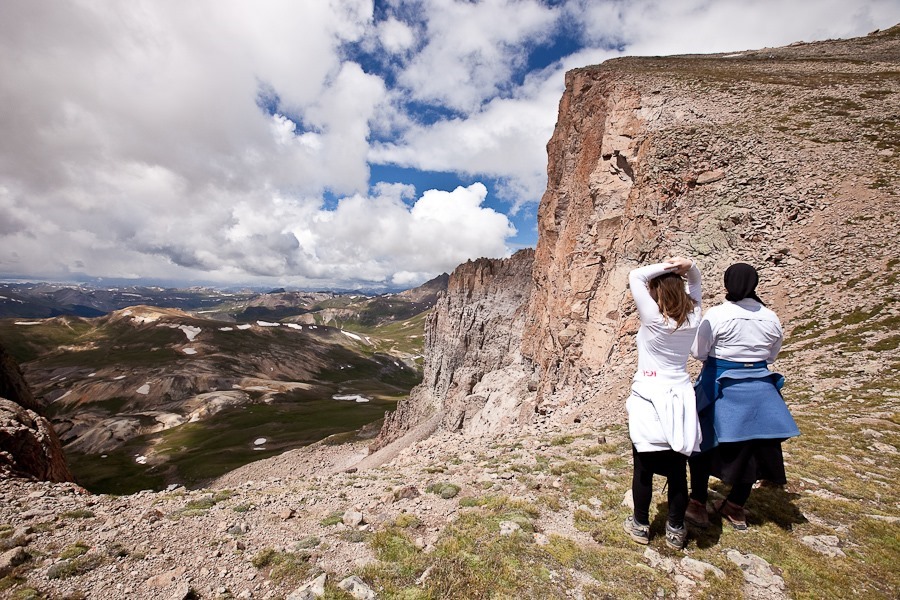
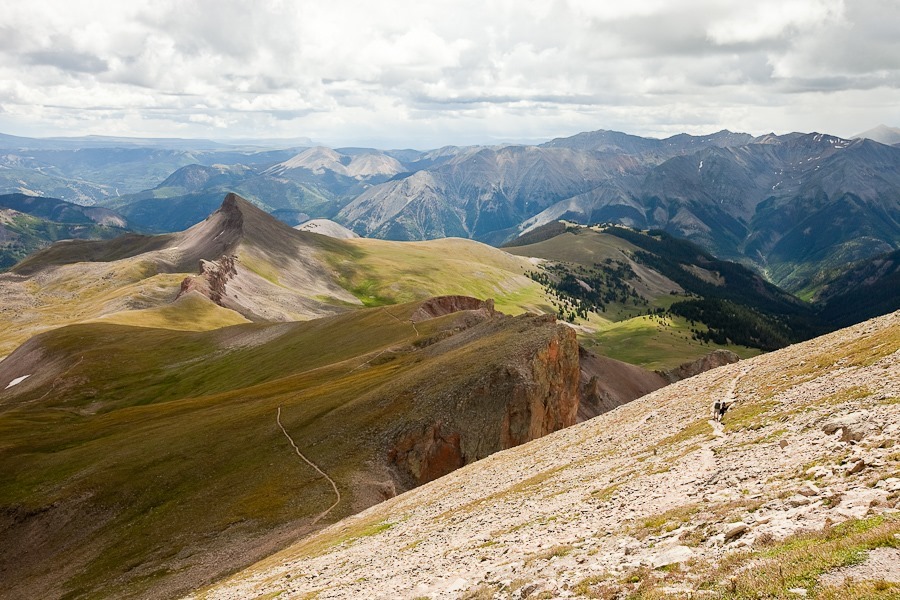
We encountered a rock wall that, while not vertical, was steep enough that we were holding on with our hands as well as our feet. The temperature was steadily dropping as we climbed, and we donned gloves, wool hats, and jackets to keep the biting alpine winds at bay. By this time, we were higher than any of the surrounding terrain, and the views were breathtaking. Snow-kissed mountain peaks (even in August!) extended as far as the eye could see. I imagined buckskin-clad explorers like Lewis and Clark, trying to find their way to the Pacific Ocean, encountering this vast expanse of rugged peaks in their path:
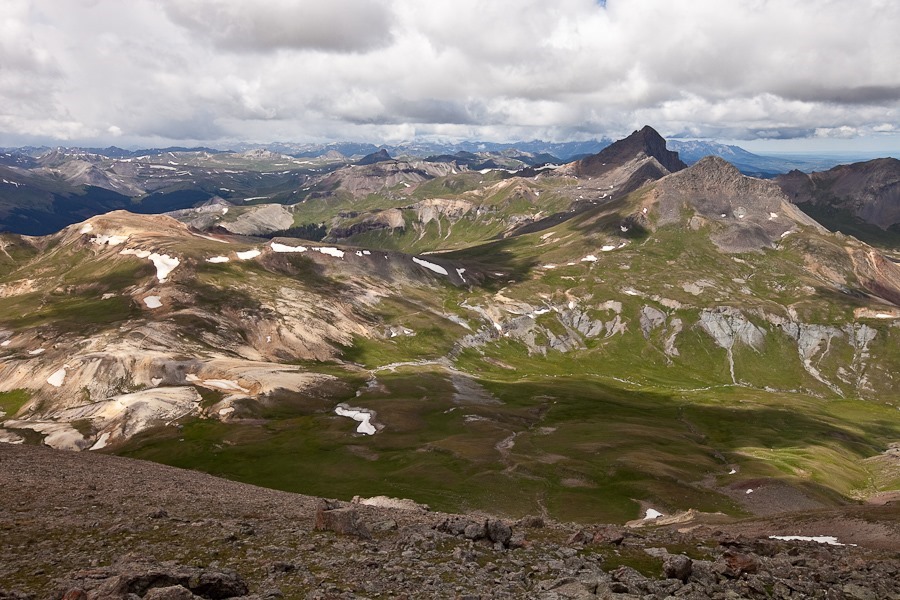
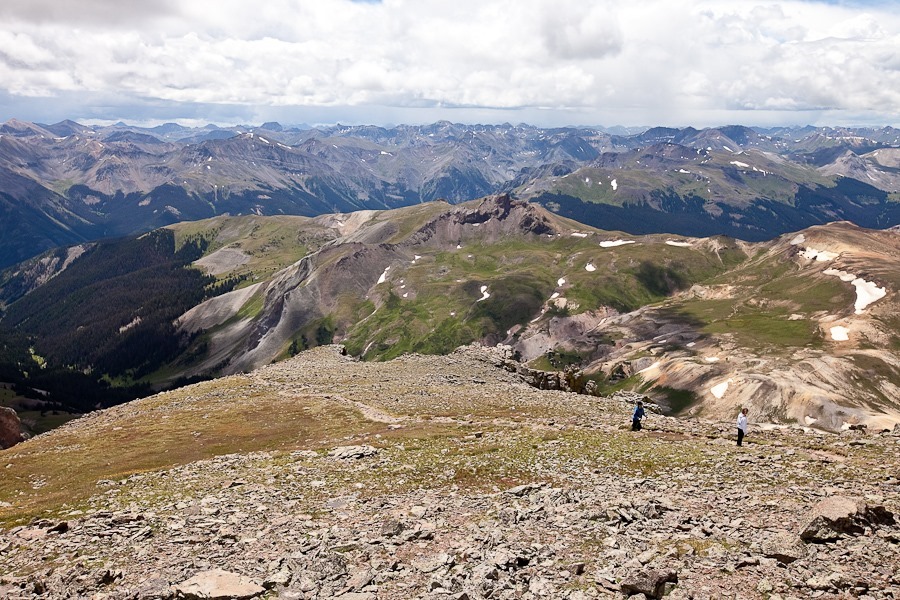
At last we reached the summit. Despite our recent high-altitude acclimation, at over 14,300 feet of elevation, we were all suffering from headaches and nausea. But the views, what views! From the summit, a 360-degree panorama of lesser peaks and mountains was visible, layer upon layer, to the horizon:
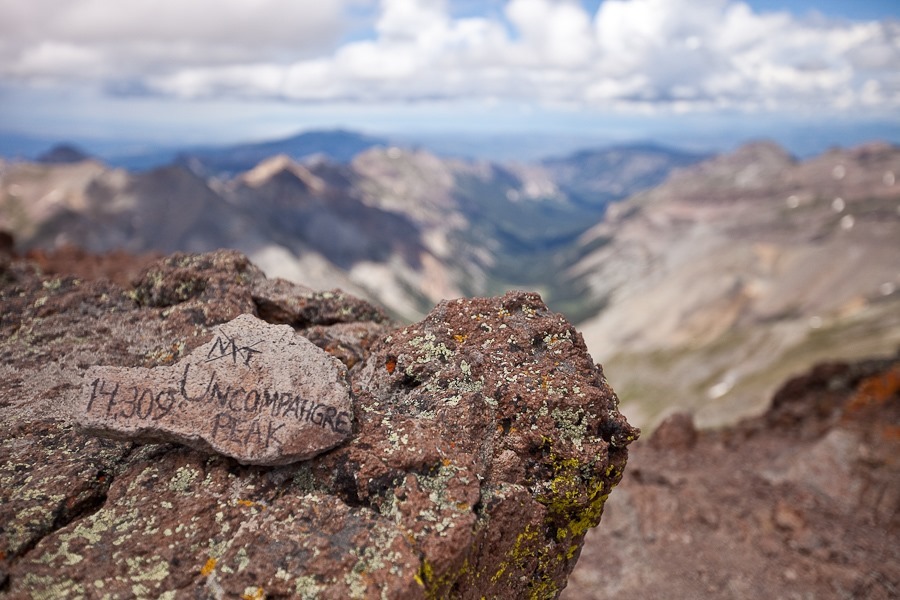
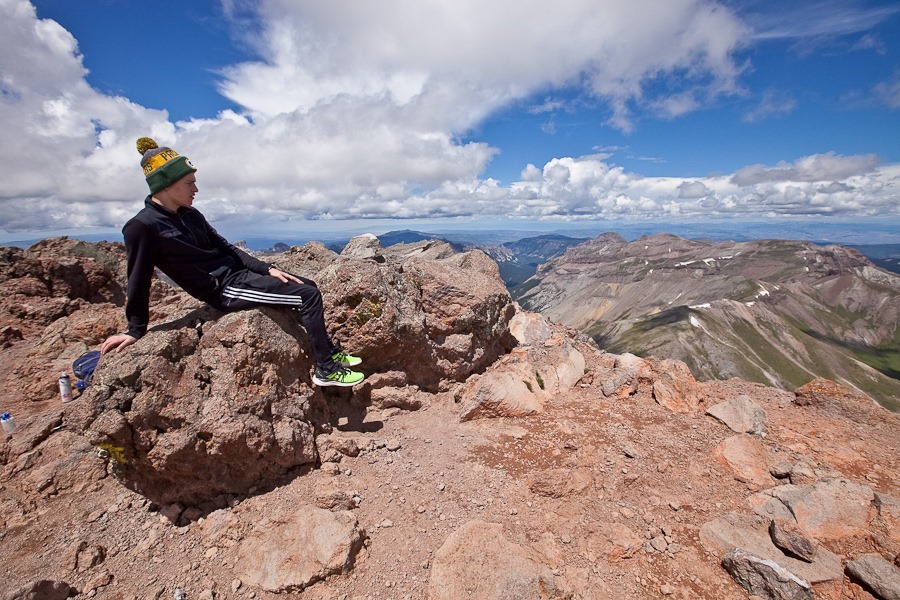
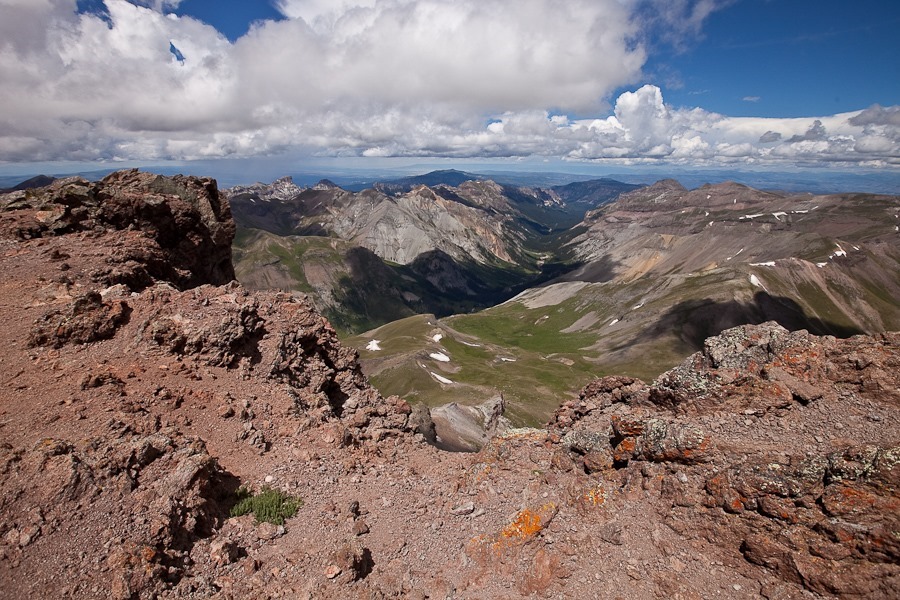

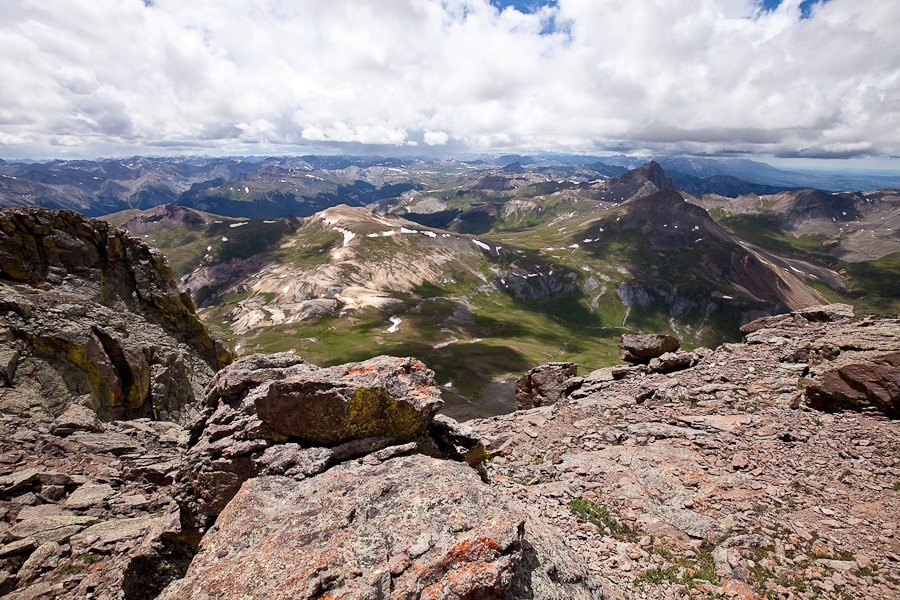
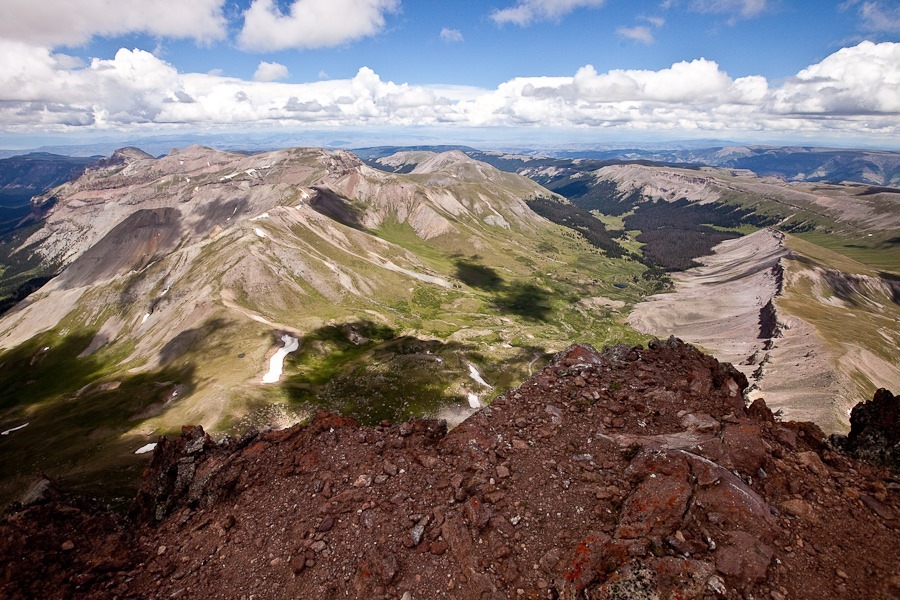

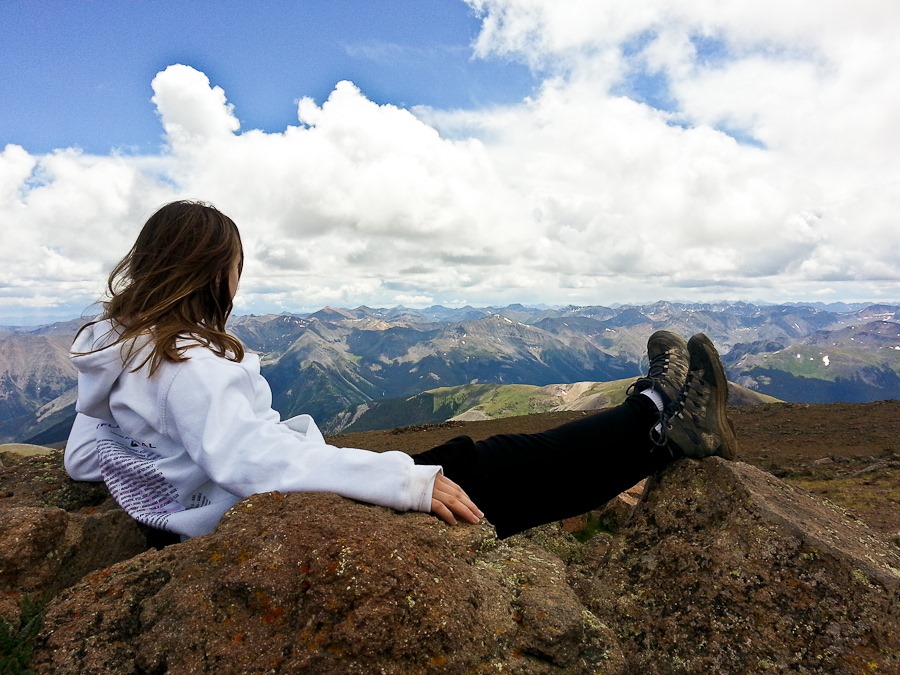
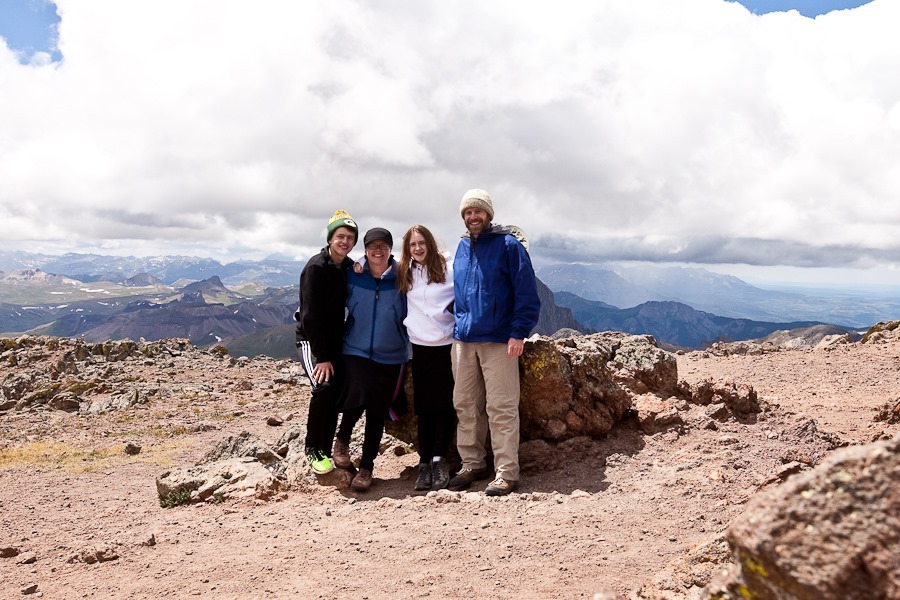
Thrilled with our accomplishment, we ate our lunch and began our descent:
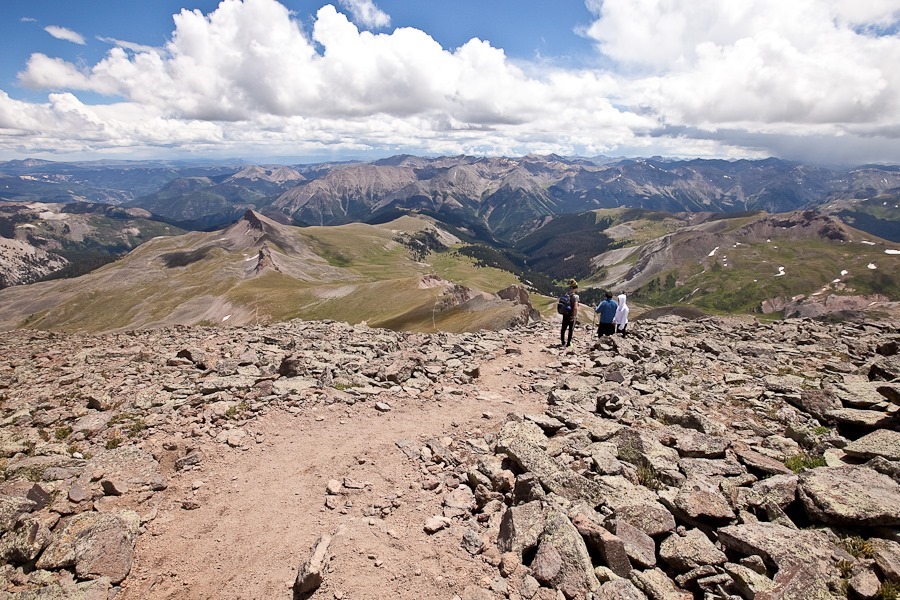
Back down through the steep part of the trail. One missed step and it’s a long way down:
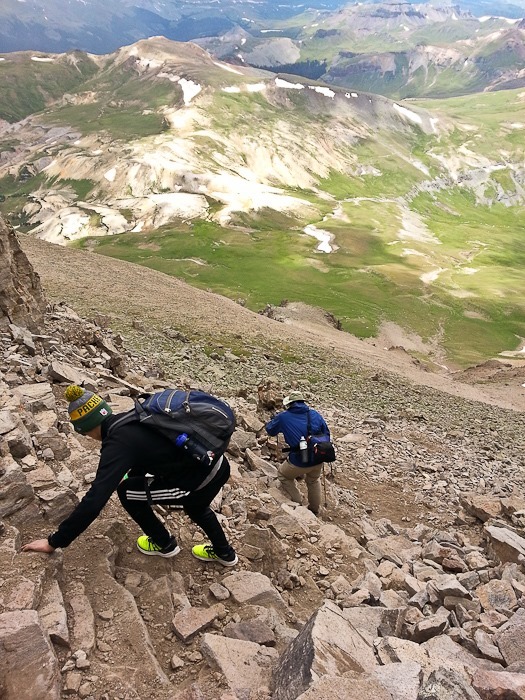
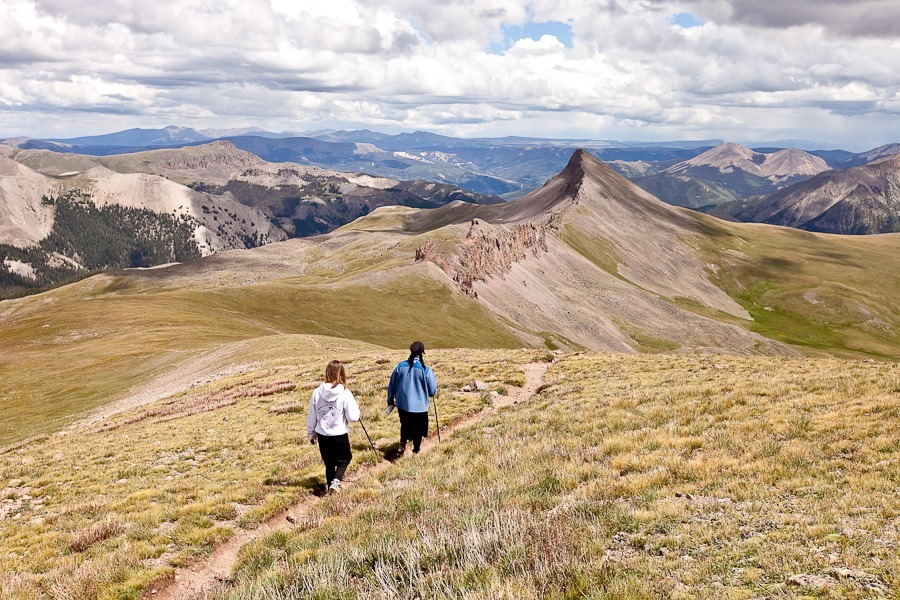
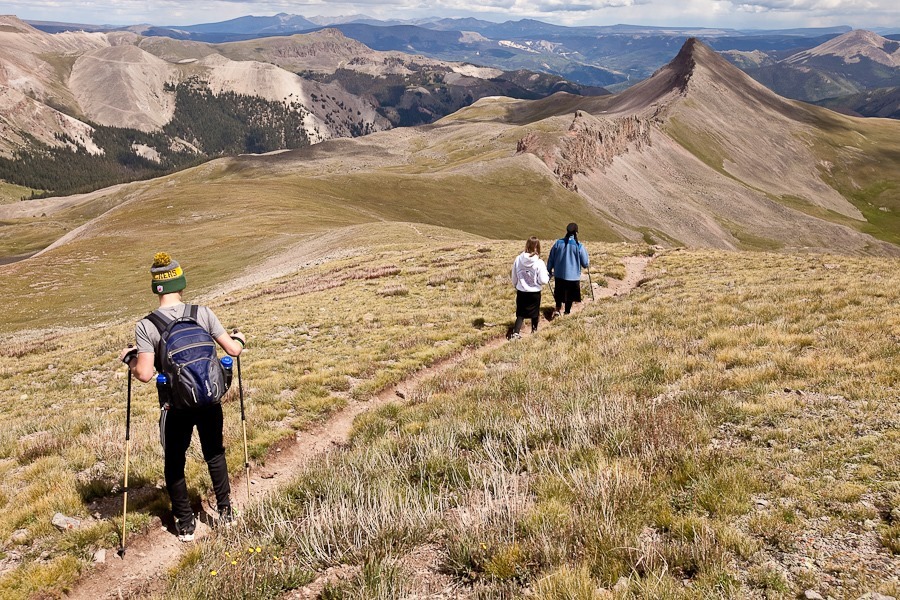
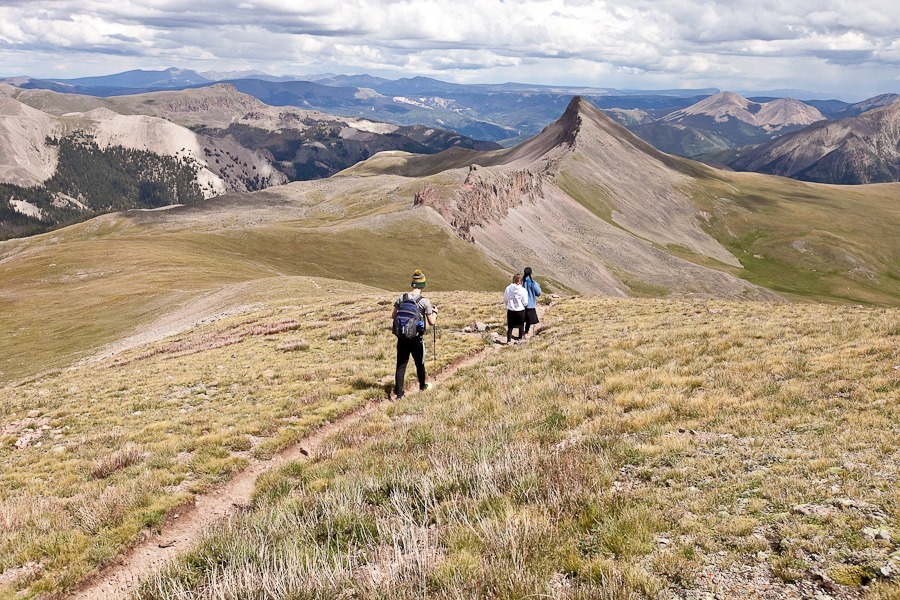
Six hours after we had began our hike, we were back at the truck.
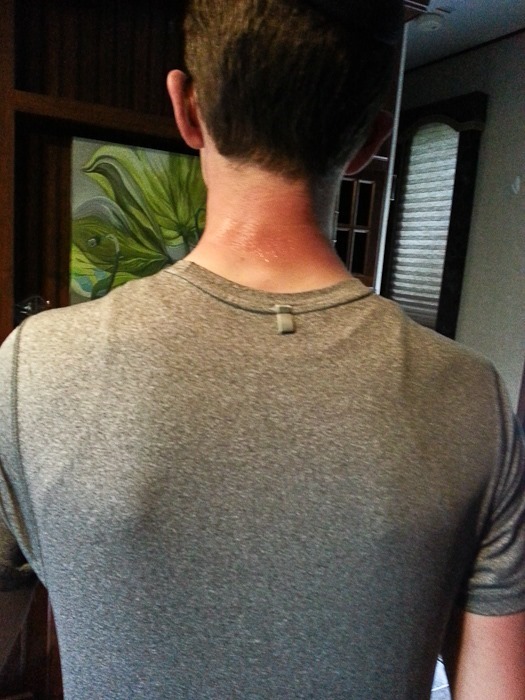
Unfortunately, my advice to wear brimmed hats was not heeded. M has quite the burn on the back of his neck:
We’ve climbed our first Fourteener! We will sleep well tonight, I think.


 Facebook
 Instagram
 Email
Email
Good job. Parts of the trail remind me of the sunken trails in the Sierra!