Water heater thermostat modification

The water heater has a non-adjustable thermostat that shuts off at 130 degrees.  Like most people, I like to shower at 105 degrees, and Trish likes her water to be around 115 degrees.  Here’s the thermostat with its cover removed.  The unit with the red wires is for the gas heater for the water heater, and the left unit is for the electric heater for the water heater:

20121113_224610


Using an electrical faceplate, I fabricated a base plate that will hold my new thermostat.  It will attached under the existing thermostats, with my units occupying the center gap:

20130409_082240

More to come!

Water works

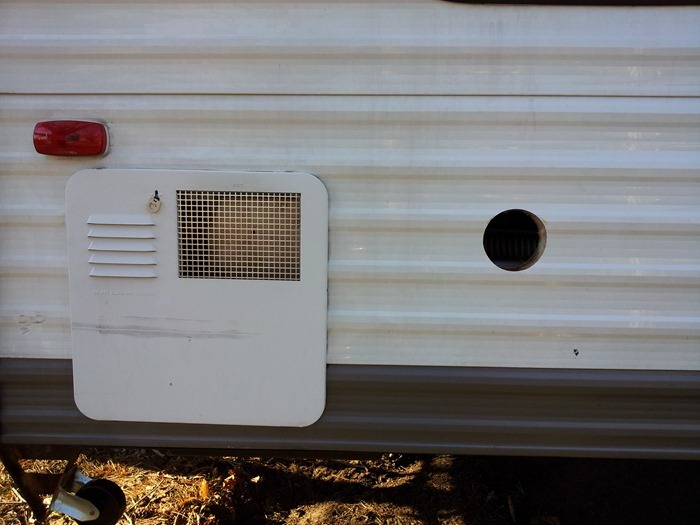
The fill hole for the water tank was installed in the rear wall of the RV, which made filling difficult with bikes on the bike rack.  I removed the fill assembly and capped it:

20130404_083931


Next, I drilled a 3.5” hole for the new fill assembly.  It was one of those “I really hope I don’t screw this up” moments:

20130404_083901


New fill assembly added:

20130405_183827


On the inside, I opted to add a second water tank (the new one is the one towards the top of the photo.  The fit is very snug, so I couldn’t use the new tank’s fill connecter.  I cut it short and plugged it with a swimming pool freeze plug (looks like this):

The new tank fills using the pump supply line, so it fills slowly.  I therefore moved the fill level sensors to the new tank.  There was a great deal of plumbing to be done, but it’s all working very well now.

I also added a lengthwise support so I could split the lower bunk’s “floor”:

20130407_173039


I did this because the lower bunk will now have a narrower mattress so that we can install floor-to-ceiling shelving for storage:

20130407_180117

All done!

20130407_181224

Adding another battery

I decided to go from one 70Ah battery to a pair of 115Ah batteries, thus tripling our power storage.  Many people recommend a pair of 6 volt batteries in series, but I decided to opt for a pair of Walmart 12V batteries in parallel.  They’re available everywhere, and come with a two-year warranty, and they’re only $100ish each.

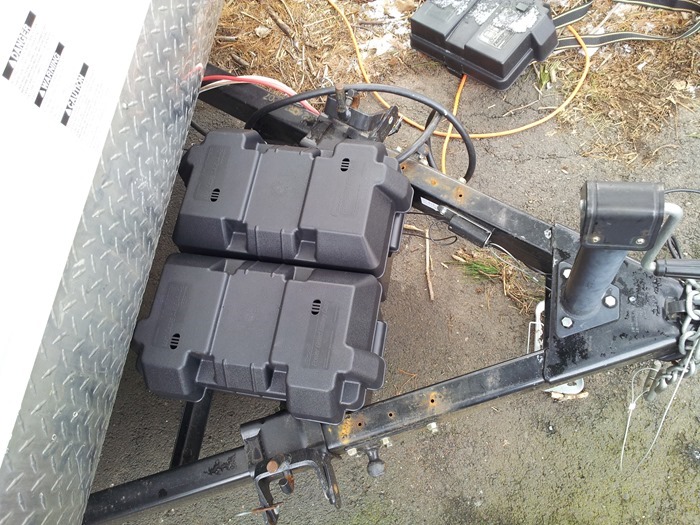
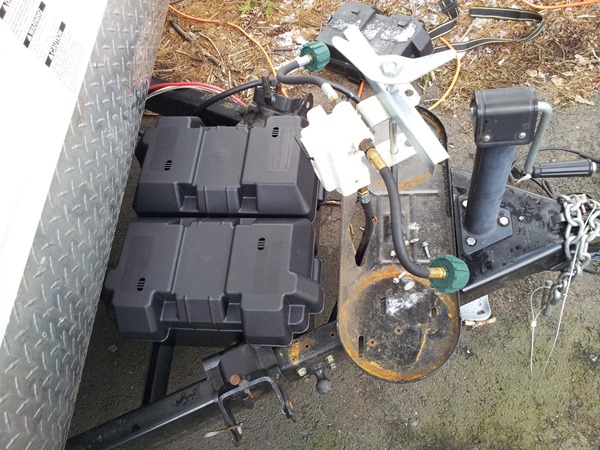
I first removed the support tray for the LP tanks:

20130317_122124


Next, I used the angle grinder to remove the front edge of the forward L-channel so the battery boxes could be installed lengthwise.  Here’s a mock up. 

20130317_125013


With the LP tray all the way forward, everything just fits:

20130317_124950


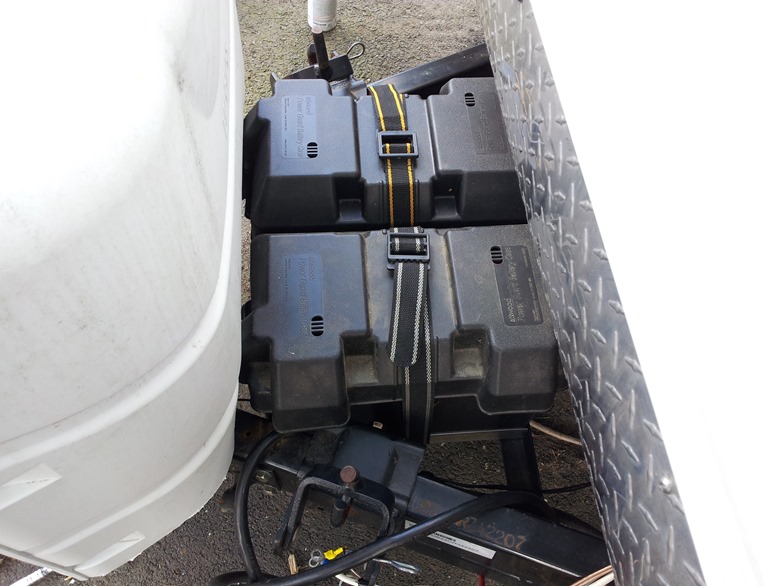
To finalize the install, I installed aluminum L-channel to support the batteries:

20130414_114702


It’s a tight fit, but it works!

20130414_132301


With the LP tanks so far forward, the cover actually encloses the front jack, so I had to cut an access hold to allow to cranking:

20130317_140700

Lots of wiring to come!

More solar panels

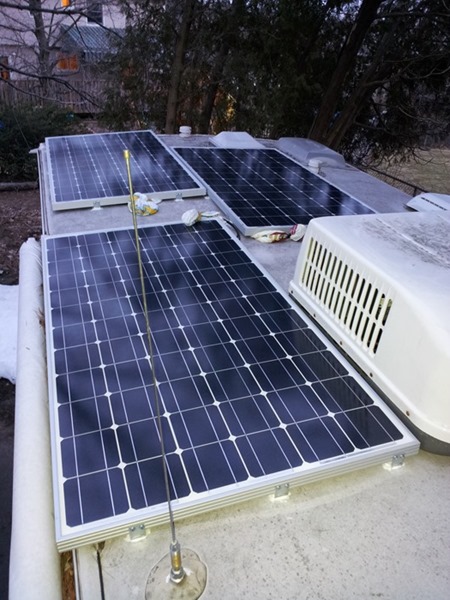
I added three more panels to the RV roof.  They had to be mounted in a way that the mounting brackets could be screwed into the joists, which are spaced every 18 inches or so:

20130303_174924

We now have 555 more watts of solar on the roof.  Adding brackets that allow the panels to be tilted towards the sun, increasing power production by 30% or so.  I decided it was easier just to add an extra panel.

Next I have to add the solar change controller and wiring.

Installing a second oven

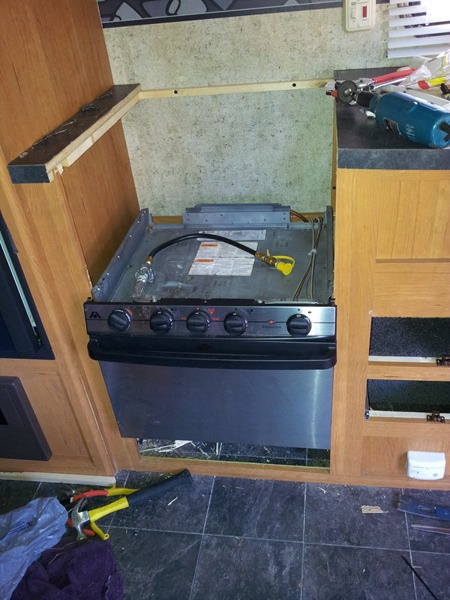
The next step was to install a second oven.  First I pulled out the oven that came with the RV:

20130101_191417


Next I cut out the cabinetry below to allow space for the second oven:

20130108_090824


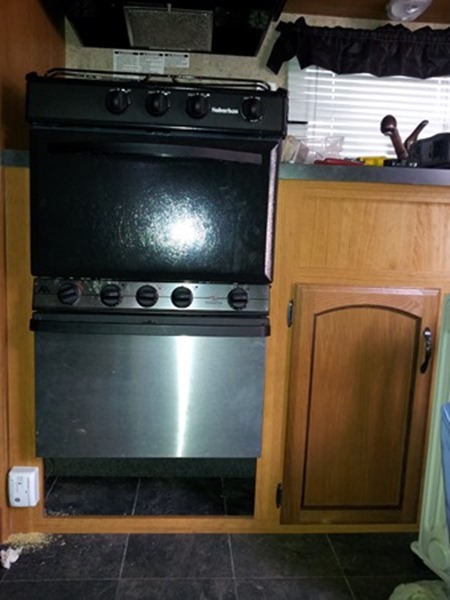
Here’s the lower oven in place.  This oven matched the existing oven in our last RV, so our two ovens don’t match, which is a minor bummer.  Notice I’ve removed all the cooktop components since this oven will be below the top oven:

20130108_092240


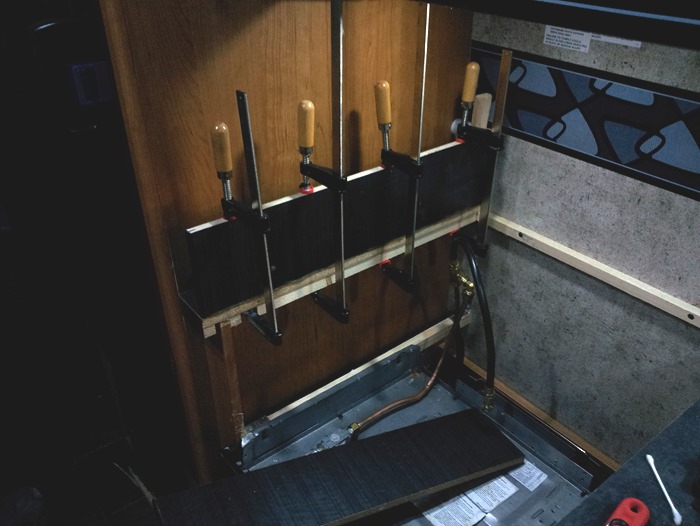
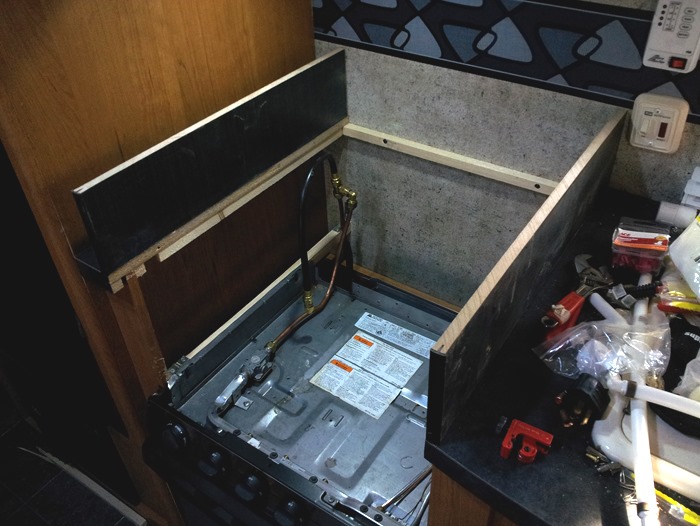
I had to add risers on the countertop to raise the upper oven high enough to clear the lower oven:

20130127_162721

20130127_134034


Top oven in place:

20130128_094346

20130222_082440

20130222_082517

All done!