The house was owned by the Longfellow family until it was given to the Park Service in 1972. All of the furnishings in the home are original. Longfellow and his children were quite the collectors:
The mirror on the left was in the house in Washington’s time, and was too heavy to move when the room was re-wallpapered in the 19th century, so behind the mirror the original 18th century wallpaper remains:
Longfellow’s study, where many of his poems were written:
Longfellow wrote a poem titled The Village Blacksmith which mentions a particular chestnut tree near his house. When the tree needed to be cut down to build a road, local children presented Longfellow with this chair in 1879, made from the tree mentioned in the poem. Longfellow in turn wrote the poem From my Arm-Chair regarding the chair:
At the window seat in the center of the photo, Mrs. Longfellow’s dress caught on fire, fatally burning her:
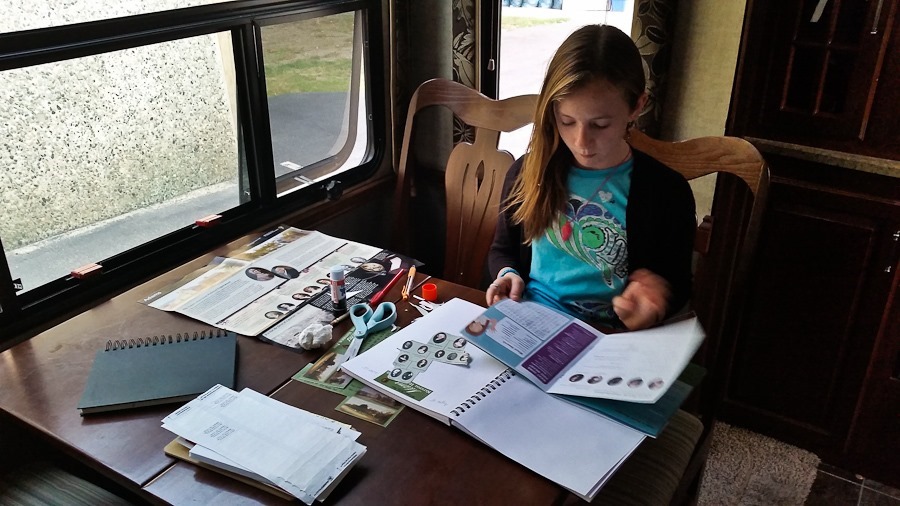
The kids completed their Junior Ranger workbooks and received their badges:
Our next stop was Frederick Law Olmsted National Historic Site. This site is the home and office of Frederick Law Olmsted, the father of landscape architecture in the US, known for his designs of Central Park and Brooklyn’s Prospect Park, among many other parks and gardens. He also was involved in the establishment of public lands set aside for preservation and conservation, authoring Yosemite and the Mariposa Grove: A Preliminary Report in 1865:
We explored the Olmstead-designed landscape around the home:
The kids completed their Junior Ranger workbooks and received their badges:
The Kennedy family sold the house in 1920. JFK’s mother Rose Kennedy purchased the house back in 1966 and restored it to represent what she recalled the home to look like when the Kennedy family lived there. About 20% of the artifacts in the home were owned by the Kennedy family:
JFK was born in this room:
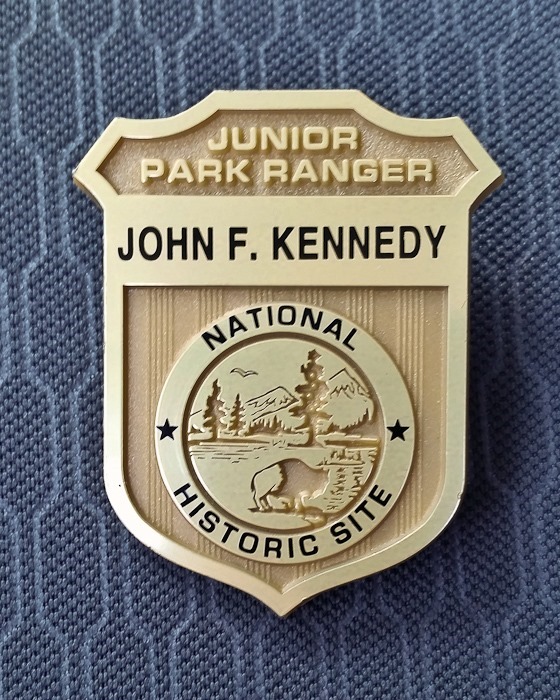
The kids completed their Junior Ranger workbooks and received their badges:
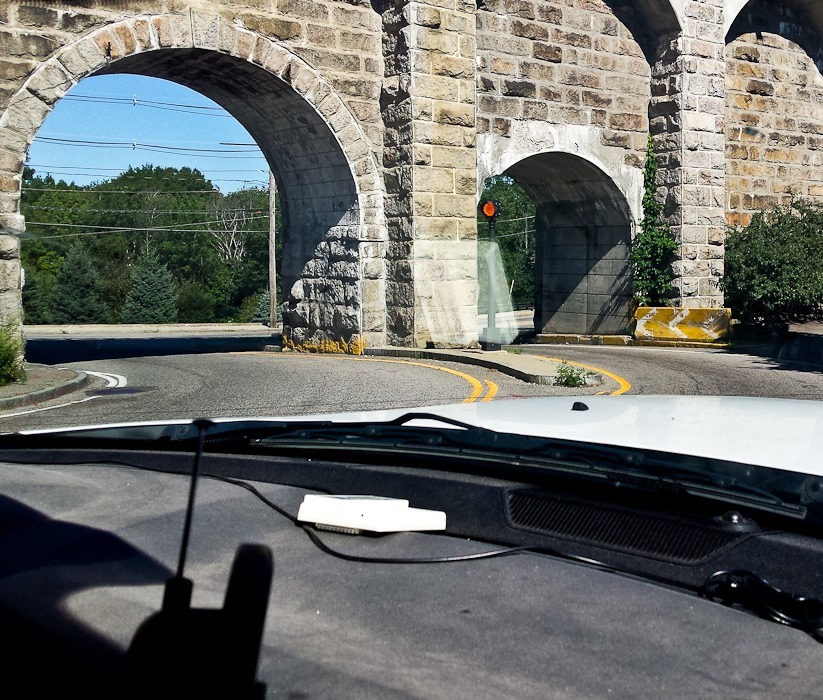
This morning we said goodbye to our old and new friends in Sharon and drove towards Quincy, Massachusetts. Along the way, we ended up encountering this tunnel. It might be high enough, but there are plenty of scrape marks on the inside of the tunnel and on the left side some of the arch is broken away. We backed into a driveway and went another way:
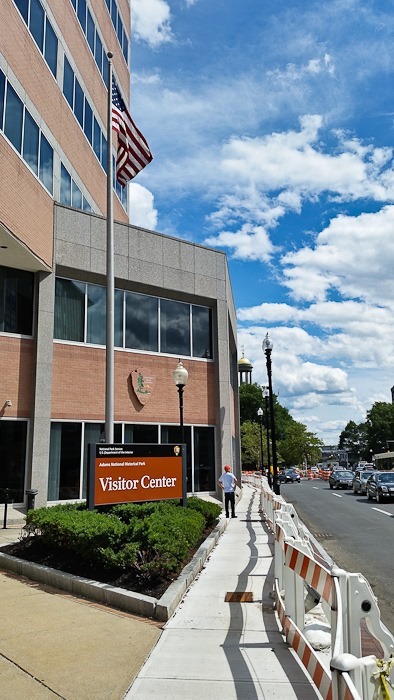
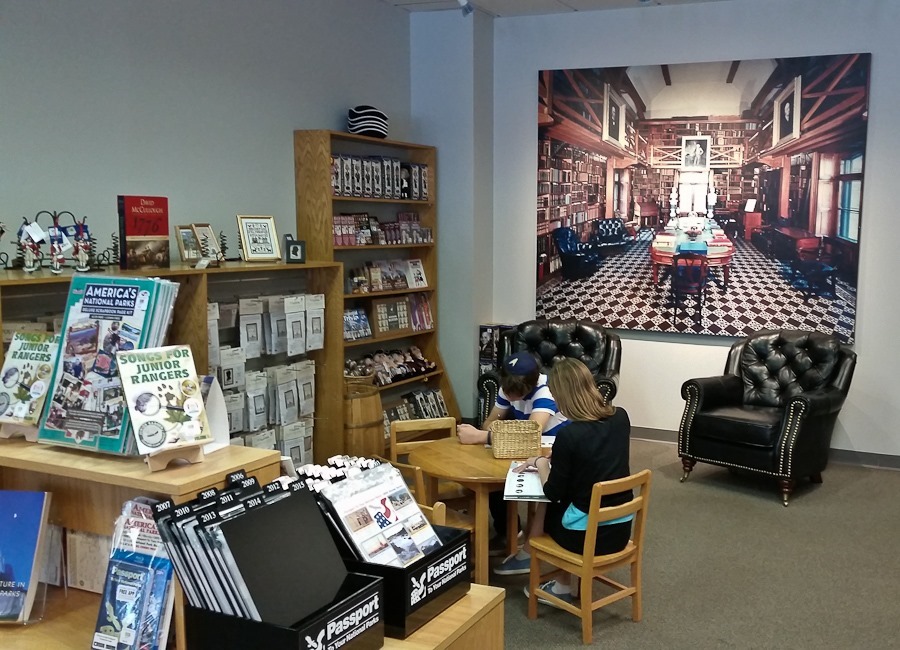
We arrived in Quincy and parked at a local supermarket, then walked the half or mile or so to the visitor center for Adams National Historical Park. It’s the only NPS visitor center we’ve been to that’s located in a mall:
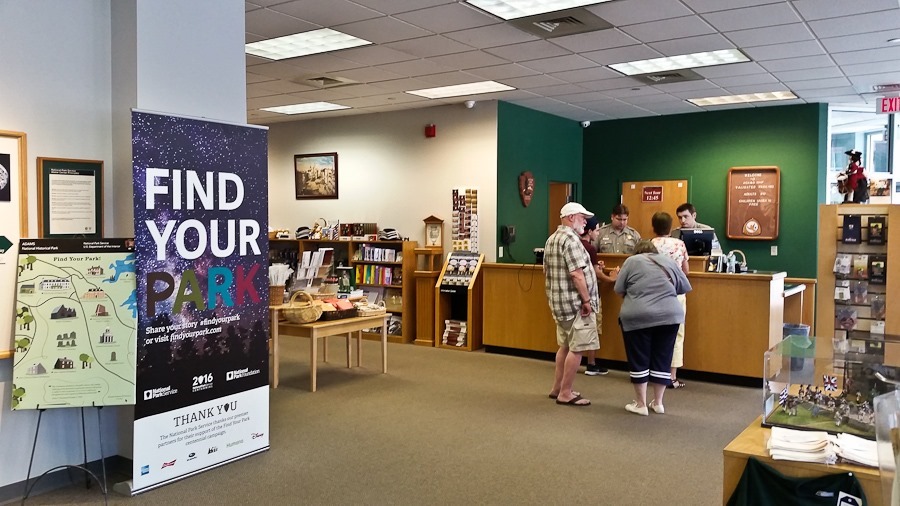
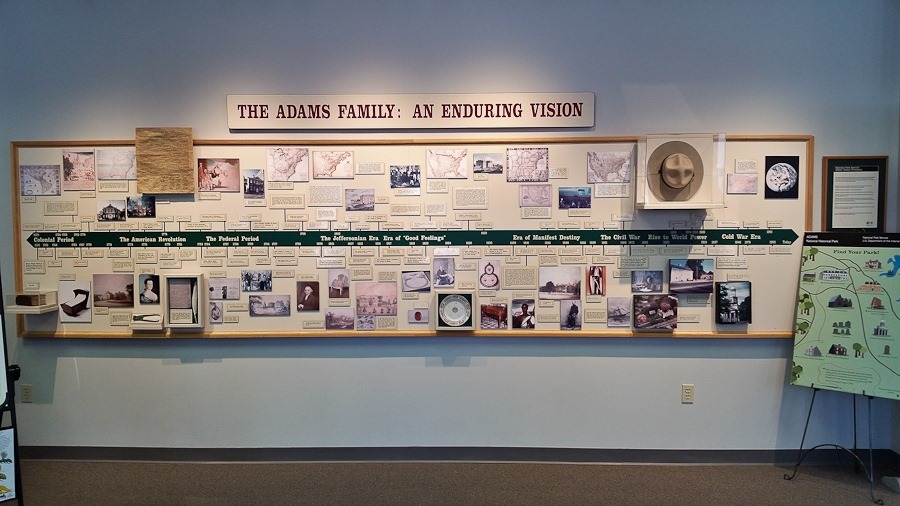
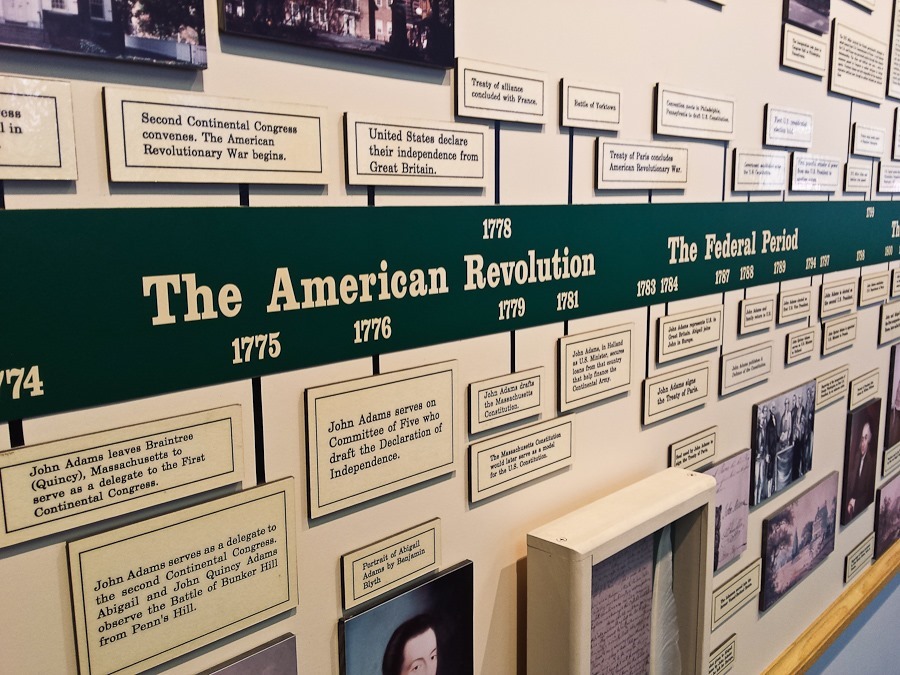
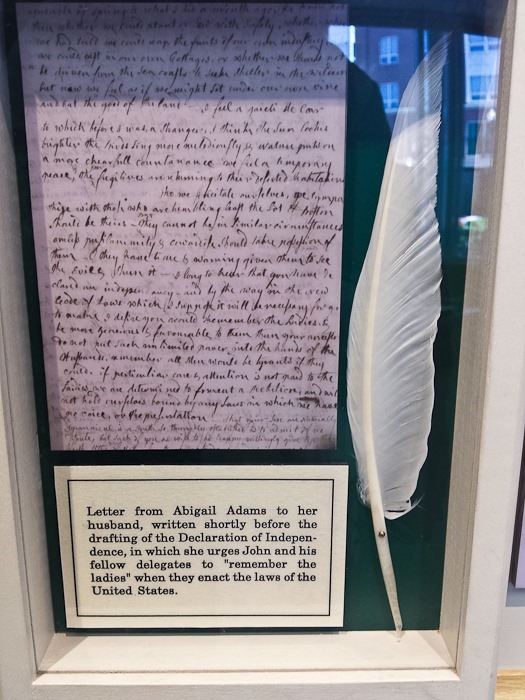
The visitor center interprets four generations of the Adams family, which include the second and sixth presidents of the US, John Adams and his son John Quincy Adams:
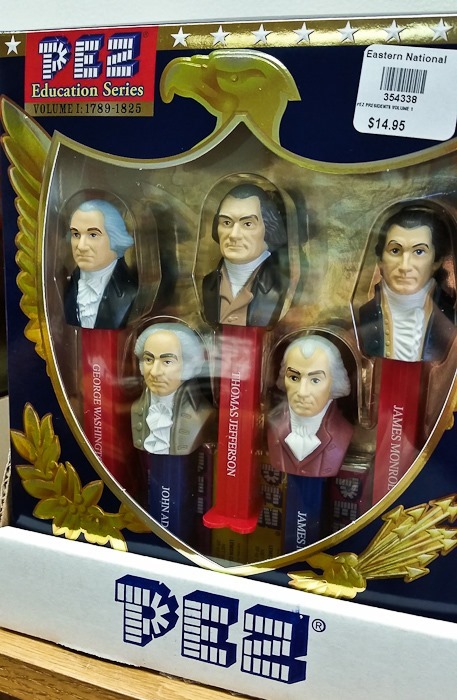
They look angry that they’ve been made into Pez dispensers:
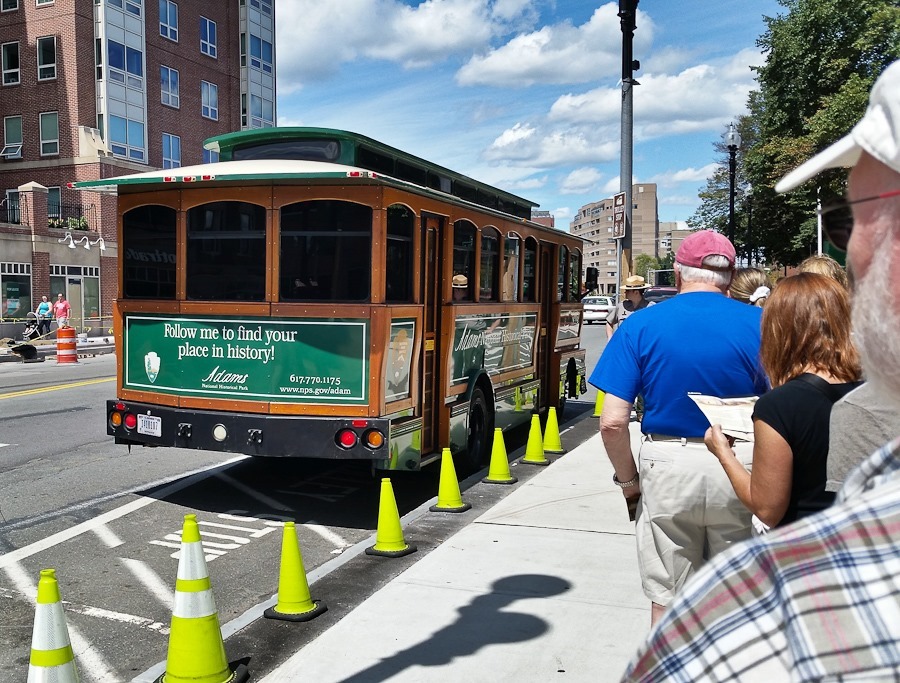
We waited for the trolley that picked us up for our tour:
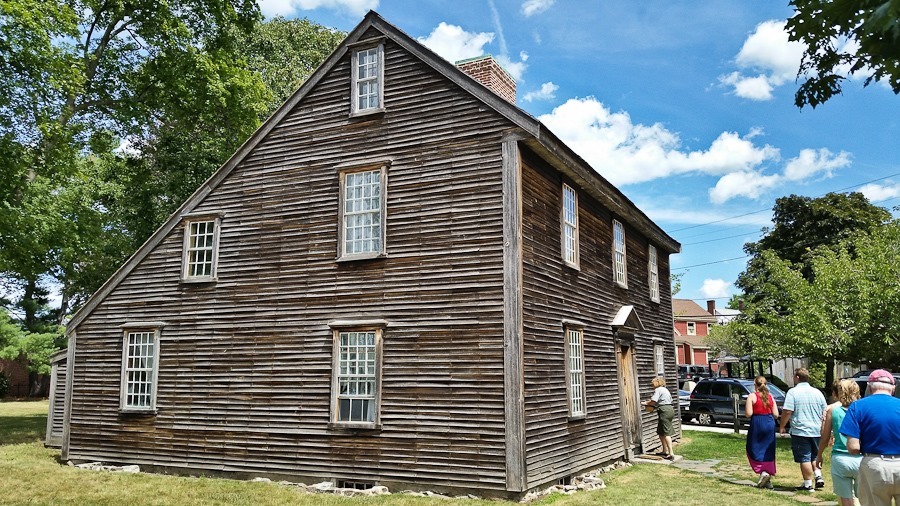
The first stop was the house of John Adams’ father, built in the late 1600s, where John Adams was born in 1735. Unfortunately, no photography is allowed in any of the buildings in the park:
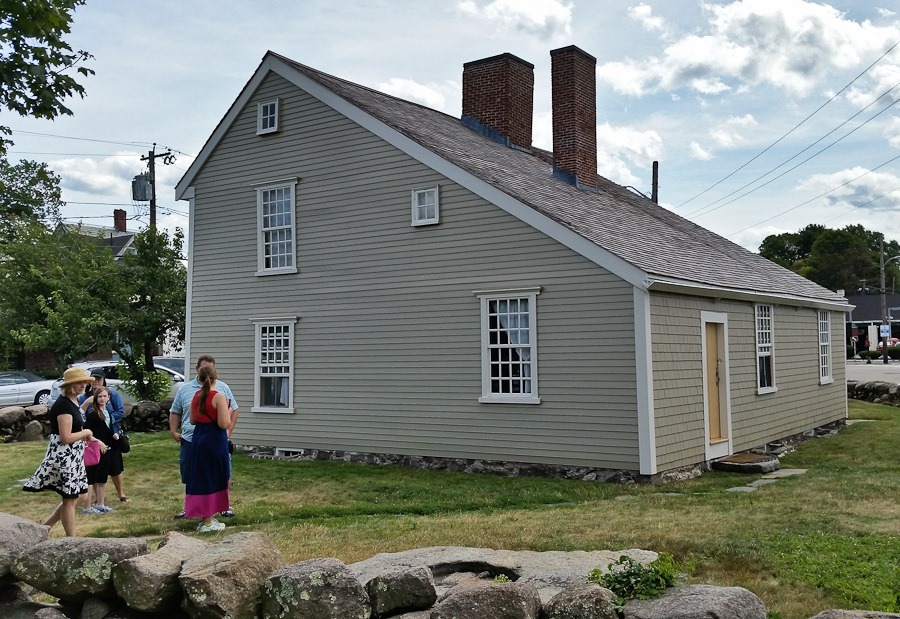
The house next door was bought by John Adams’ father and given to John Adams. John Quincy Adams was born here in 1825:
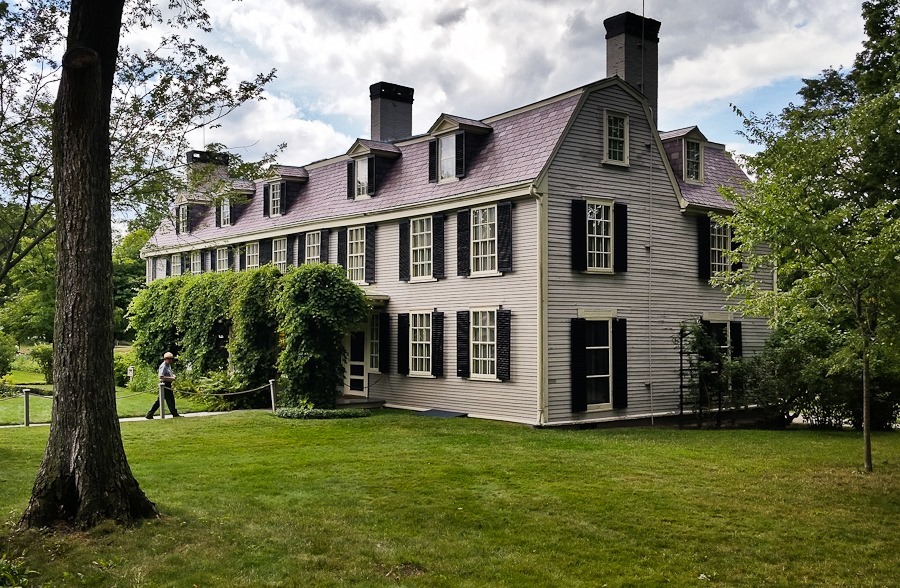
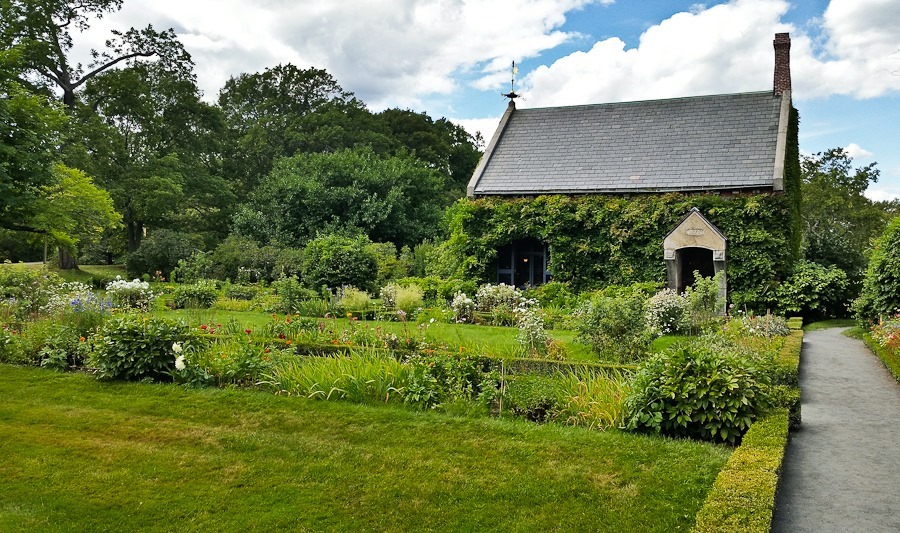
We next took the trolley to Peacefield, which was acquired by the Adams family in 1787. John Adams died here on the 50th anniversary of independence, 4th of July, 1826, the same day that his friend and political opponent Thomas Jefferson died. The interior contained family portraits that date back to the 1600s, as well as the desk at which John Adams wrote the Massachusetts constitution, which was the basis for the US constitution:
Also at this location is the library that was built posthumously for John Quincy Adams by his son, Charles Francis Adams. Thousands of volumes fill the floor to ceiling shelves. On display is the bible given as a gift to John Quincy Adams by the slaves of the Amistad, who were repatriated to Africa thanks to Adams’ actions as their lawyer in United States v. The Amistad:
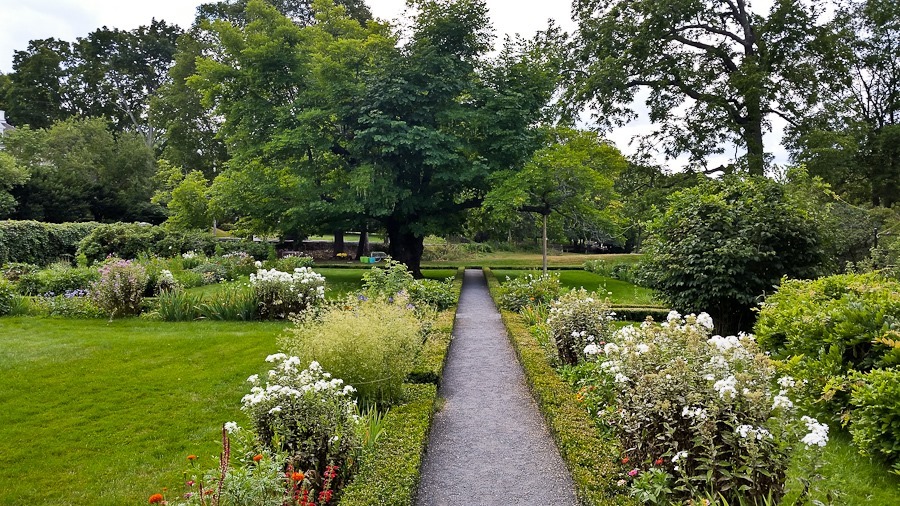
The formal garden at Peacefield:
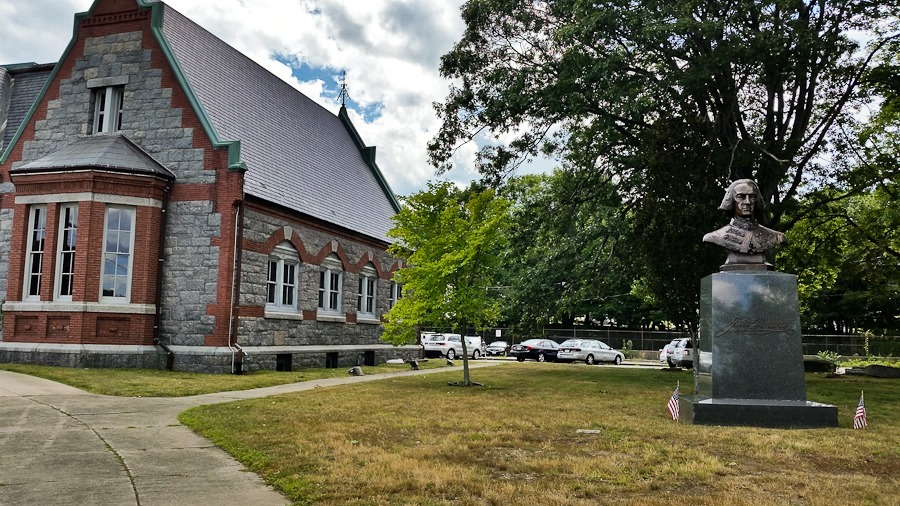
On the way back to the visitor center we passed this statue, commemorating the birthplace of John Hancock in a house that used to stand here. Today it is the site of the Adams Academy, a school founded by the Adams family:
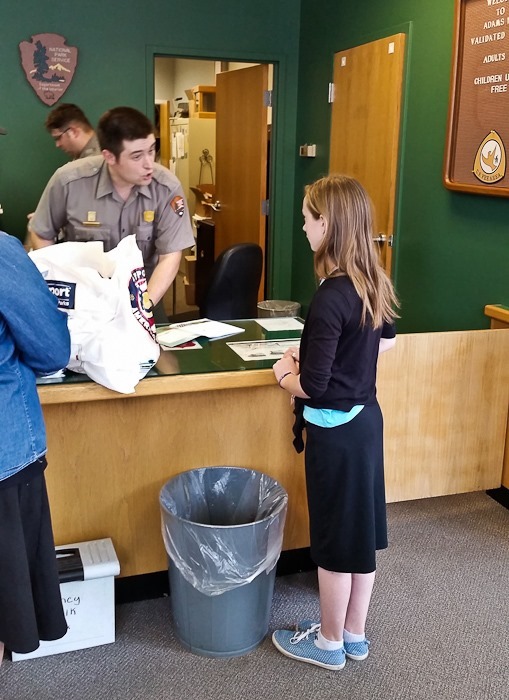
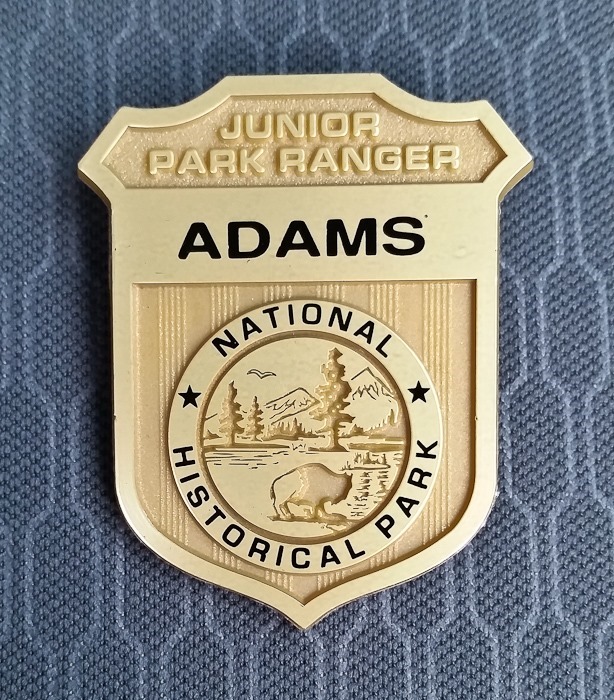
the kids completed their workbooks and received their Junior Ranger badges:
This morning Baruch and I went for a ride. I rode with him for the first 20 miles of his commute to work, then rode back to the RV. He kept me working hard:
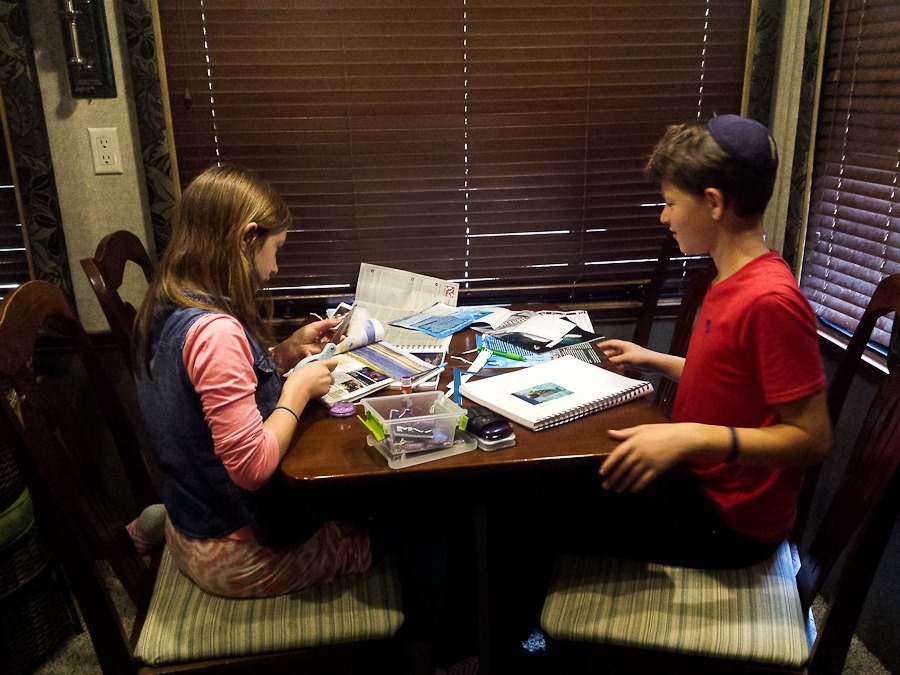
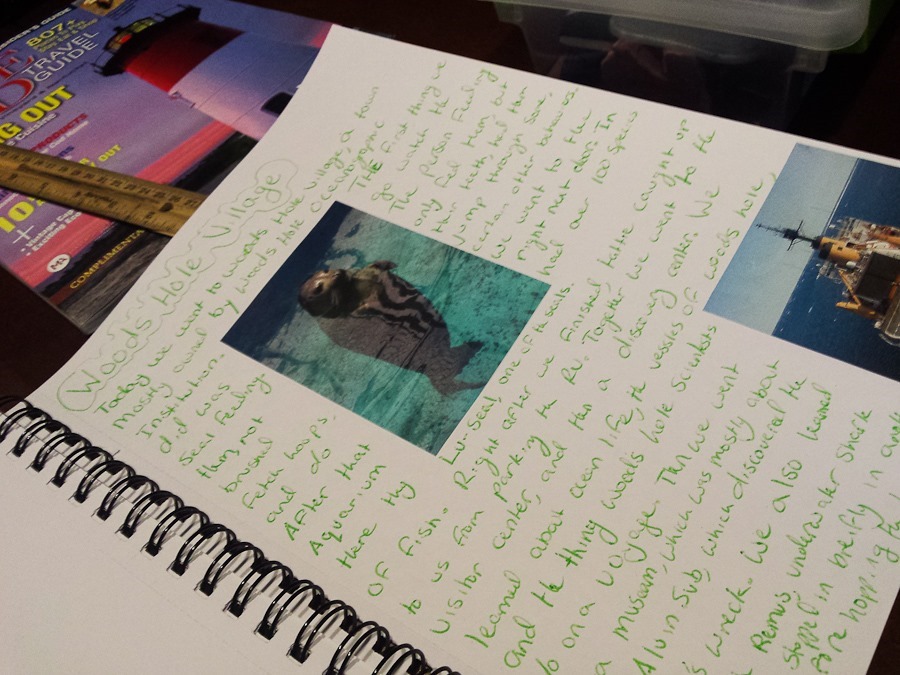
The kids did their homeschool, which today included journaling about yesterday’s tour of Woods Hole:
We decided to linger one more night here in Sharon, Massachusetts:
This morning we awoke at the Walmart of Onset, Massachusetts to an early thunderstorm. The weather alerts on our phones warned of severe lightning and thunder with a slight chance of a tornado. We all gathered in the living room to watch the lightning and the incredibly loud cracks of thunder. The storm passed in less than thirty minutes and by the time we were packed up and ready to head out the sun was shining.
Our first stop this morning was the Woods Hole Science Aquarium to watch the seal feeding program. Woods Hole Village is a very small town with narrow streets and almost no parking. Ben dropped us off and had to squeeze his way back through town (not an easy task when you are almost 60 feet long!) to park at a shopping center several miles away. He rode the trolley back and met up with us after the seal feeding program. It is a very popular summer activity and the crowd was already well formed by the time Ben dropped us off:
The exhibit currently houses two Harbor Seals named LuSeal and Bumper. They are both rescue seals that were rescued as infants. LuSeal was found at a nearby beach and the rescuers noticed she was underweight. They cared for her and once she regained her health, released her back into the wild. A few weeks later she turned up again, underweight and seemingly unable to care for herself. The trainer called her case “failure to thrive” and said she would have died in the wild but is doing well in the aquarium. Bumper was found on the beach after being attacked by a shark as an infant. The rescuers were afraid his wounds were so severe that he would lose his tail. Bumper survived, but an infection led to blindness and he will live out his life here in the aquarium with LuSeal.
The seals are fed twice a day and require 8 pounds of fish per day. The trainer led the seals through a set of exercises designed to help him assess their health. He also brushed their teeth. The seals have been taught to respond to signals, words, and in Bumper’s case, claps. After each completed task, the trainer gave them two fish from their individual buckets. The trainer told us that Harbor Seals are quite intelligent and the second set of tasks he asked them to perform were to provide novelty, something they wouldn’t otherwise get in captivity. Here, LuSeal and Bumper respond to the trainer’s command to go up and over the rock ledge:
They also leapt through a hoop, jumped out of the water, and dove for rings. After the seal feeding program finished, we went inside the Aquarium to view the fish tanks and other displays (photos by M and B):
The exhibit continued upstairs and we could see the tops of the tanks we viewed below, and the kids had a chance to handle some creatures in the touch tank.
Looking out into the harbor outside the aquarium:
Our next stop was the Marine Biological Laboratory which featured displays about the research going on locally including this display about the nervous system of squid:
Along the boardwalk we could see the Research Vessel Knorr. This ship is owned by the U.S Navy and operated by Woods Hole Oceanographic Institution (WHOI). The ship can carry a crew of 22 and a scientific party of 32 to sea for as long as 60 days. This ship is famous for assisting in the discovery of the Titanic wreck:
A little further down the boardwalk, Research Vessel Atlantis was visible. We were told it is headed out on a research mission tomorrow. According to the WHOI website:
“The research vessel (R/V) Atlantis is owned by the U.S. Navy and operated by WHOI for the oceanographic community. It is one of the most sophisticated research vessels afloat, and it is specifically outfitted for launching and servicing the Alvin human occupied submersible. Delivered to Woods Hole in April 1997, Atlantis was built with six science labs and storage spaces, precision navigation systems, seafloor mapping sonar, and satellite communications. The ship’s three winches, three cranes, machine shop, and specialized hangars were specifically designed to support Alvin and other vehicles of the National Deep Submergence Facility.”
The view as we continued along the boardwalk:
Our next stop was a visitor center operated by the Coalition to Save Buzzards Bay. The kids spent a bit of time handling the sea stars and whelks in the touch tank:
This was the first time M handled a knobbed whelk with it’s owner still inside:
B is showing me where this sea star is growing a new appendage:
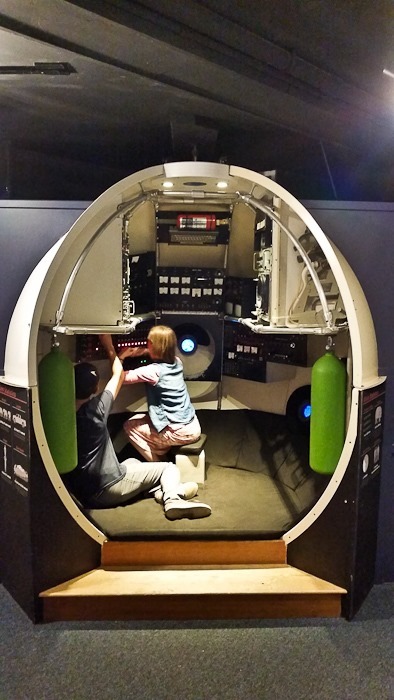
Our next stop was WHOI’s Ocean Science Exhibit Center to learn about the deep submersible vessel Alvin, the discovery of the Titanic wreck, and ongoing research sponsored by WHOI. Here the kids are exploring a full size model of the titanium pressure hull of Alvin. This compartment is occupied by three adults during a dive:
This model of the Titanic (which took 3000 hours to build) depicts the luxury liner as it appeared one hour after striking the iceberg. Notice how the bow of the ship is quite close to the water while the stern is visibly coming out of the water:
Upstairs we enjoyed several displays about marine life:
This display about the Remus SharkCam was very impressive. Developed to study Great White Sharks, it was deployed in 2013 near Guadalupe Island in Mexico and captured spectacular video. You can watch the video here and see a shark actually attack the camera. The camera is on display and you can run your fingers along the jagged marks left by the shark:
Our last stop in Woods Hole was the Woods Hole History Museum:
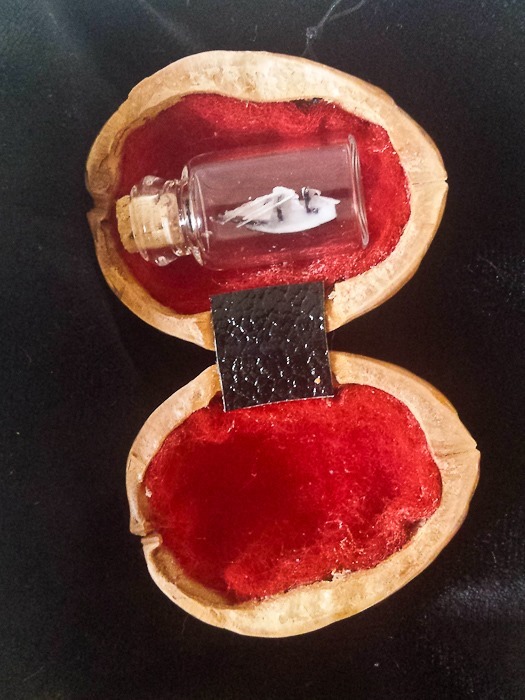
There were several model ships including this ship in a bottle. The sign next to it claimed it is the second smallest ship in a bottle according to the Guinness Book of World Records:
Scale model of Woods Hole Village:
Next door, this gentleman told us about the history of local boat making. The sailboat we are gathered around was made by a local and had a pivoting mast. At the time, the bridge in town was made of concrete and was quite low. The builder of this ship created a special fitting so he could drop the mast, slip under the bridge, and then raise it back up as he continued out of the harbor. Today the bridge is made of steel and raises for the local boats to pass:
We caught the trolley back to the RV and had lunch before continuing on to the second half of our day exploring Plimoth Plantation. Since we have spent the last two years in the West learning about the Gold Rush and early Pioneers, I was excited to begin our study of the early colonists starting with Plimoth Plantation and the Pilgrims!
Thee are three sites that make up the Plimoth Plantation Heritage experience: Plimoth Plantation Village and Wampanoag homesite, The Mayflower II, and the Plimoth Grist Mill. Since we arrived in late afternoon, many of the period actors had already left. However, there were still several people to interact with. The kids really enjoyed hearing the actors speak in 17th century English!
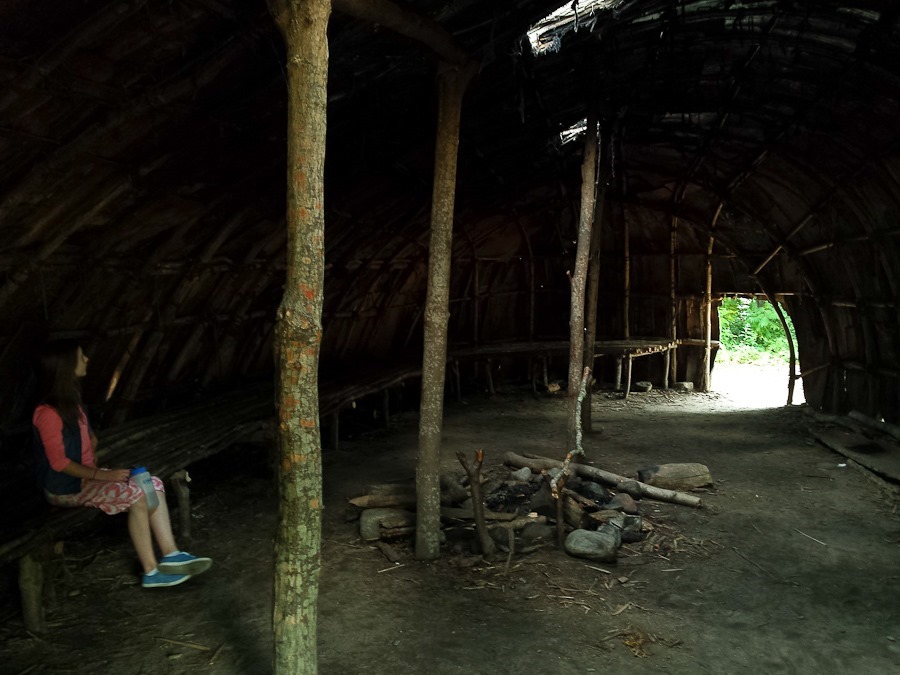
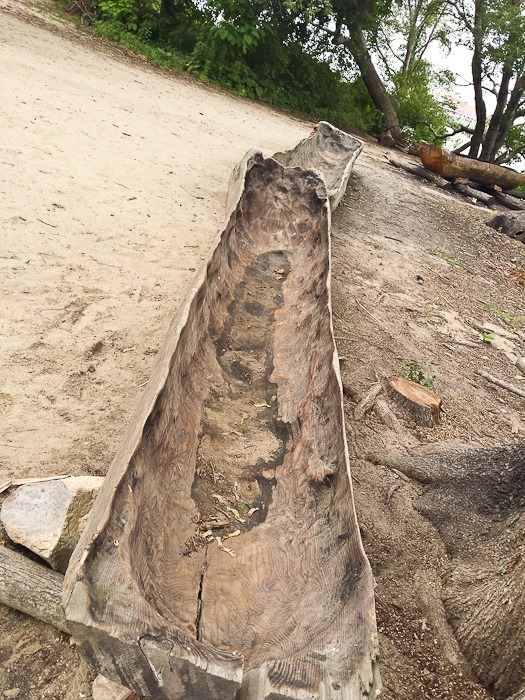
The Wampanoag homesite was quiet, but a volunteer was seated near this large Wetu, which I mistook for a meeting house. She told us that is was a four generation winter home that slept up to 15 people:
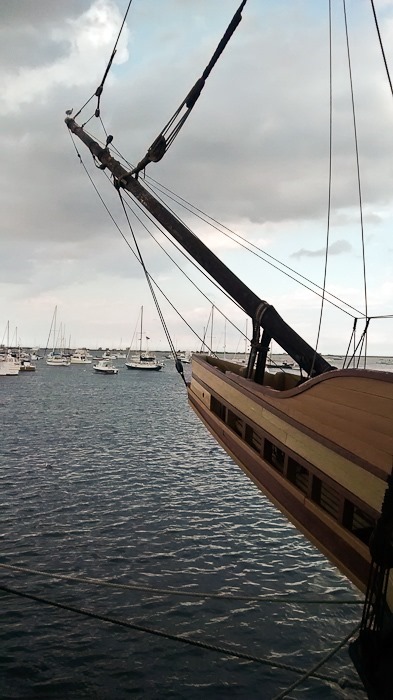
Next we visited the Mayflower II, an exact replica of the original Mayflower, built in 1957:
While below, we listened to a volunteer describe in great detail how difficult the 66 day journey really was for the passengers and crew. Looking around, it was hard to image 102 passengers living so close together in dark, cramped quarters with hardly any ventilation.
Just a block away from the Mayflower II, we viewed Plymouth Rock. Although legend holds that this rock was the point where the pilgrims first stepped off the ship when they arrived in Plymouth, it wasn’t mentioned in any of the writings from the passengers. It wasn’t until over 100 years later that people began to refer to the large rock as “Plymouth Rock”:
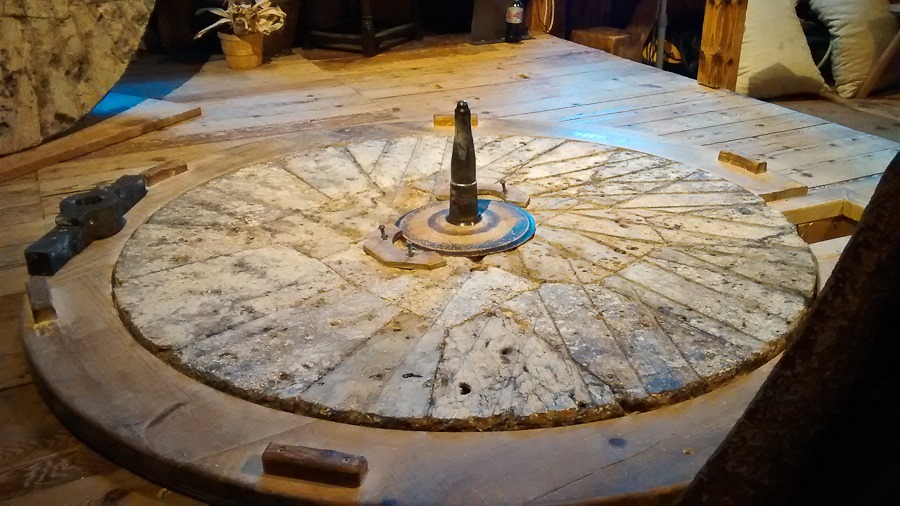
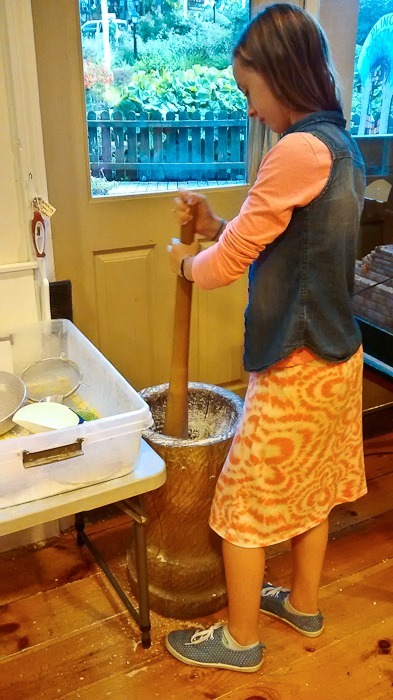
The third and final stop for the day was the Grist Mill. We learned from the volunteer that the mill was built 16 years after the pilgrims arrived in Plymouth. Until the mill was built, they ground all of their corn by hand with wooden mortars. She told us that three to four hours each day were spent grinding!
Downstairs there were several different hands-on displays like this one showing how gears interact:
This model demonstrated two types of waterwheels, the overshot wheel and the breastshot wheel. The Plimoth Grist Mill is a breastshot wheel.
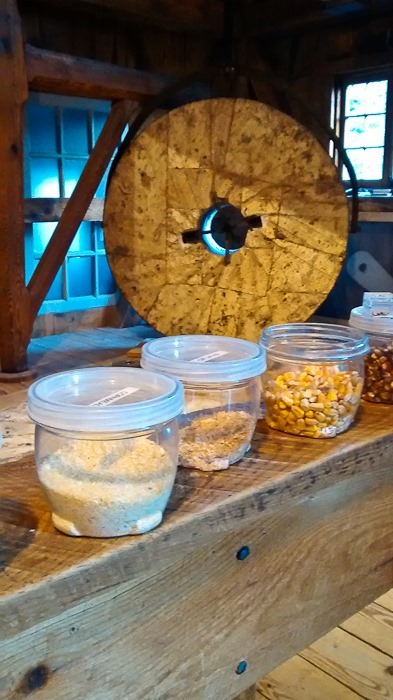
B took a turn grinding some corn:
While I was at Plimoth Plantation with the kids, Ben went on a bike ride around town:
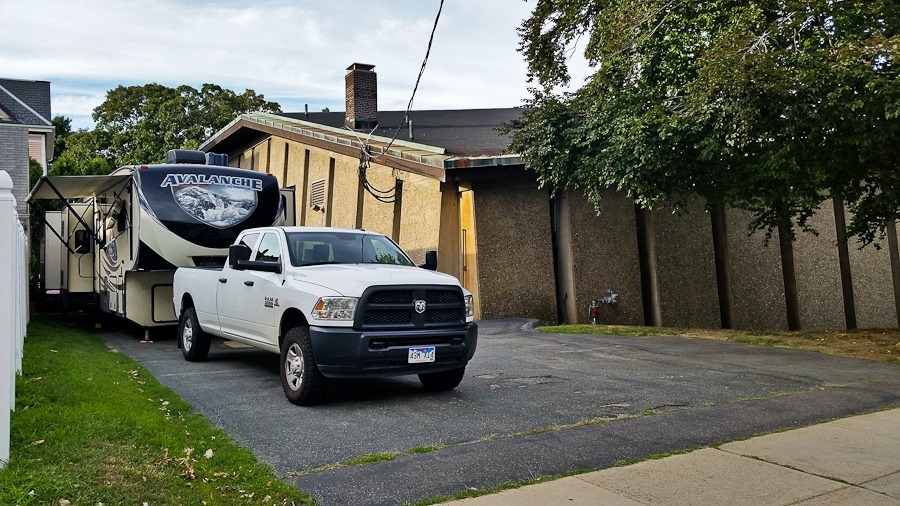
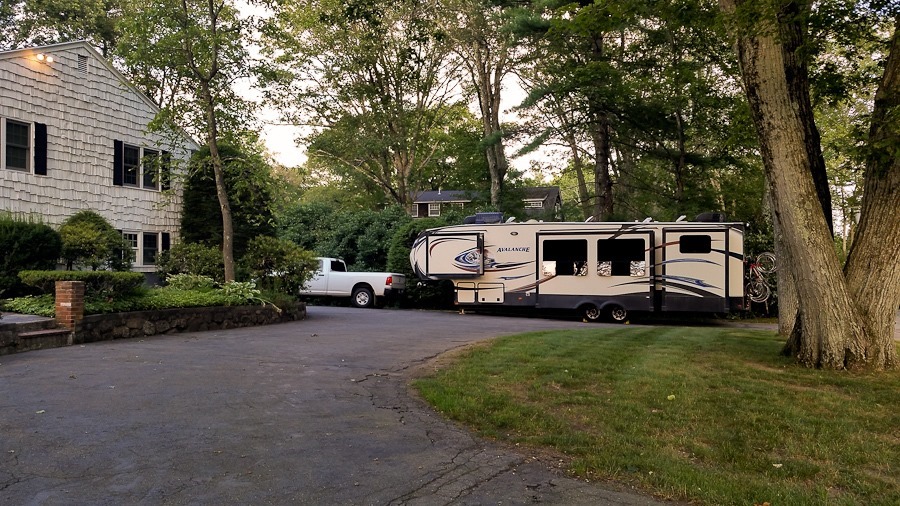
We continued North and West to visit our Portland friends Baruch and Elise, who now live in Sharon, Massachusetts. Their driveway is pretty narrow, so their neighbors Burt and Alice generously invited us to overnight in their driveway. We had dinner together and caught up on what we’ve missed in the ten or so years since we last saw each other. See the trip map for today’s drive and our current location.
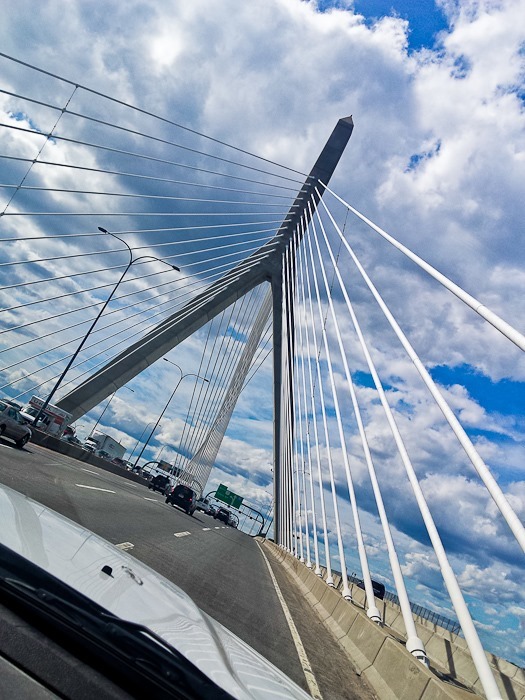
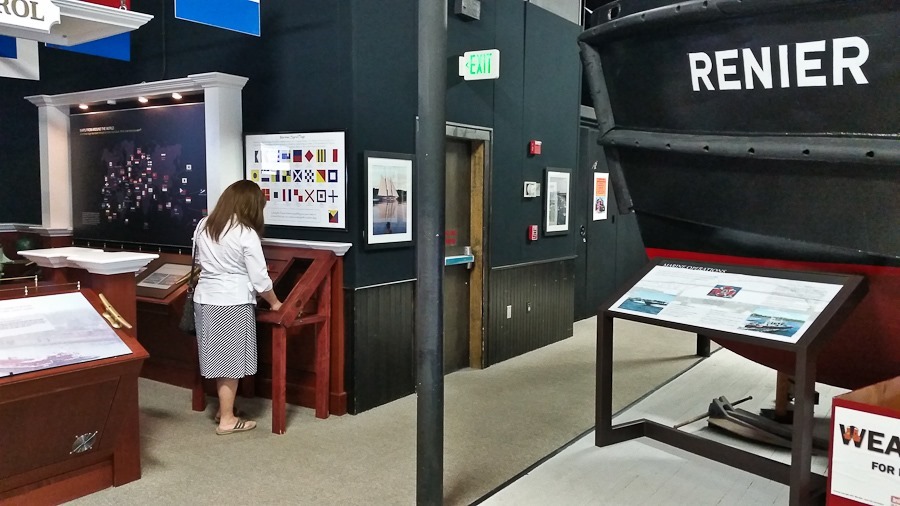
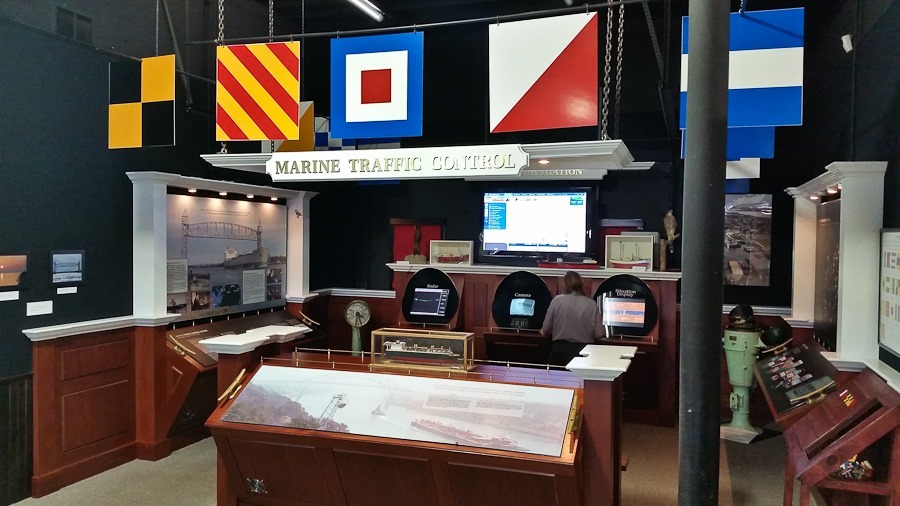
We awoke to another humid day at the Walmart of Onset, Massachusetts. We drove east and crossed over the bridge onto Cape Cod. Our first stop was the Cape Cod Canal Museum, a US Army Corps of Engineers museum which interprets the history of the Cape Cod Canal. The museum has on display the canal patrol boat Renier:
The kids struggle to maintain control in stormy seas:
At the flag display, the kids spelled out YOU ARE BEING WATCHED:
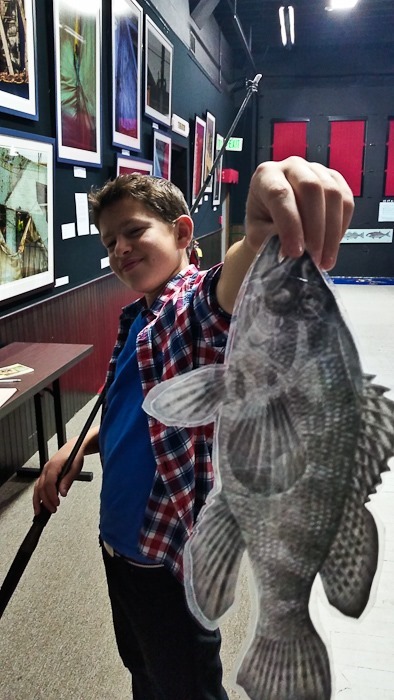
Magnetic fishing for laminated paper fish:
Looking from the canal out to sea:
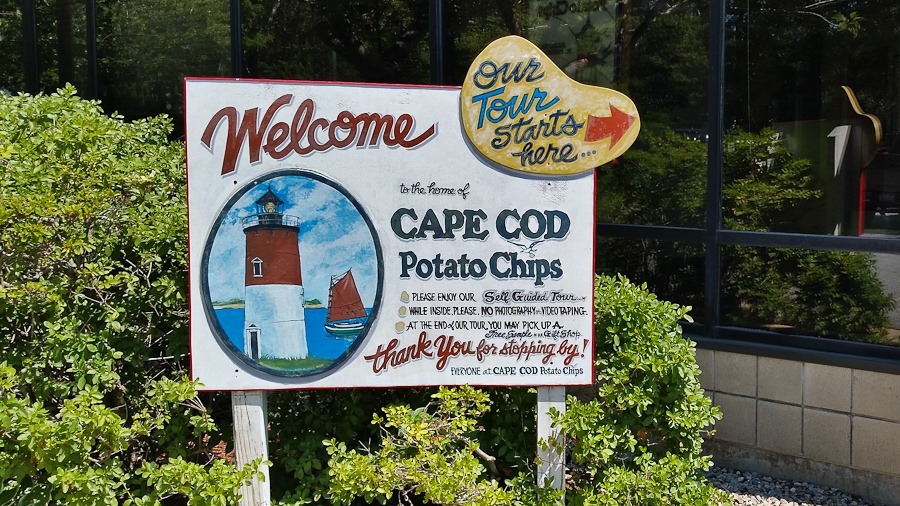
Continuing east, we stopped at the Cape Cod Potato Chip factory to tour the facility:
The tour involves walking down a hallway with interpretive signage and windows that look into the production area. We could see the potato slices being fried and salted, then ride a conveyor belt off to packaging. The tour was self guided and the factory doesn’t allow photographs to be taken:





























 Facebook
 Instagram
 Email
Email