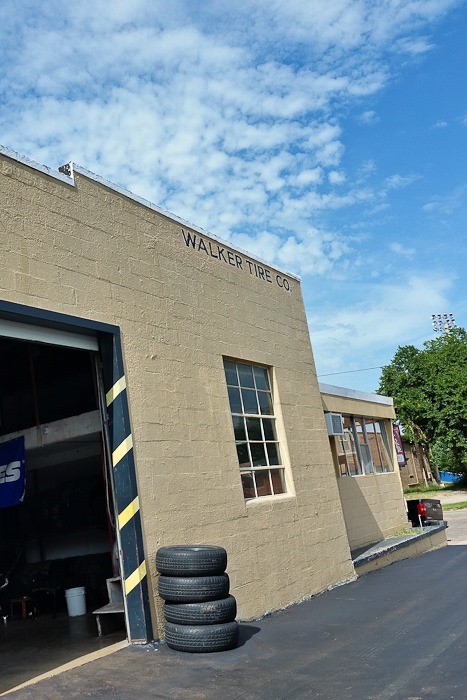
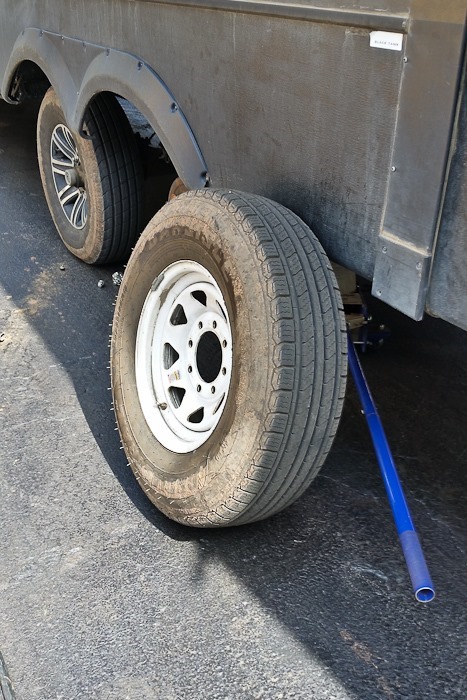
We drove west, stopping at Walker Tire in Guthrie, Oklahoma to replace the RV tire with the bubble from a few days back:
The folks at Walker Tire suggested we upgrade the RV to 14-ply tires from our current 10-ply tires. We did the switch on the rear axle since it seems to carry more weight than the front axle.
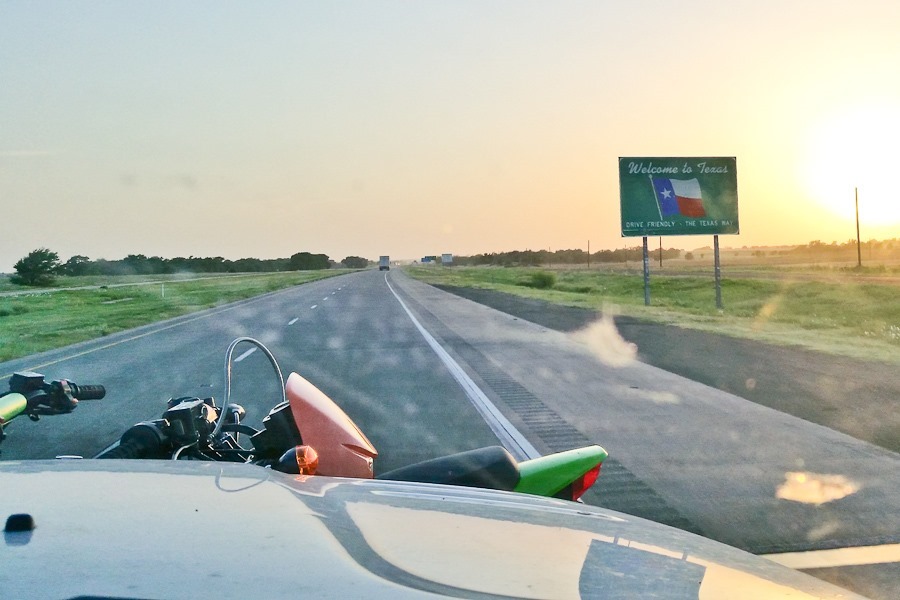
We continued west into Texas:
We overnighted at the Walmart of Canyon, Texas. See the alternating yellow line on the trip map for today’s drive
On last summer’s trip, we suffered in hot locations, when even our two air conditioners were insufficient to keep the RV interior cool. I decided to install a third generator. The living room has a ceiling fan installed in a recessed bezel, so there’s already a hole in the interior ceiling and a 120-volt line (see stock photo below):
I removed the ceiling fan and its mounting bezel. I then drilled four holes in the corners of the interior ceiling hole so I could identify the corresponding location on the exterior roof. Up on the roof, I found the four holes and cut away the roof’s rubber membrane:
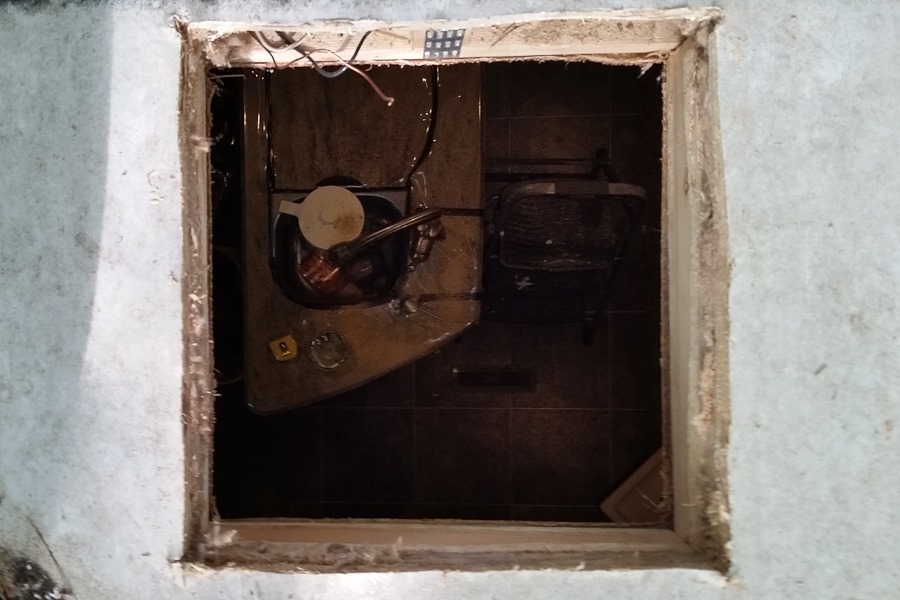
I then cut out the roof section, revealing the interior below:
The air conditioning unit mounts to the roof, and the air distribution module mounts to the interior ceiling:
All done:
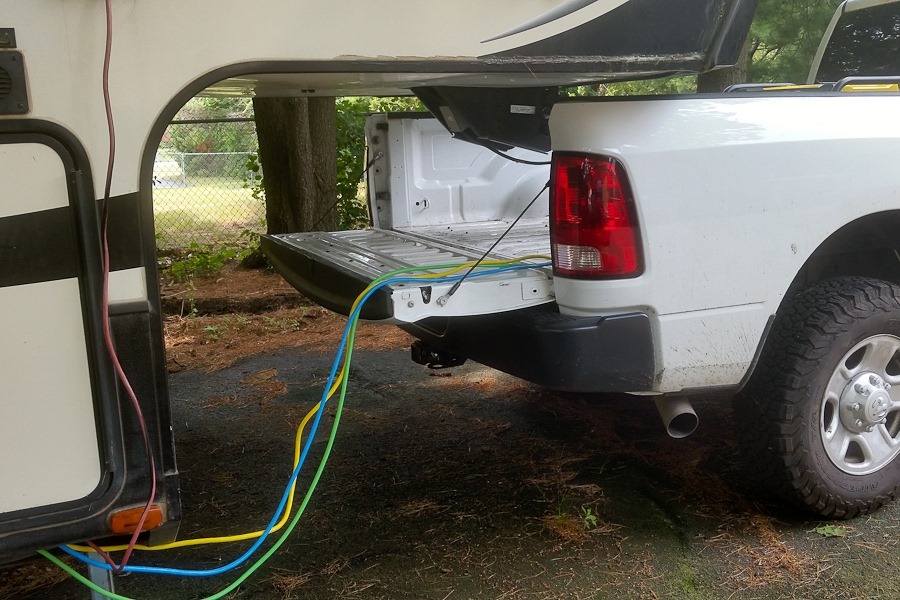
To run all three air conditioners while driveway camping, I removed the three air conditioners’ power connections from the breaker panel and assigned an external extension cord to each air conditioner (see here for details on why this is necessary). We then tested our new monster generator with the three air conditioners:
The generator was able to handle to load without issue. Looks like this summer’s trip will be much more comfortable than last summer!
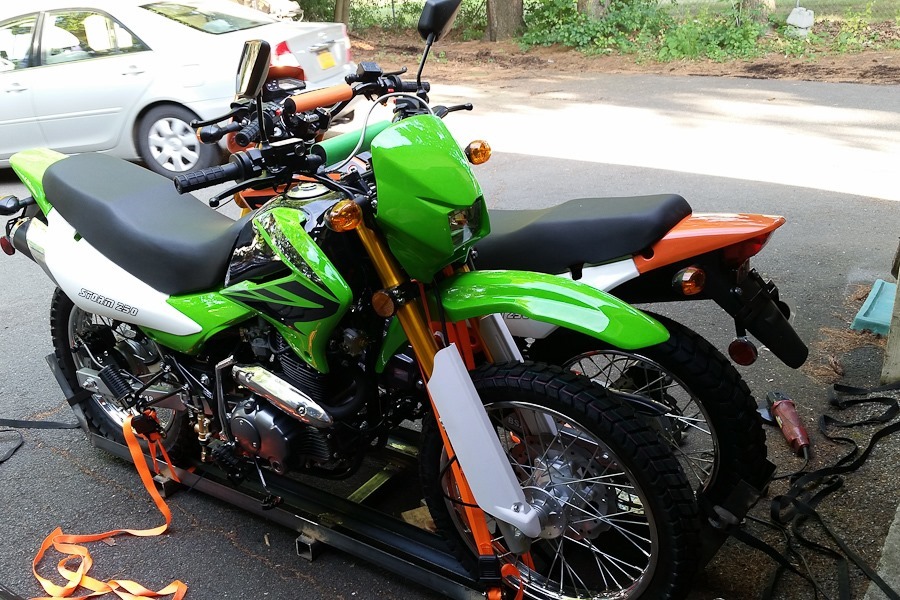
To make our summer trip more interesting, we decided to take along a pair of motorcycles. We purchased a pair of Bashan Storm 250 Dual-Sport motorcycles. We named them Lewis and Clark, so we could say things like “We explored the desert with Lewis and Clark.” They come in a box from China and look like this when assembled:
Of course, we need a way to carry the motorcycles. Ultimately I’d like to convert our 5th wheel into a toy hauler, but for now the quickest solution is to mount them on the front of the truck. I started with a store-bought front hitch receiver:
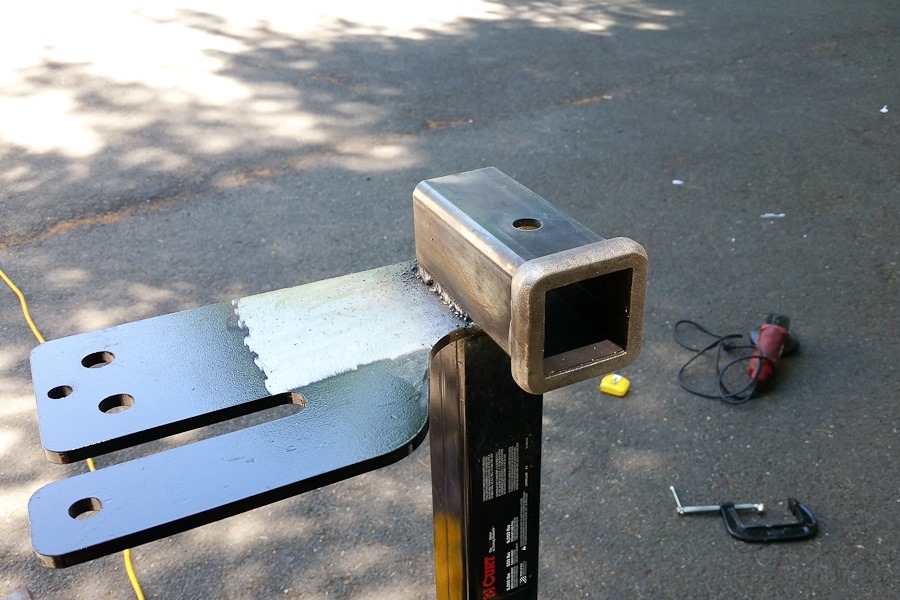
I then welded two more receivers to the bar, one of each end:
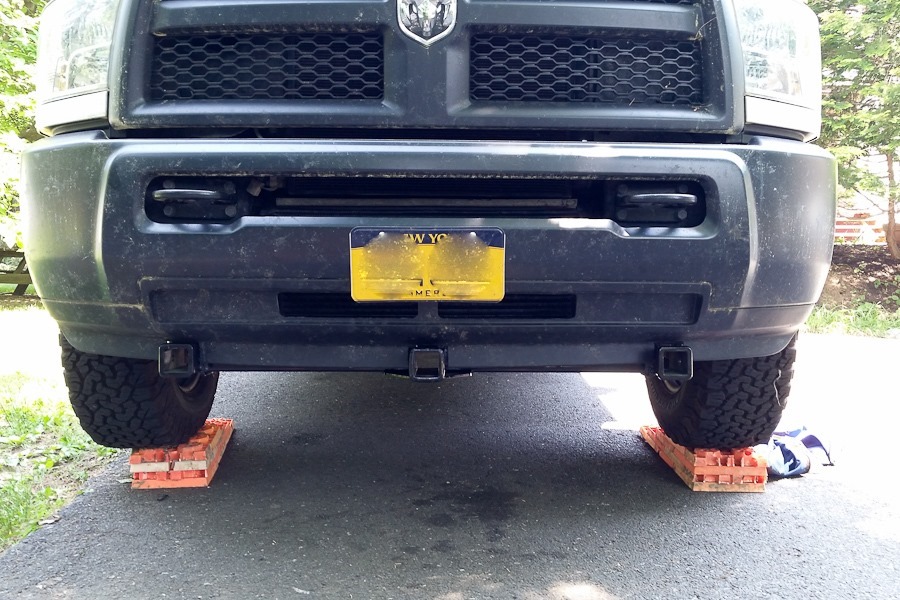
The triple receiver mounted:
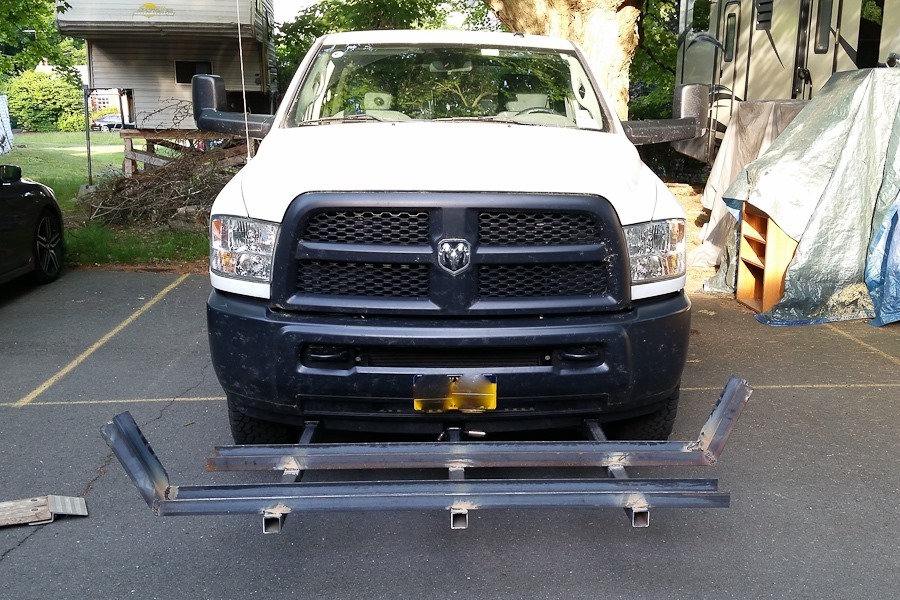
I bought some steel and laid out how I thought the rack would be configured:
We adjusted distances using clamps and tested the fit:
I screwed the rails to be beams and then welded everything together:
I then cut and bent up and welded the end of the rail as a rear wheel holder:
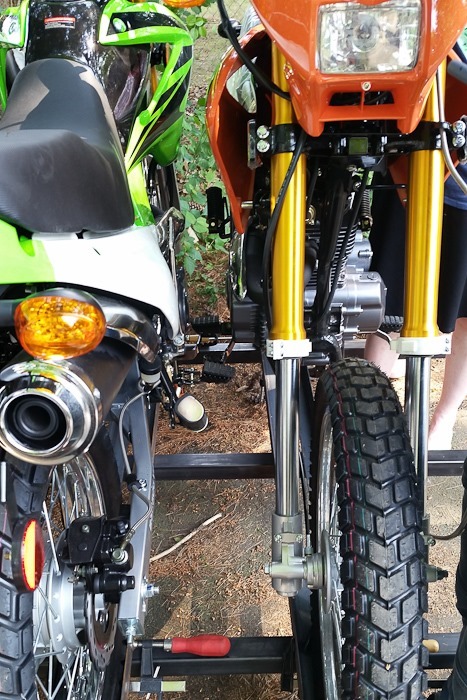
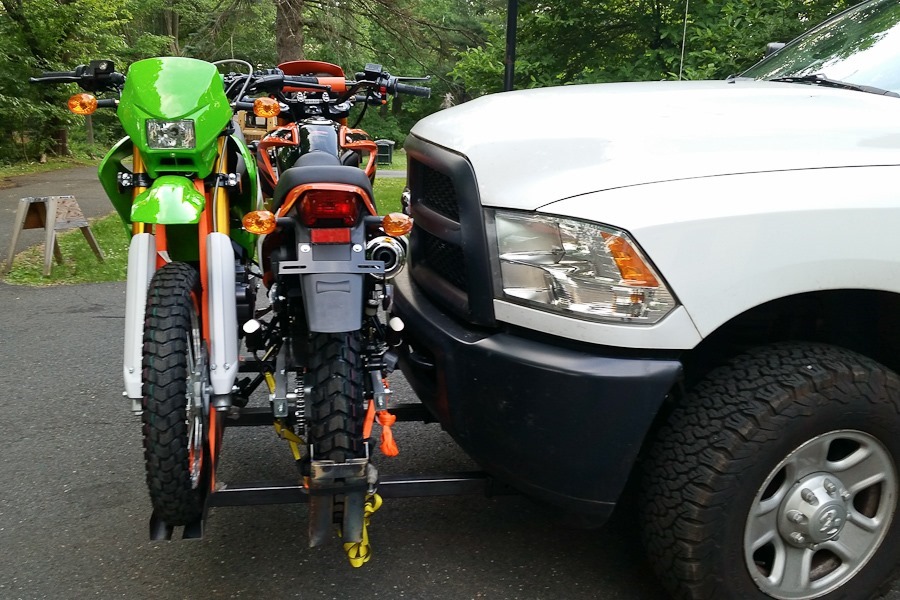
Lewis and Clark on the rack:
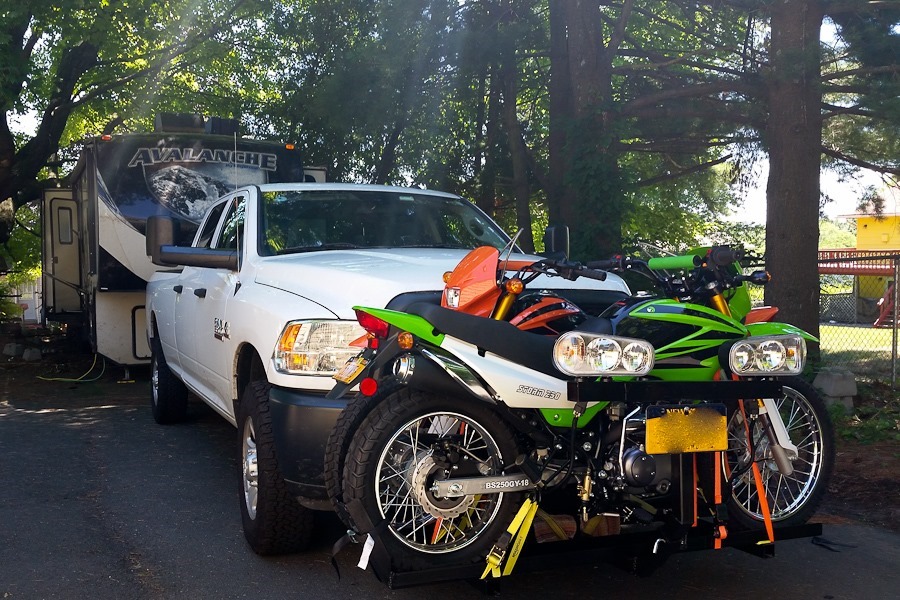
The rack installed:
Since the motorcycles block the truck’s lights, I welded a receiver to the front of the rack and fabricated a light bar using some steel and a snowplow light kit:
I had to remove the truck’s headlights and splice into the wires, then run wiring harnesses out to the light bar. Using toggle switches I mounted under the hood of the truck, I can route power to either the truck’s lights or the snowplow lights:
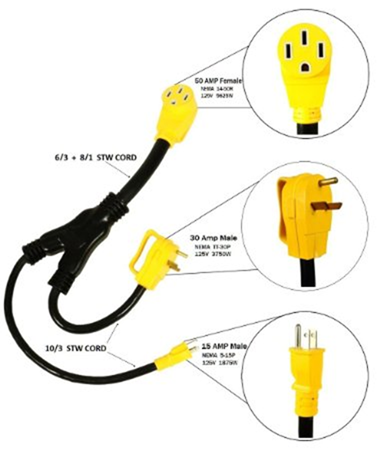
An RV of decent size expects a 4 slot, 50 amp power cable which provides two 50 amp circuits. When driveway camping, most hosts don’t have a 50 amp power connection, so if two circuits are desired (for running two air conditioners, for example) a splitter like this can be used along with a 30 amp to 20 amp adapter to present two 20 amp plugs that can be plugged into two different circuits in the house:
The problem is that most household outdoor plugs have a GFCI in the circuit that looks like this:
The GFCI protects homeowners from shock by insuring that the same amount of current flows back into the neutral return wire as flowed out from the hot wire. If not, it means some of that current is flowing elsewhere, like through a person. When this current imbalance is detected, the GFCI “trips”, and needs to be reset.
Since the RV power system has in its four connector jack two hot lines but only one neutral, using the splitter above won’t work if either 20 amp plug is connected to a GFCI-protected circuit, since the current returning from the two hot lines spills into a common neutral, and is then split by the splitter. Since the current has been “mixed” on the common neutral, the returning current on the then-split neutral will never exactly match the inbound current from the corresponding hot line, so the GFCI will trip. It’s like two parallel rivers: the inflow and outflow on a given river is identical, but if a trench is cut to connect the two rivers, the inflow and outflow on each river won’t match since one river donated a bit of its inflow to the other river’s outflow through the trench.
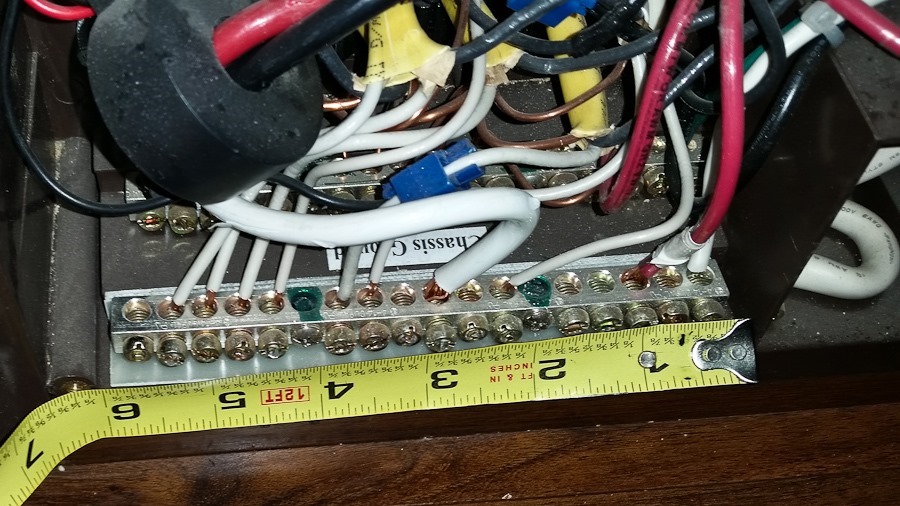
The solution is to split the neutral, so that each of the RV’s two circuits is completely separated from the other. Here’s the common, single neutral bar in the RV’s breaker box:
I removed the neutral bar and installed two separate neutral bars:
Since the neutral from the RV’s four pin connector now only serves the right side of the breaker box, I brought an extension cord in, cut off the female end, and wired it in on the left side of the breaker box to supply power for the left side. I did the same thing on the right side too, so the right side can receive power from the big 50 amp connector on the back of the RV or through its new 20 amp extension cord. The right side can also receive power from the inverter I wired in a while back, so the three breakers that can provide power have been colored to insure I only turn one on at a time. I also added a second meter so I can repay our hosts for the power used on both circuits:
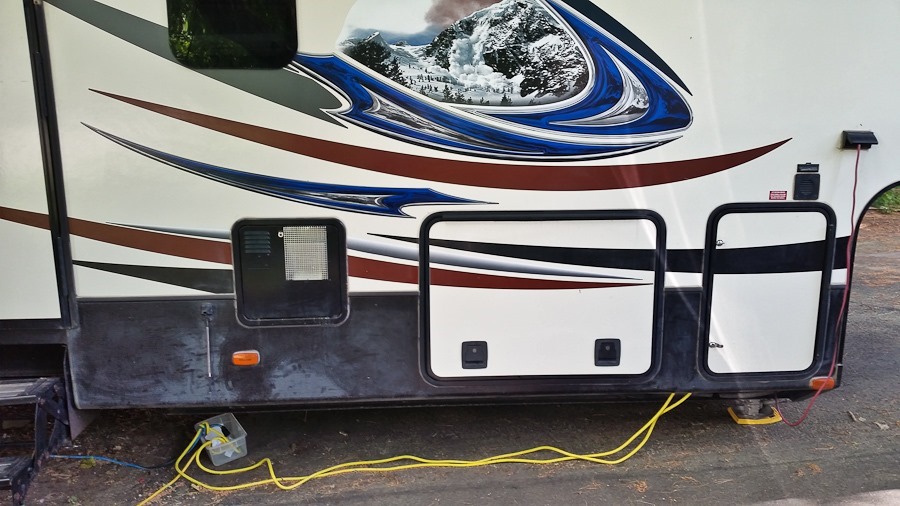
The new pair of 20 amp power cords come out through the bottom of a compartment. In the plastic tub they’re plugged into a pair of extension cords that lead to the house:
Until now, the common neutral problem has limited us to one 20 amp circuit when driveway camping, which can be uncomfortable in hot weather since an RV this large needs both air conditioners to keep it cool. I’m happy to have finally broken free of this limitation!
Shabbos was just a bit on the hot side of comfortable, with highs in the high 80s. We had lunch with Rabbi and Mrs. H and their children, which is always a pleasure!
Today we moved back to my parents’ house from the synagogue. This will use up the last 24 hours of the 72 hours per month we’re allowed to be parked in front of their house, so tomorrow we will have to move on.
Today’s project was to replace the RV range with a residential range. Our current oven is about the size of a microwave oven, and Trish could really use more space for cooking more elaborate Shabbos and holiday meals. Here’s what we started with:
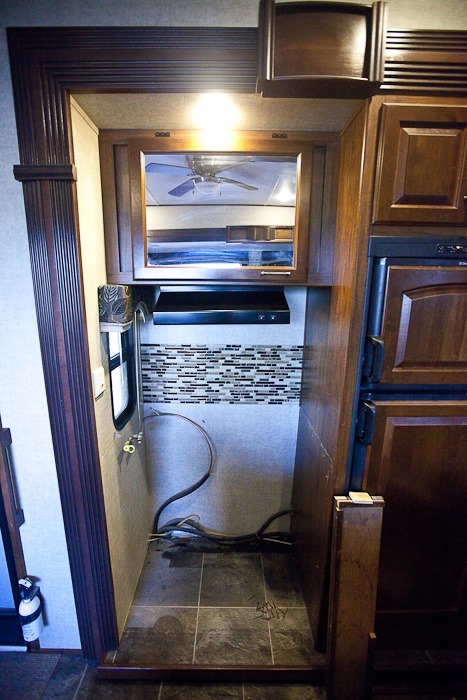
The first step was to remove the range:
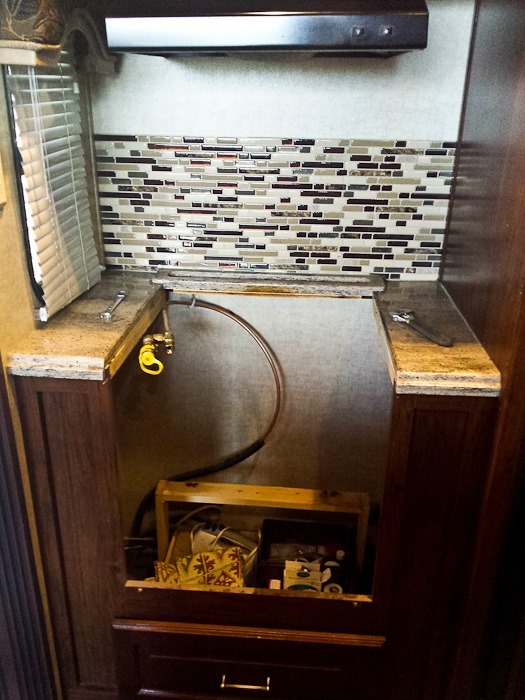
Next I removed the cabinetry and countertop around the range, leaving a 34” wide alcove for the new range:
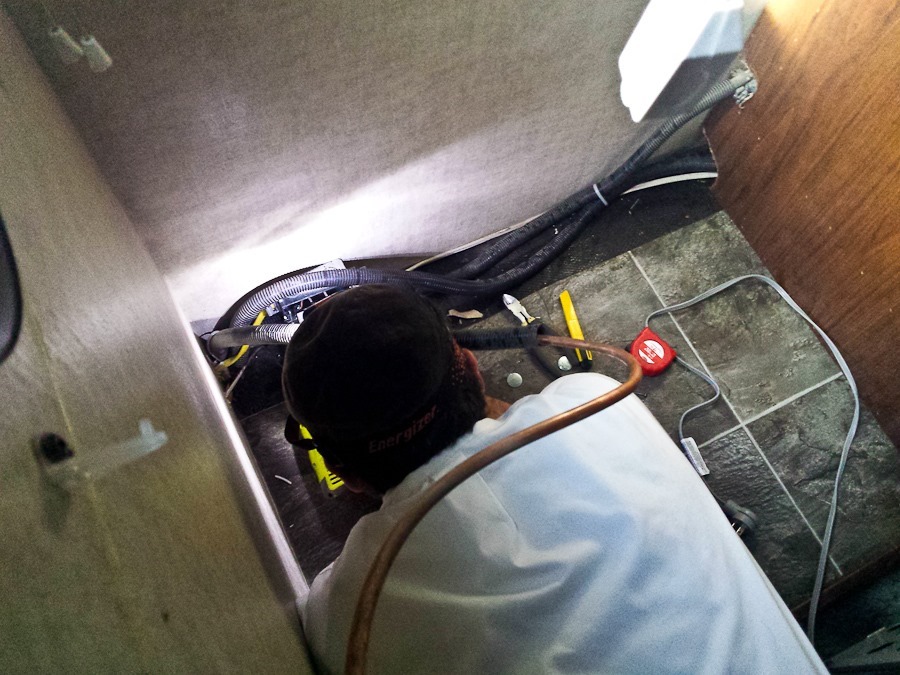
Next I added an outlet for the residential range and modified the propane plumbing to attach to the new range while preserving the quick release propane connector for our catalytic heater:
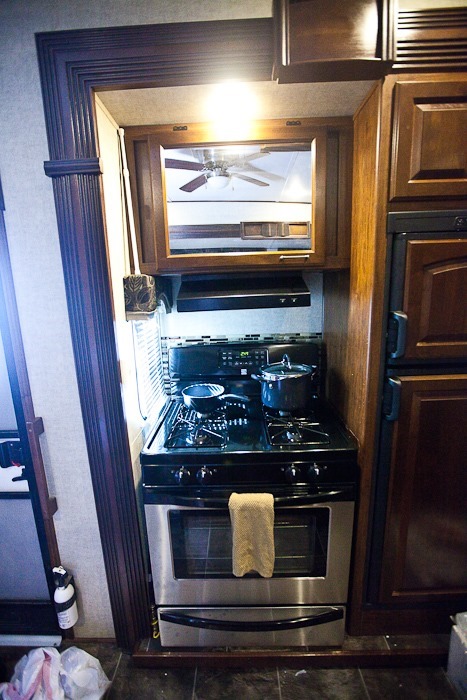
After replacing the natural gas orifices in the cooktop and making a few other adjustments in the oven, the new range was ready to run on propane instead of natural gas. After attaching the propane line and plugging into the new outlet, the new range is ready to go:
The only down side is that the oven seems to keep the 400-watt electric igniter on whenever the oven is heating (as opposed to turning off once the gas is ignited), so we will have to be careful not to use the oven for several hours when the solar system isn’t charging the battery.























 Facebook
 Instagram
 Email
Email