We stopped at the gas station in Coldfoot before driving back down the Dalton Highway to Fairbanks. The Post Office here is only open 3 days a week for four and a half hours:
We stopped by the interagency visitor center in Coldfoot, the largest building here. The kids received their Junior Ranger badges for Gates of the Arctic National Park which we passed yesterday on our drive up to Deadhorse:
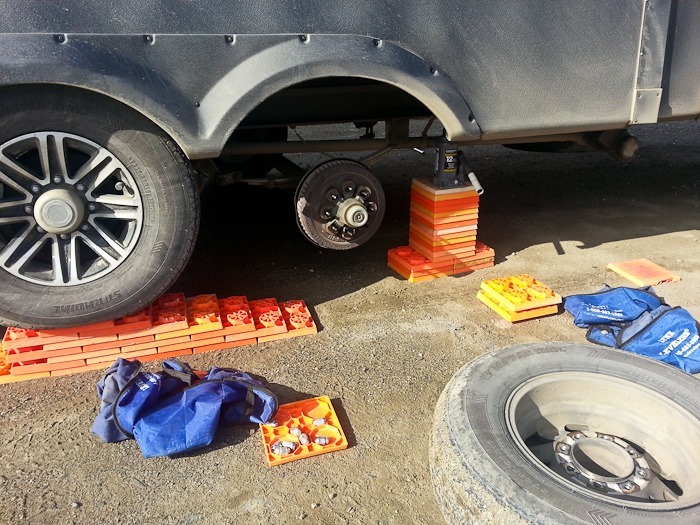
On the way back to Fairbanks we had a flat tire. I changed it at Gobbler’s Knob. The nice thing about dual axle RVs is that the good tire can be driven up onto a ramp which lifts the flat tire off the ground. I did still have to use the jack to finish the job:
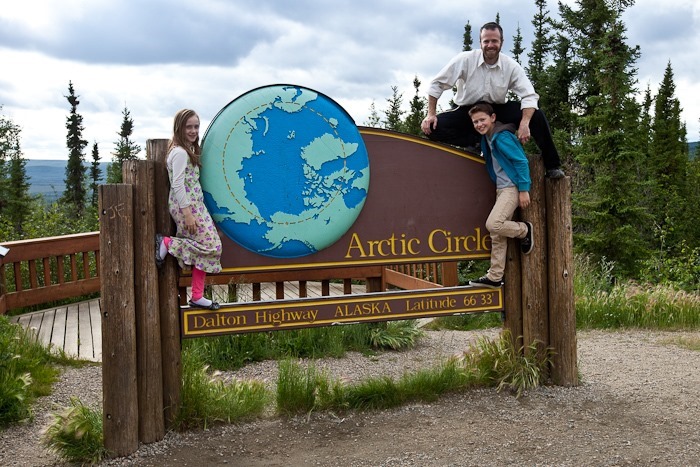
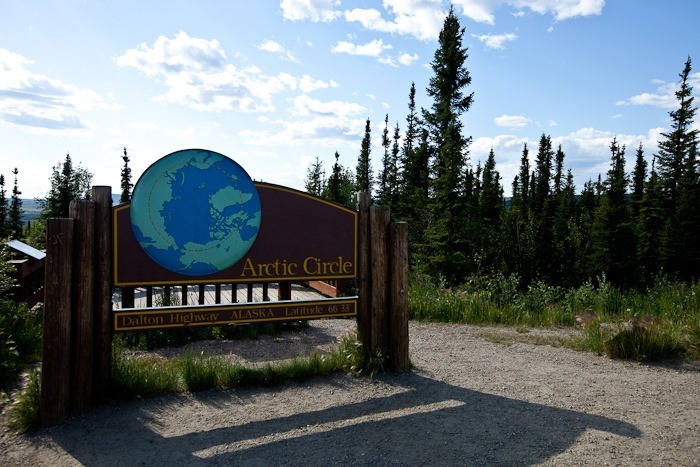
We stopped again at the artic circle wayside for a photo:
Looking North towards Coldfoot:
Crossing the Yukon River:
We arrived back at the Lowe’s in Fairbanks a little bit after midnight. See the trip map for driving details and our current location.
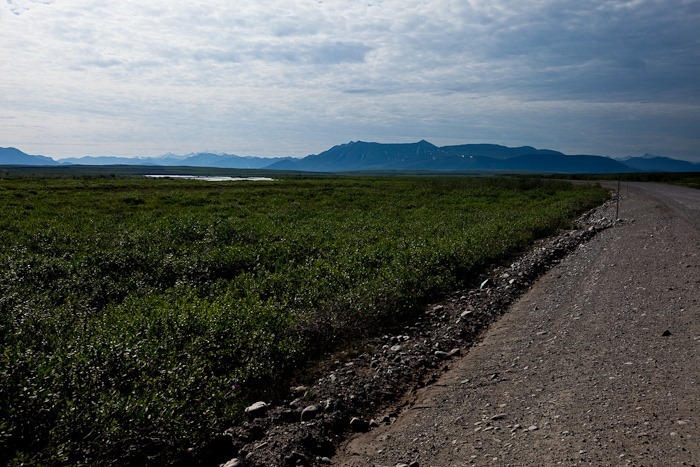
As planned, we left the RV at Marion Campground in Coldfoot at 7:30AM and drove North towards Deadhorse. The Brooks Range rises up between us and the Arctic Ocean:
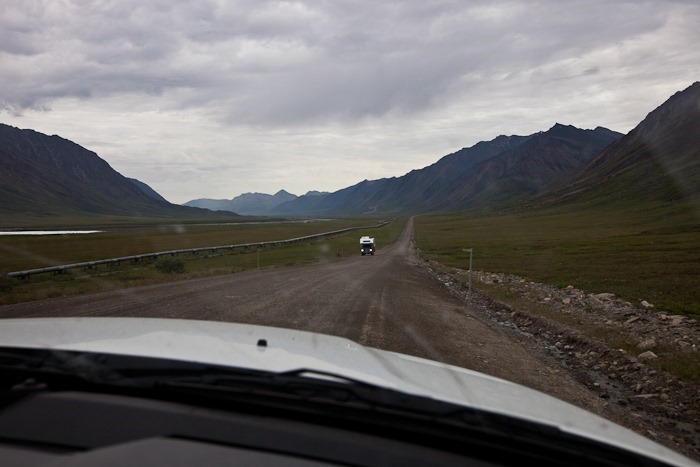
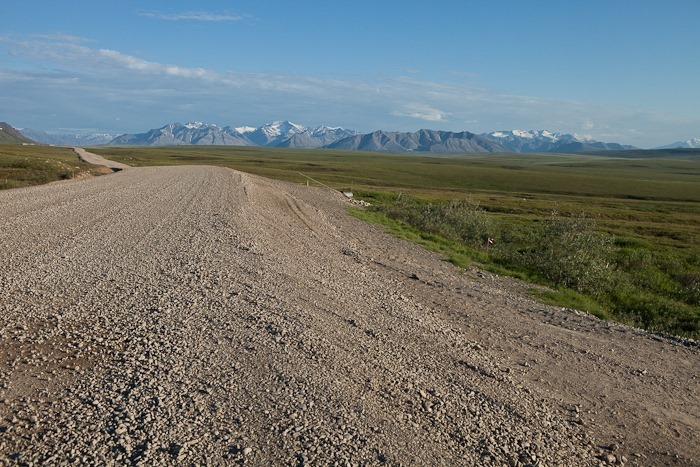
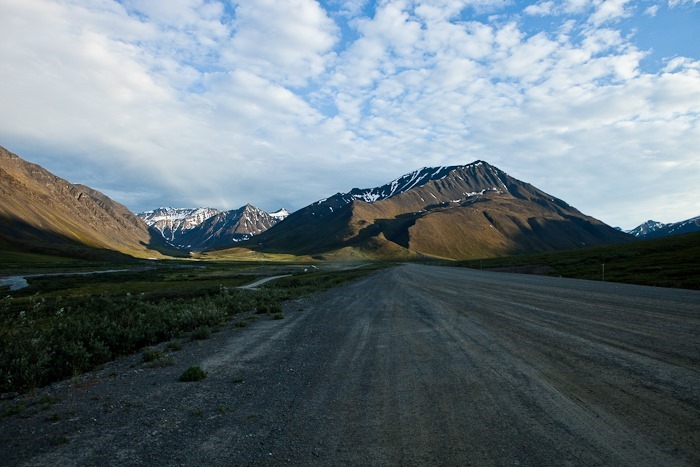
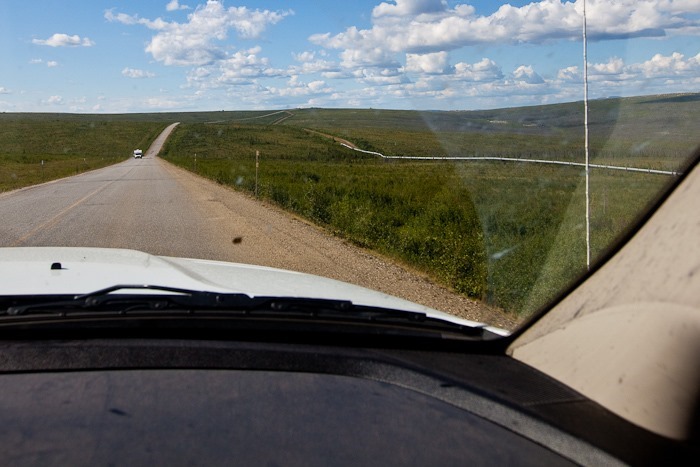
The road quickly turned to gravel, as it would be for nearly the entire drive. It’s a lonely road:
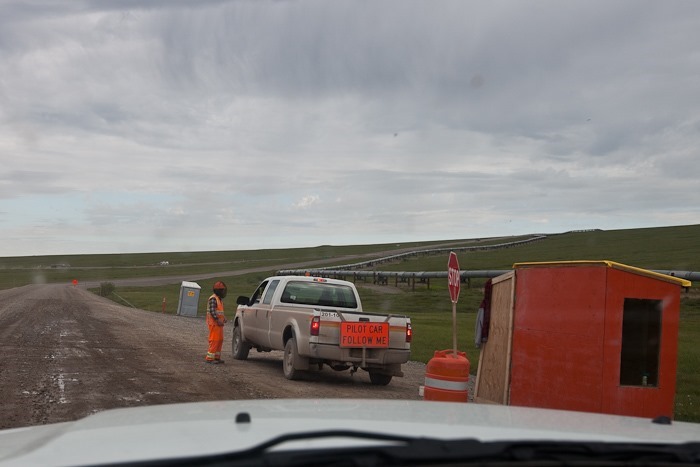
We had to wait for road construction at the turnoff for Galbraith Lake. Notice the mosquito netting on the flagger’s head. Like in Coldfoot, the mosquitos here in the boggy tundra are insanely plentiful. The flagger easily had 100 mosquitos crawling all over his head net.
Looking back after crossing the Brooks Range:
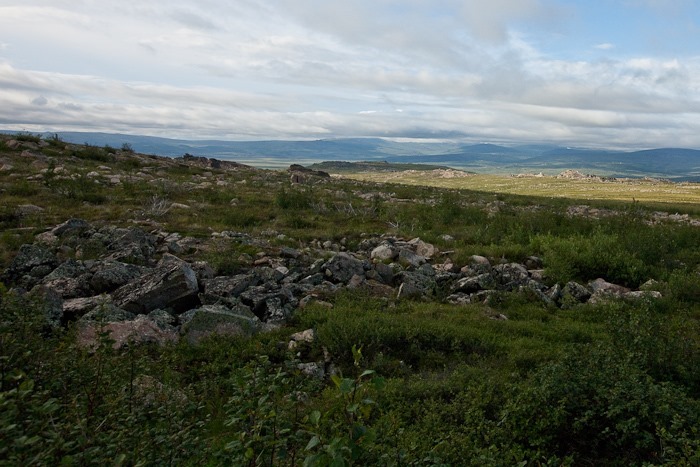
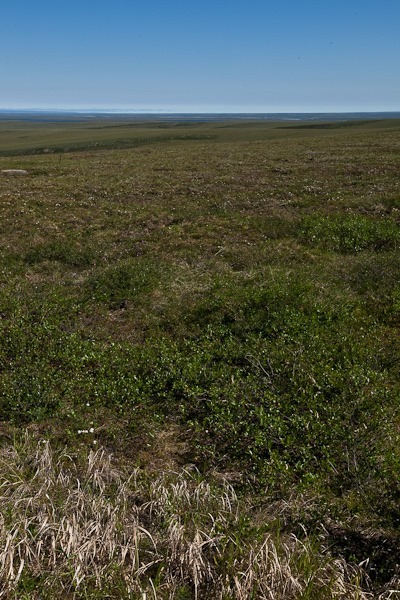
The last 100 miles to the Arctic Ocean are soggy tundra with no plants taller than a foot or so:
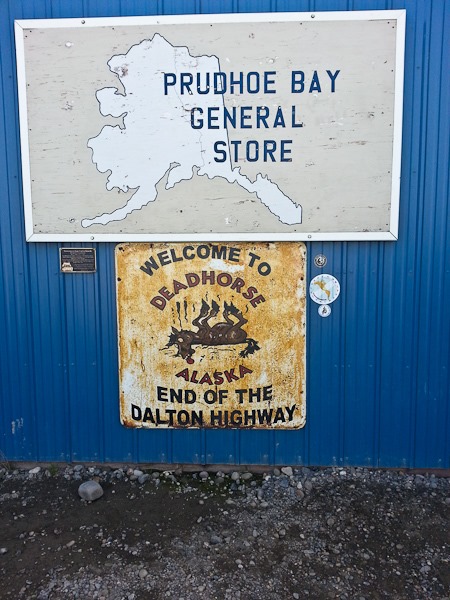
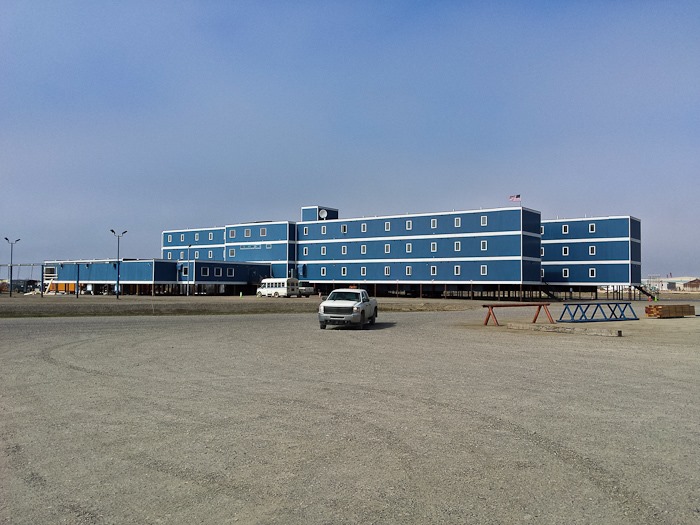
At last we reached Deadhorse after six hours of driving. It’s a town like no other, with a handful of permanent residents and thousands of oil workers working a two weeks on, two weeks off schedule:
There are no parks and no schools. The “roads” are all gravel, and buildings, cobbled together from shipping container-sized sections brought in on trucks, are built on stilts to avoid melting the permafrost which would cause the buildings to collapse:
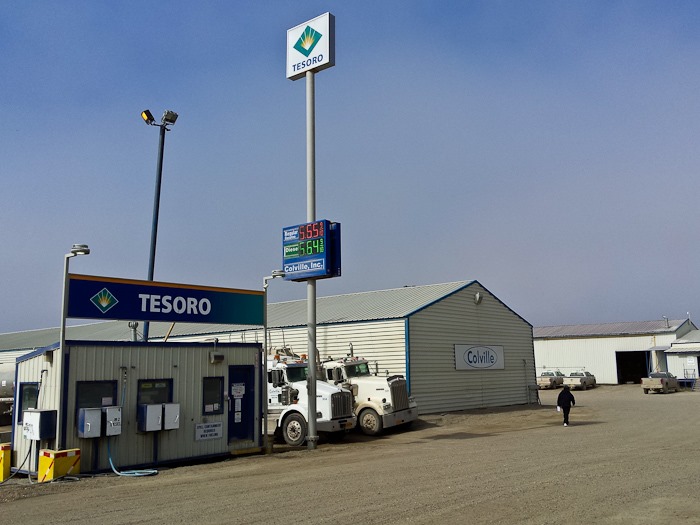
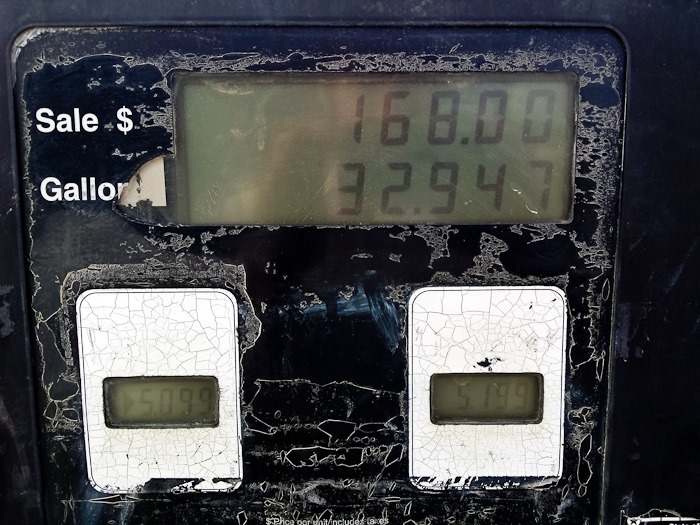
There’s no refining at Deadhorse. The oil flows 800 miles to Valdez, where it’s refined and brought back using tanker trucks. That explains the price; diesel was $4.15 in Fairbanks, $5.10 in Coldfoot, and $5.65 in Deadhorse:
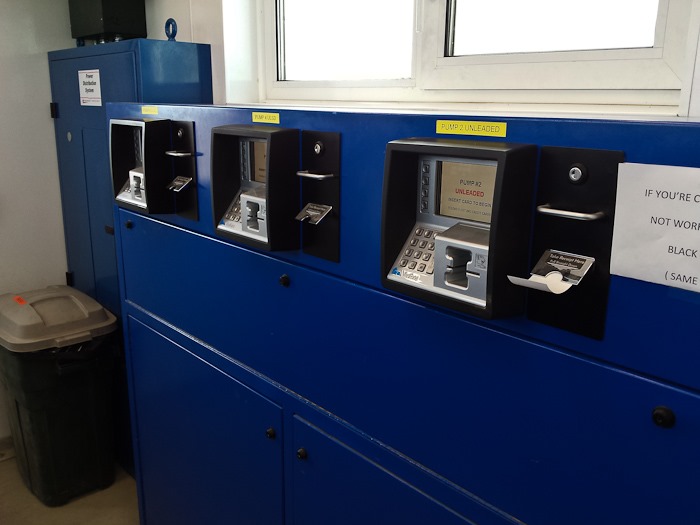
Perhaps because of the cold, the payment half of the pump is inside a building, and each pump is behind a roll-up steel door:
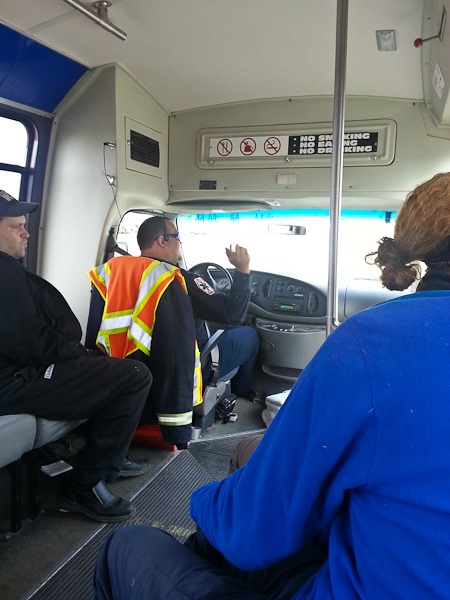
We boarded the tour shuttle bus that would take us North from Deadhorse into the restricted security zone on Prudhoe Bay and on to the shores of the Arctic Ocean. We had to sign up 24 hours in advance to allow time for background checks, and had to present ID to board the bus:
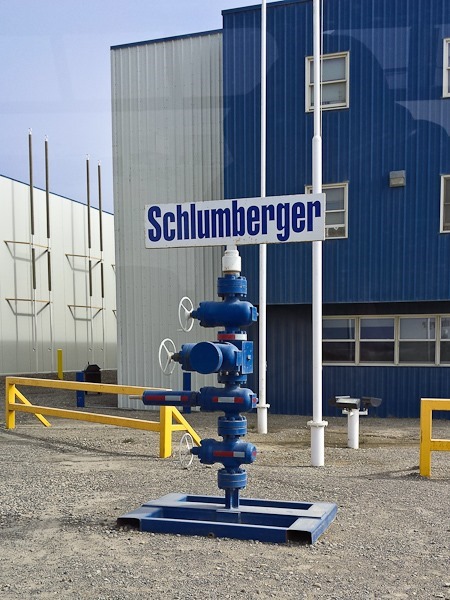
Schlumberger, manufacturer of fine oil well head pressure valves:
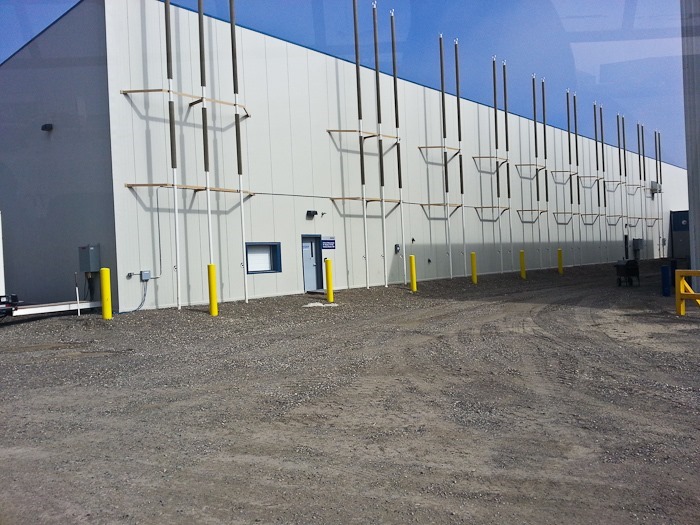
Like the Alyeska Pipeline, this building has foundation cooling towers to keep the permafrost from melting:
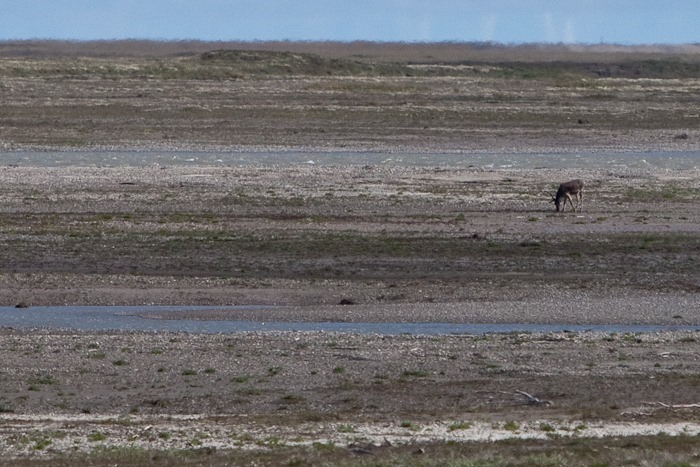
Out on the tundra, we spotted a lone caribou:
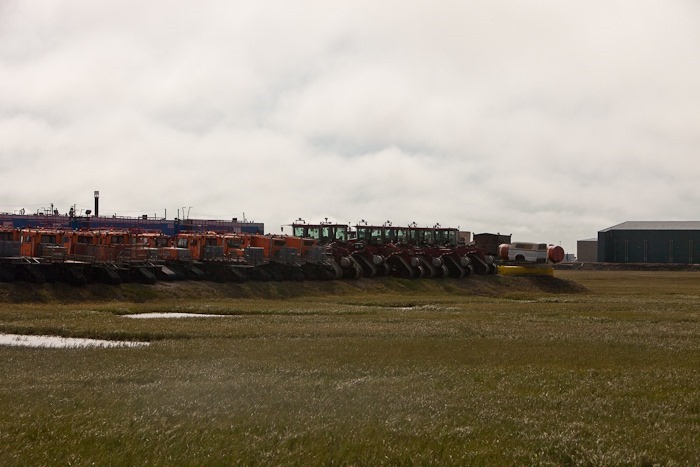
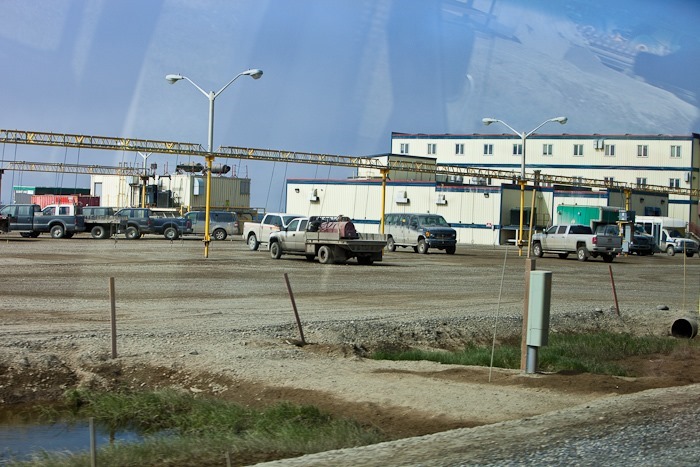
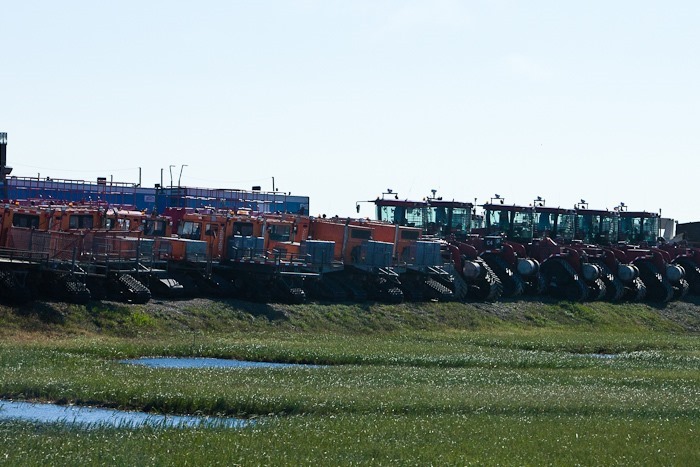
Still in town, we passed stockpiles of vehicles and machinery to support the oil fields. 4% of US oil is produced here at the largest oil field in North America:
The yellow “rail” supports extension cords that hang down. Drivers plug in their cars to keep the oil pan and battery warm so that the vehicles can be started during the winter when temperatures can plunge below –60 degrees. The coldest wind chill recorded in Deadhorse was –102 degrees:
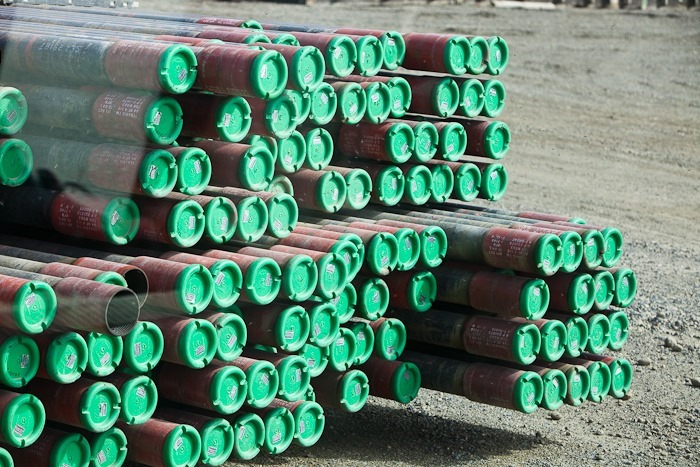
Oil drilling pipe sections:
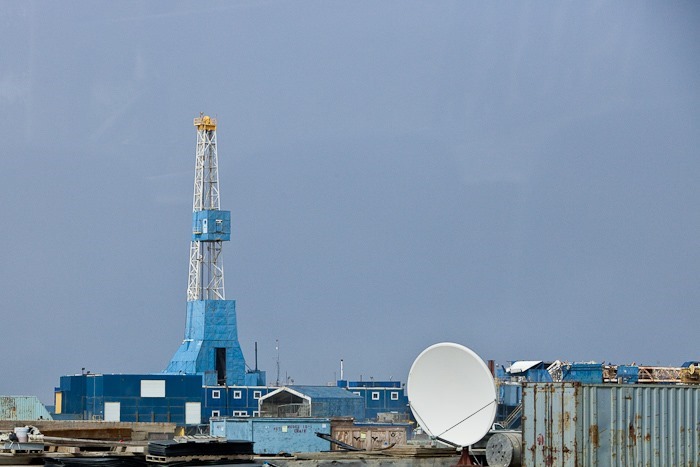
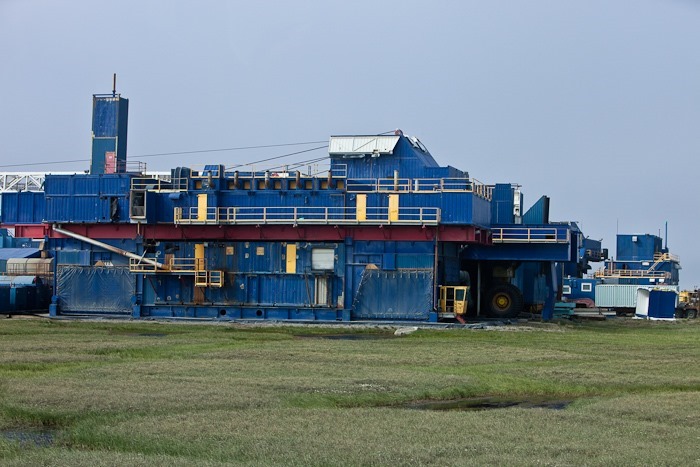
A movable oil derrick:
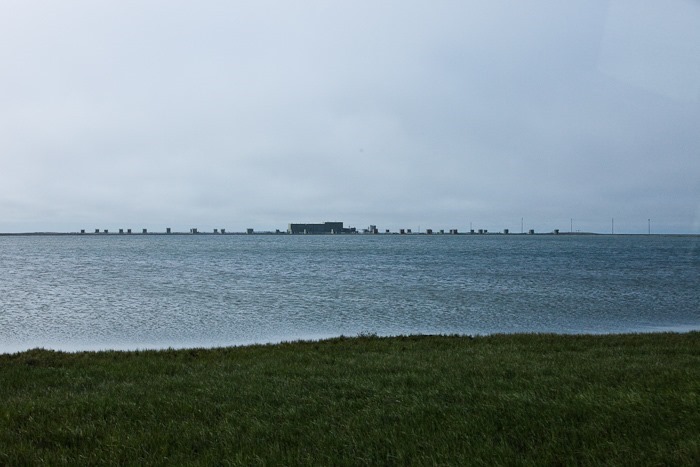
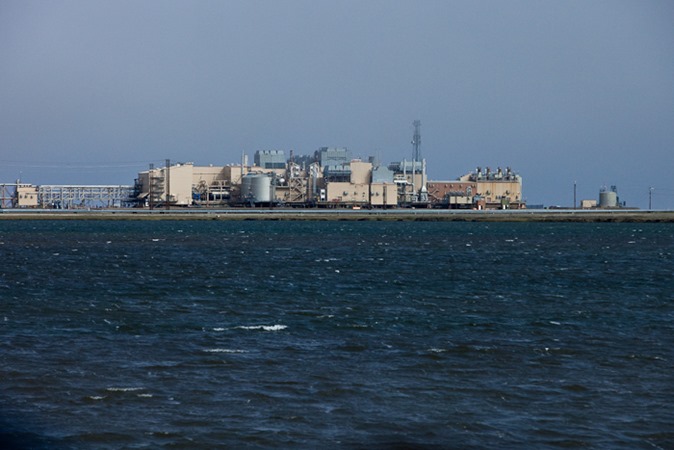
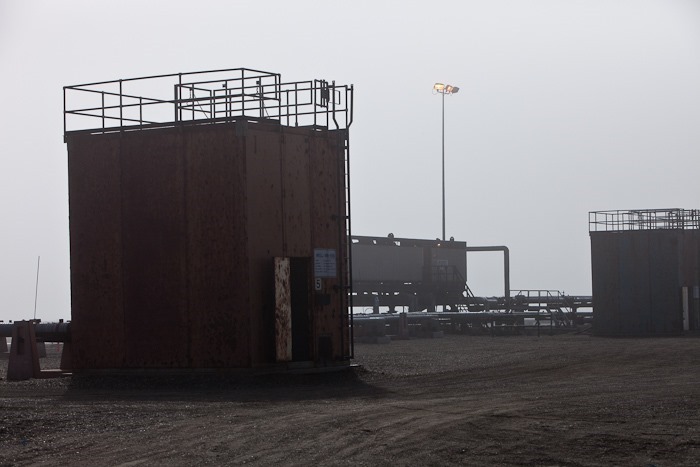
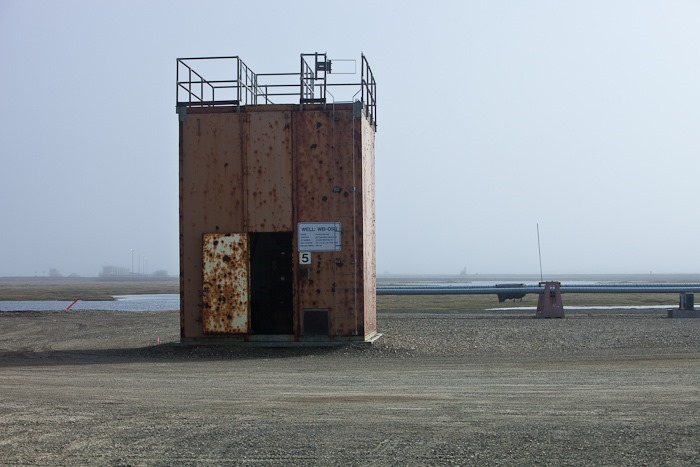
In the distance, well heads live in the square boxes. The water, oil and natural gas slurry drawn from 9,000 feet below the surface is routed to the large building:
The oil derrick is a giant vehicle with 12 foot-high wheels, covered by the tarps at the lower corners of the derrick. The pilothouse and front swivel wheels can be seen on the right:
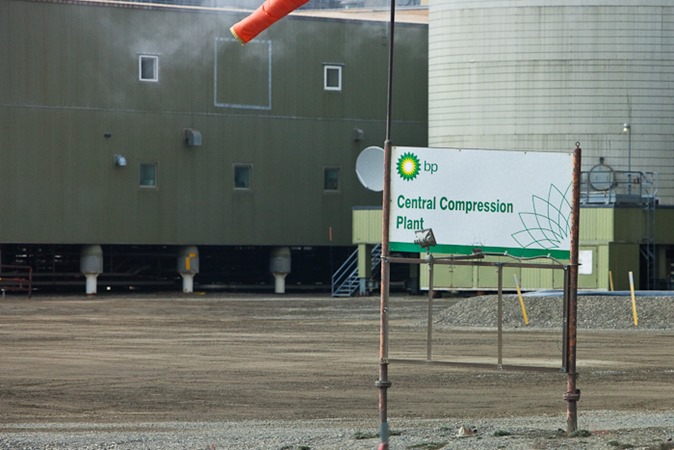
There are dozens of plants scattered over the tundra:
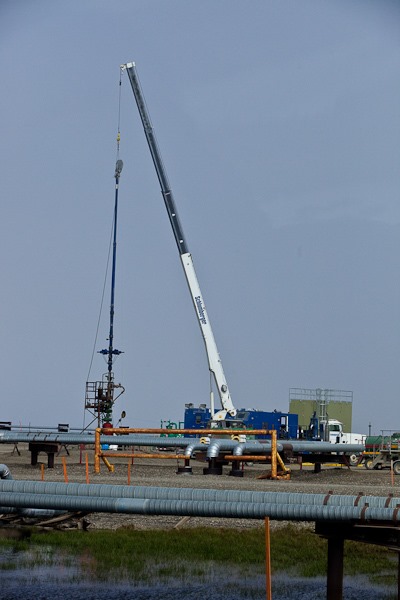
Here a well head is being serviced:
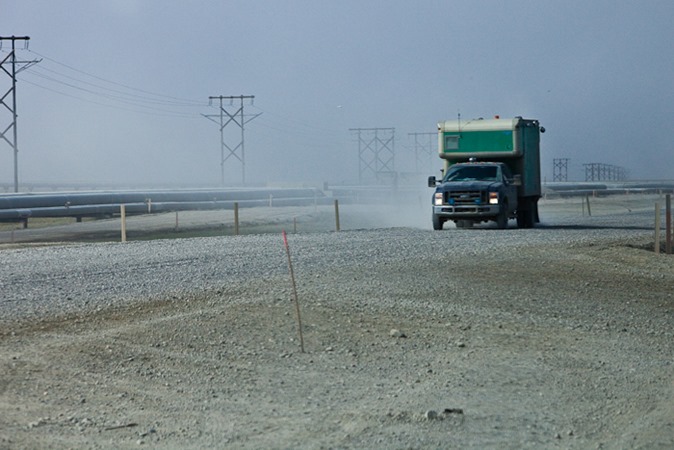
The whole area is bleak and the air is filled with dust from the roads:
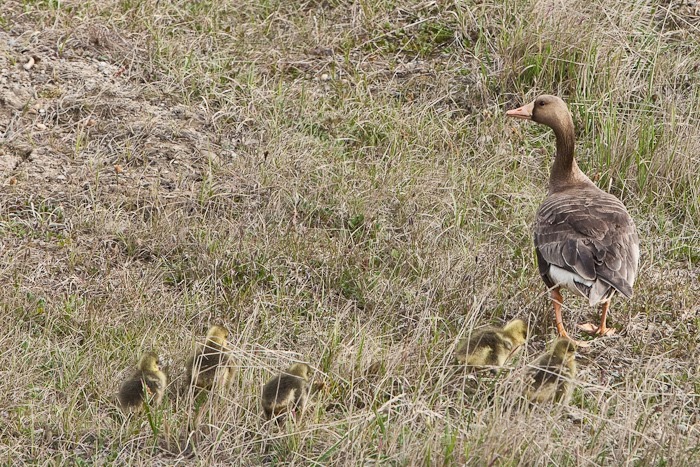
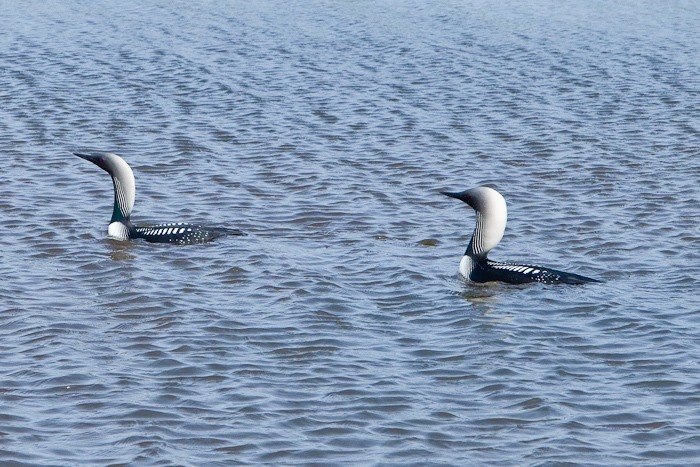
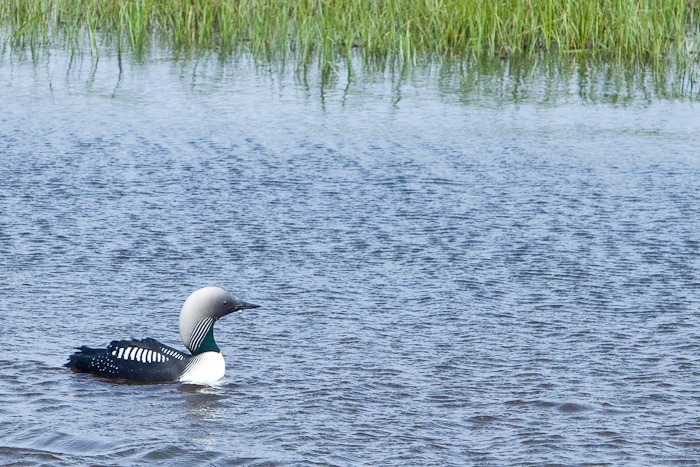
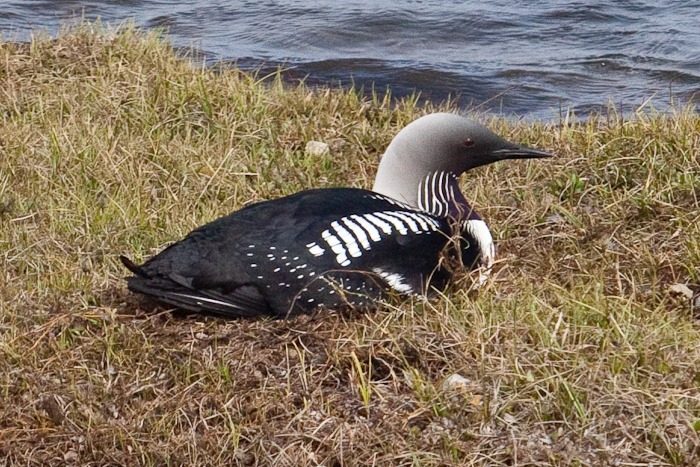
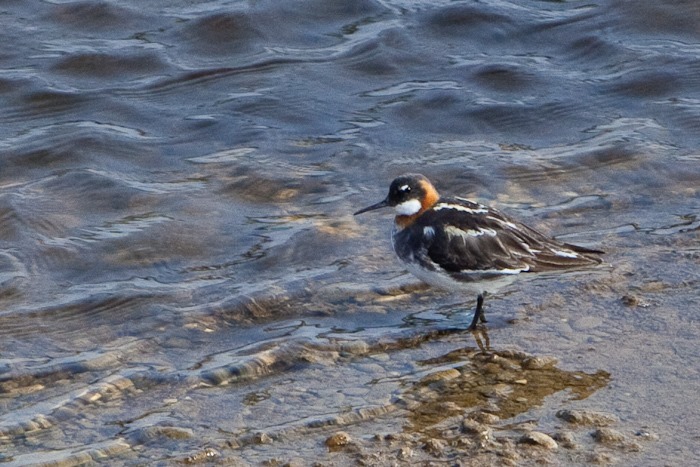
We saw quite a bit of wildlife:
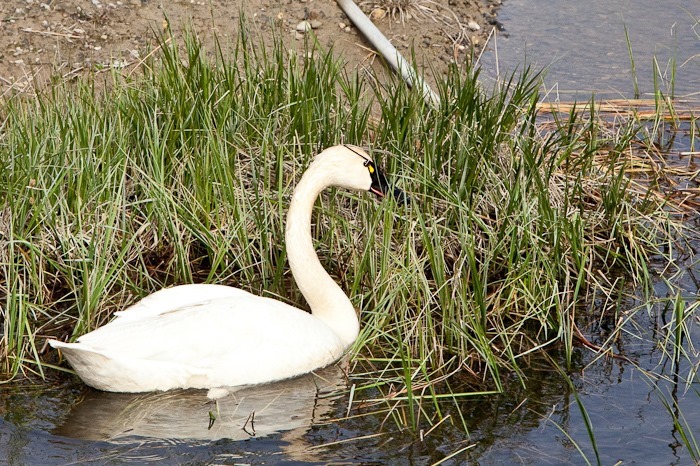
The loons were out swimming:
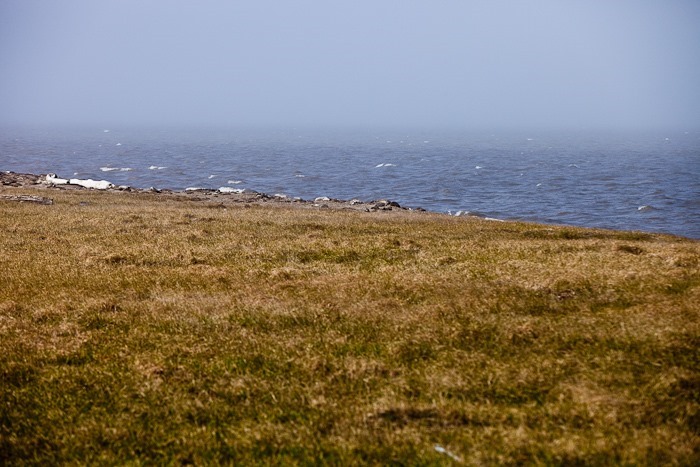
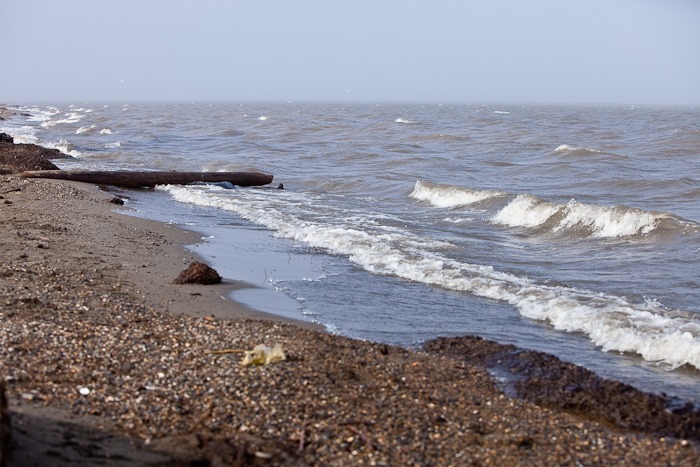
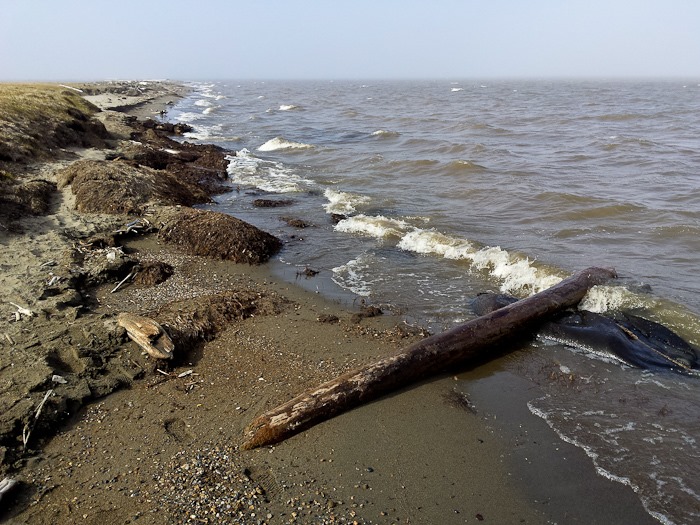
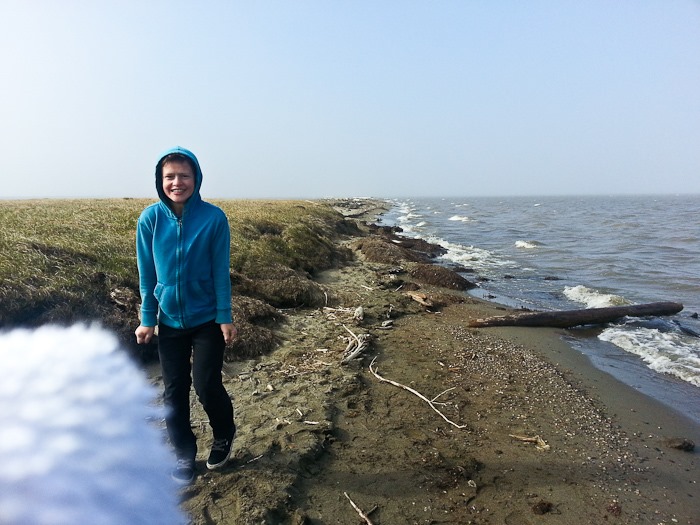
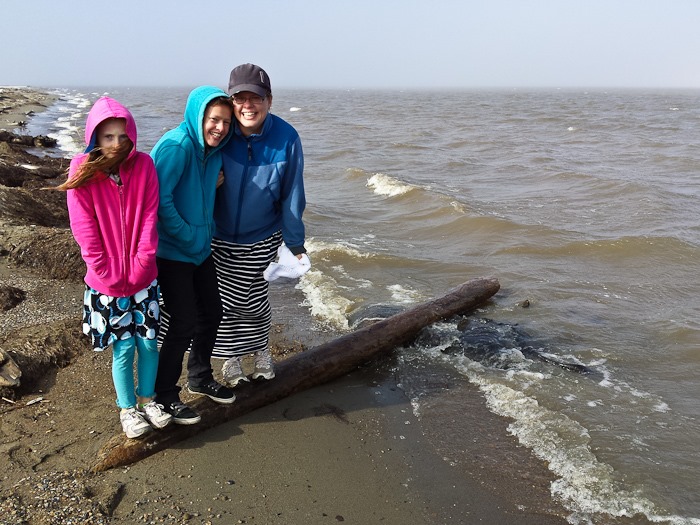
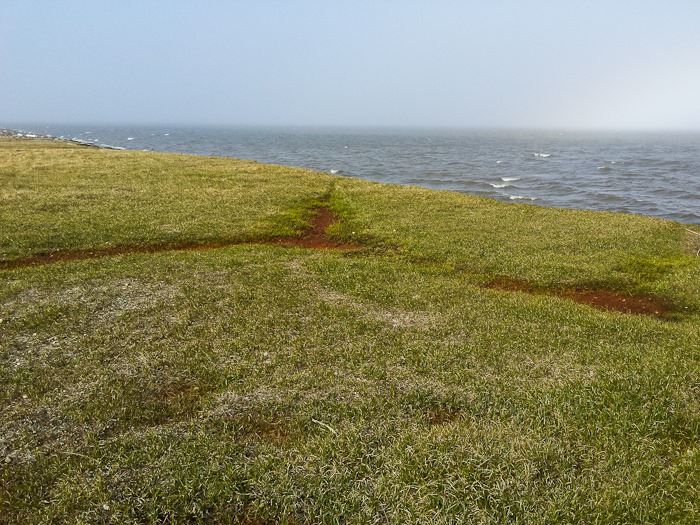
At last we reached the coast of the Artic Ocean. The ice had only broken up a few weeks ago, so the water was still 32 degrees, and the wind blowing in off the ocean was about that cold too. As a result it was pretty foggy:
I can’t count how many times I’ve looked at the map and wondered what it would be like standing at 70 degrees latitude, looking North where only 1,200 miles distant lays the North Pole. I’m very excited to be here!
Yes, it’s really cold:
The freeze thaw cycle of the surface soil causes polygonal mounts to form in a pattern similar to the shell of a turtle:
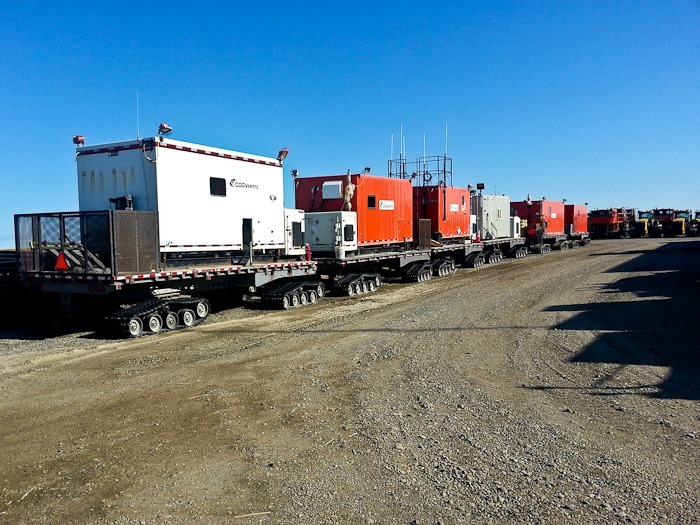
Office space on tank tracks:
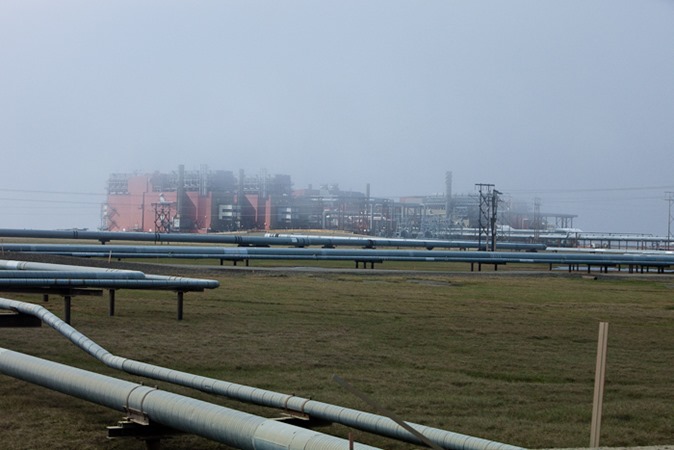
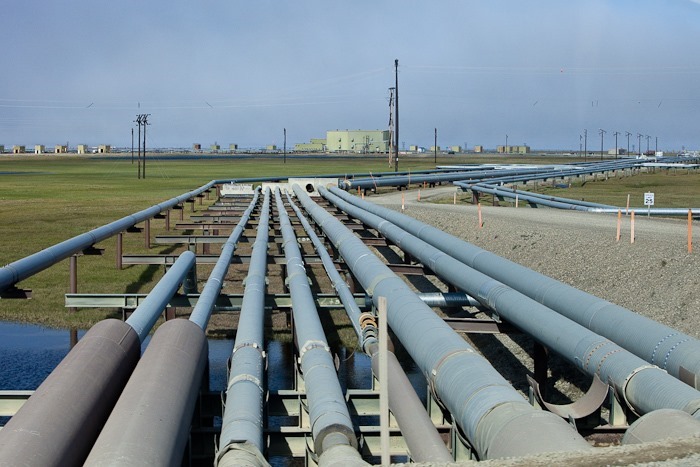
So many pipes, about 2,000 miles worth in Deadhorse alone:
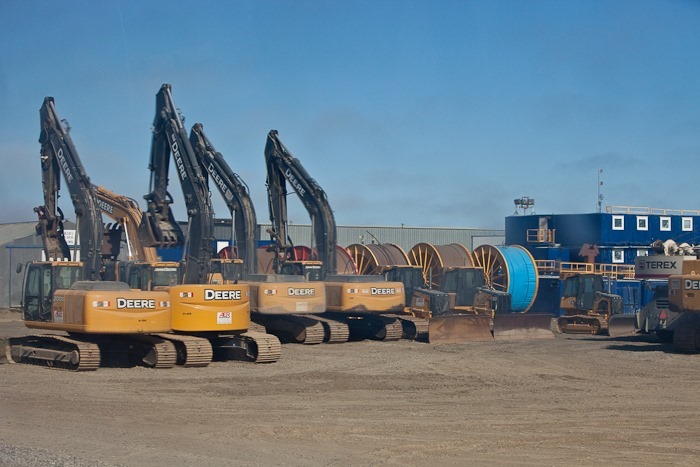
The investment in equipment and vehicles is staggering:
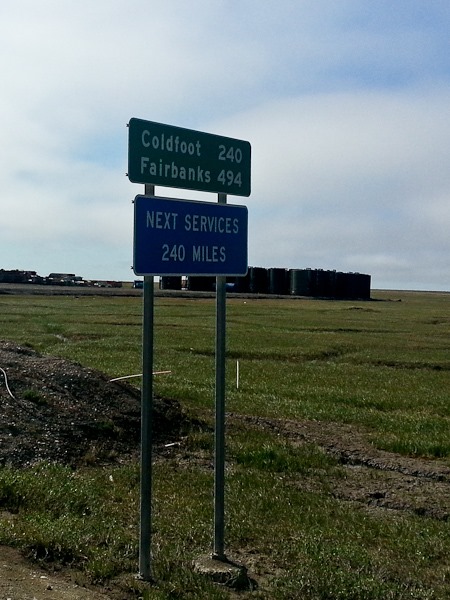
After our tour wrapped up, we started back South towards Coldfoot a little bit after 6pm. Glad we filled up here:
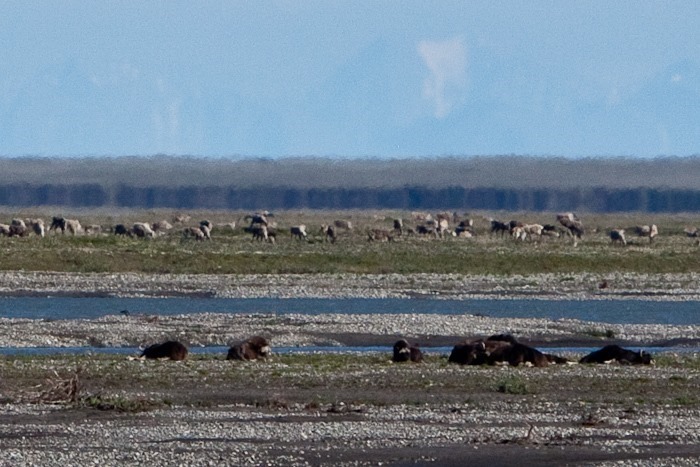
Across the tundra, a herd of caribou are the backdrop for a herd of musk oxen:
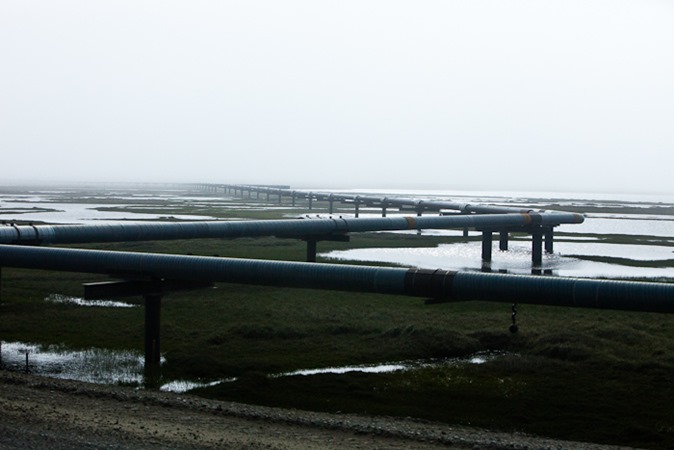
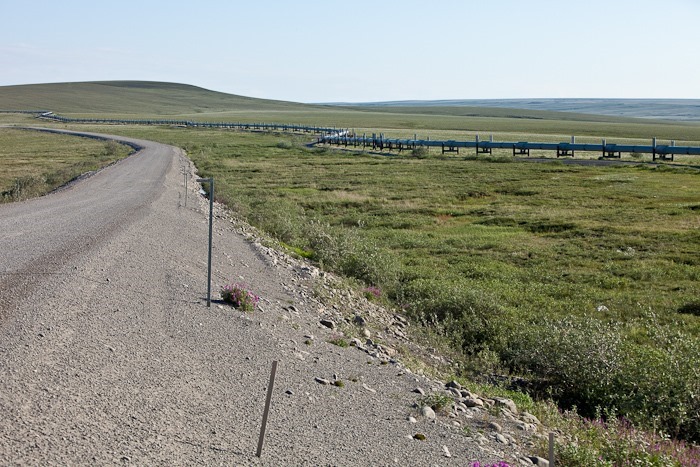
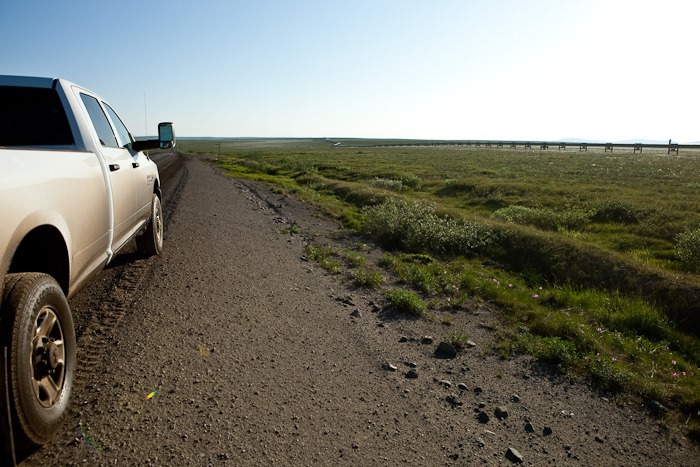
The pipeline keeps us company on our return drive:
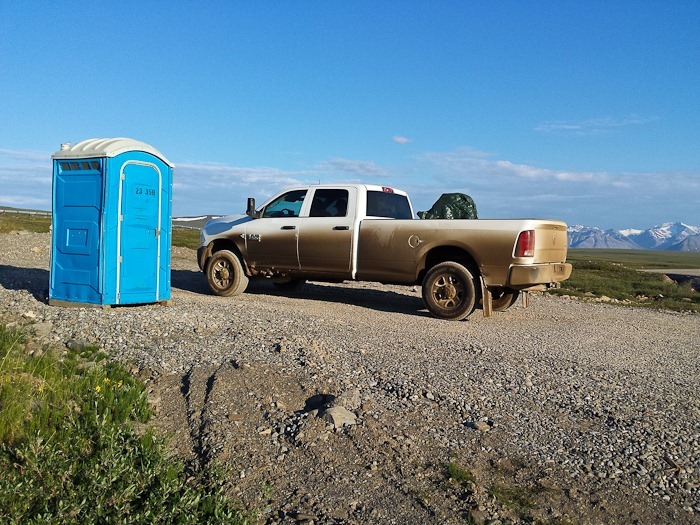
So much for our clean truck. This is the only restroom between Deadhorse and Coldfoot:
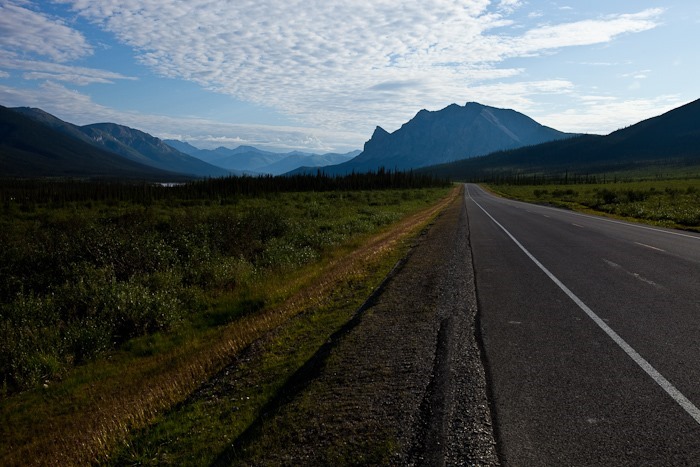
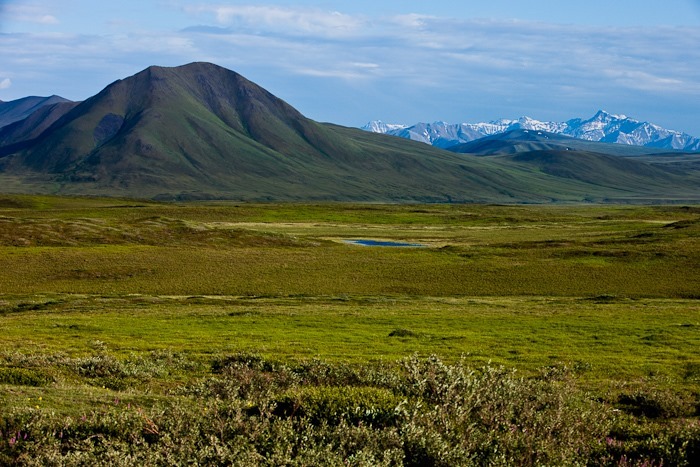
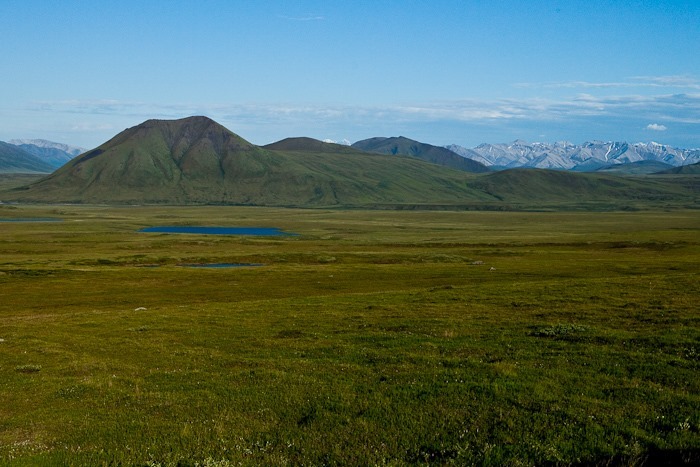
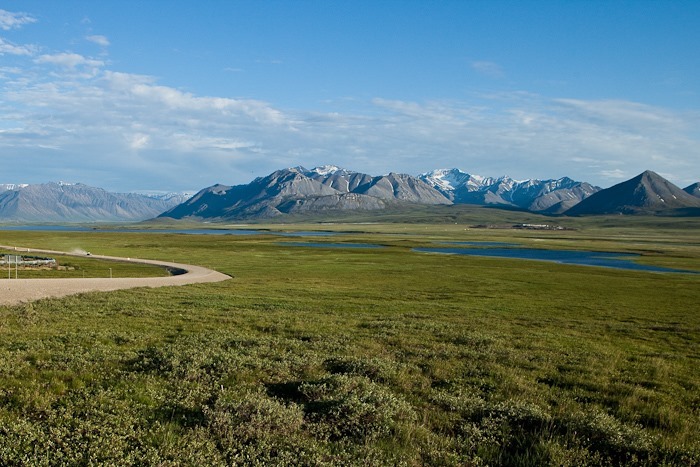
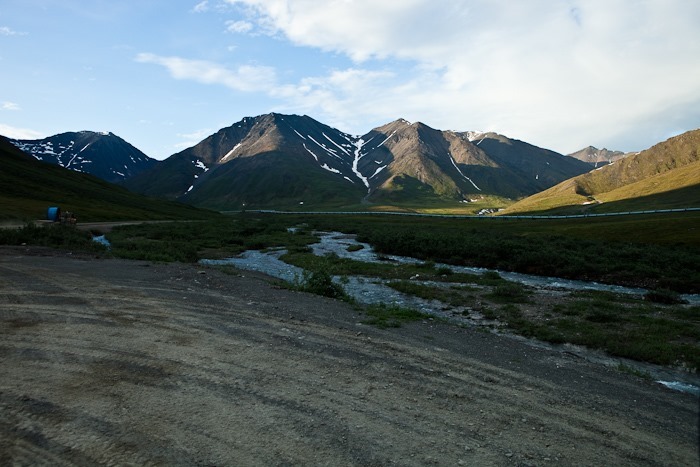
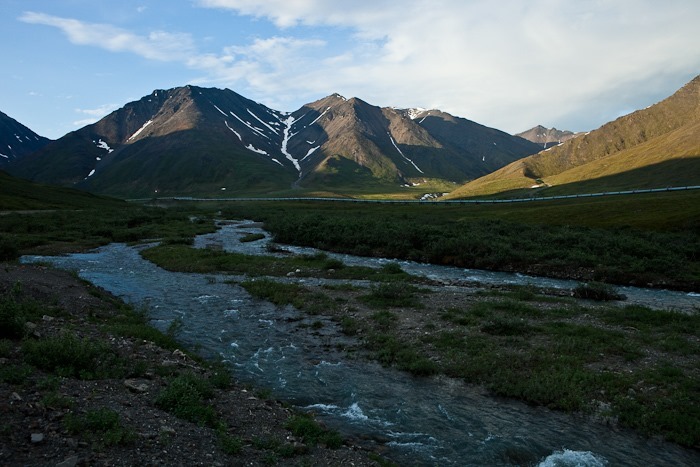
The tundra provides a lush foreground for the Brooks Range:
Ground water can’t soak down more than a foot or so due to the permafrost below, so the tundra is spongy and wet, despite the fact that the North Slope is technically a desert, receiving less than 5 inches of precipitation a year:
We approached the Brooks Range:
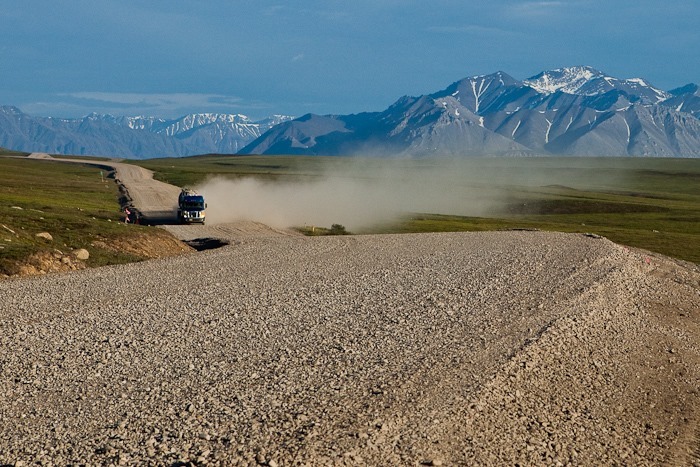
Fast-moving trucks like these threw rocks into our windshield, causing two chips in the glass that will need fixing:
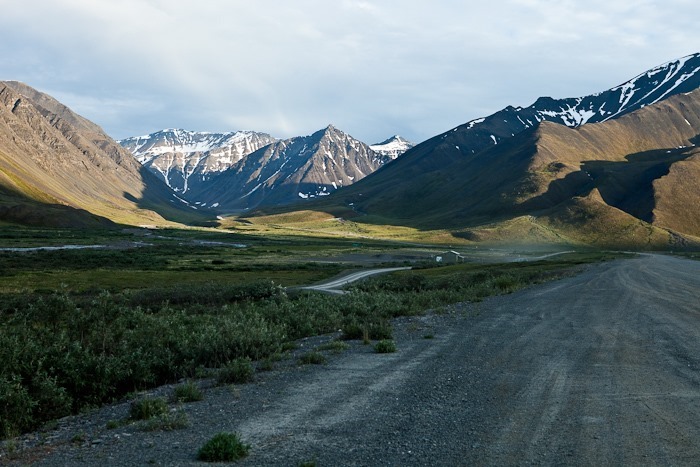
Leading up to the pass over the Brooks Range:
Looking back towards the pass after crossing it:
We arrived back at the RV shortly before midnight. We are above the arctic circle, so the sun is still up and probably won’t go down for another couple of weeks.
We did it! We visited the top of North America, at a latitude well North of Iceland and at about the midpoint of Greenland. See the trip map for driving details and our current location.
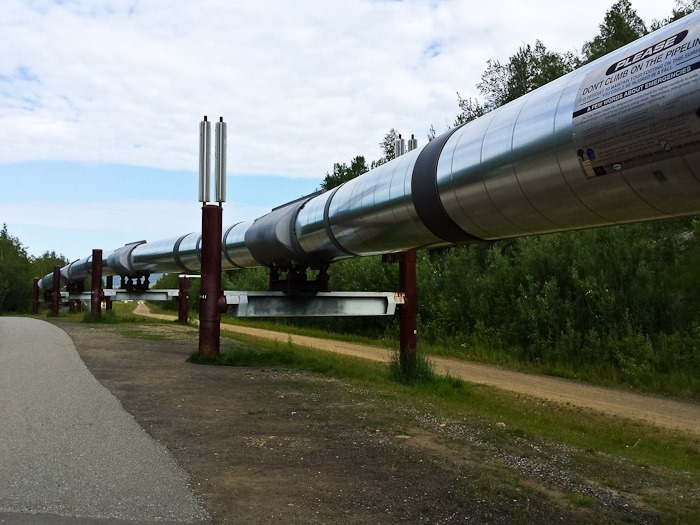
Leaving Lowe’s this morning, we drove North out of Fairbanks. We soon reached a roadside exhibit where the Alyeska Pipeline comes up next to the road. We are at the red “you are here” text, and we intend to reach Prudhoe Bay tomorrow:
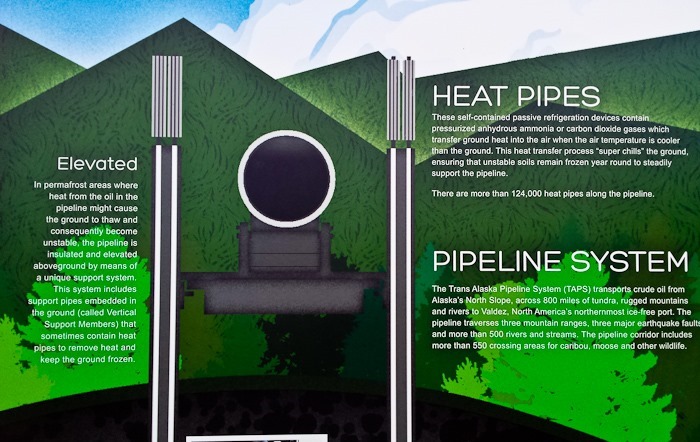
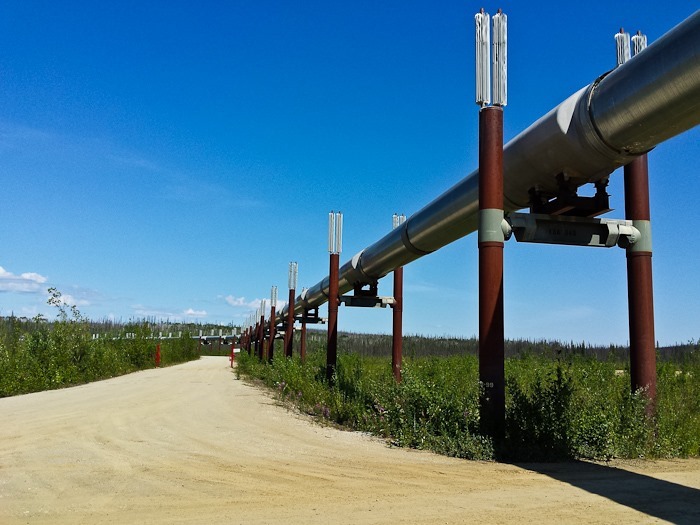
There’s quite a bit of technology that goes into making the pipeline work. The support posts are filled with ammonia which acts to transfer heat from the ground to the heat-radiating fins on the supports. This stops the permafrost from melting, which would result in the pipeline sagging towards the ground and rupturing:
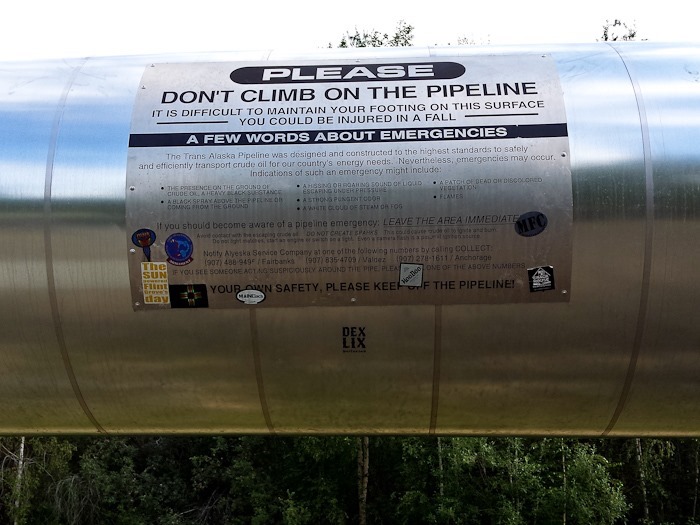
Hard to believe this 4-foot diameter ribbon of stainless steel extends another 500 miles North to the Arctic Ocean:
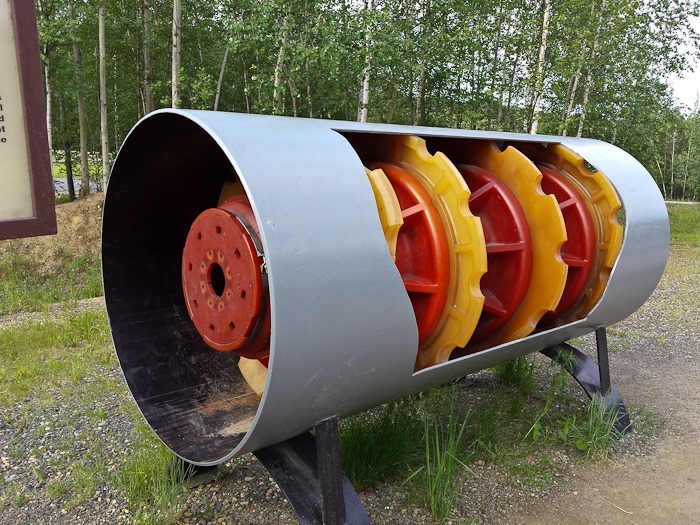
A modern pig was also on display, working its way through a cutaway length of pipe. The pigs clean the pipe walls as well as stabilize the flow of oil. Some of them have instruments for measuring pipe wall integrity:
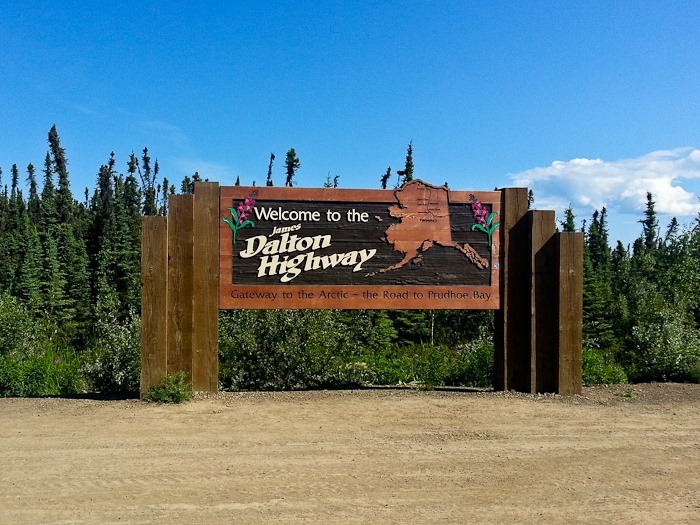
The Dalton starts out as a pretty poor dirt road, then transitions to poor pavement. Of the 180ish miles on the Dalton today, about 120 miles will be paved.
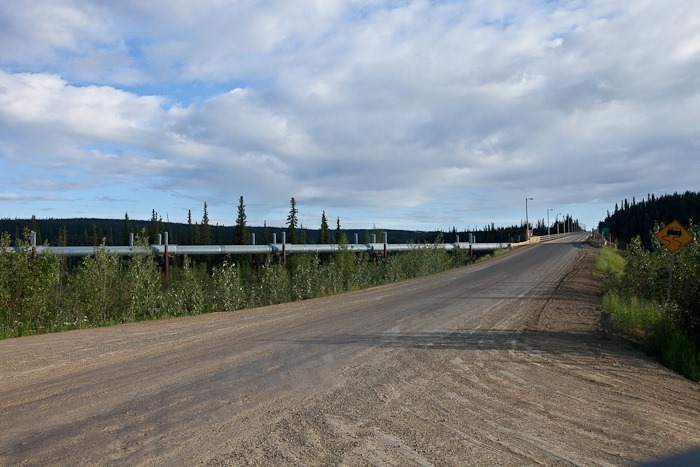
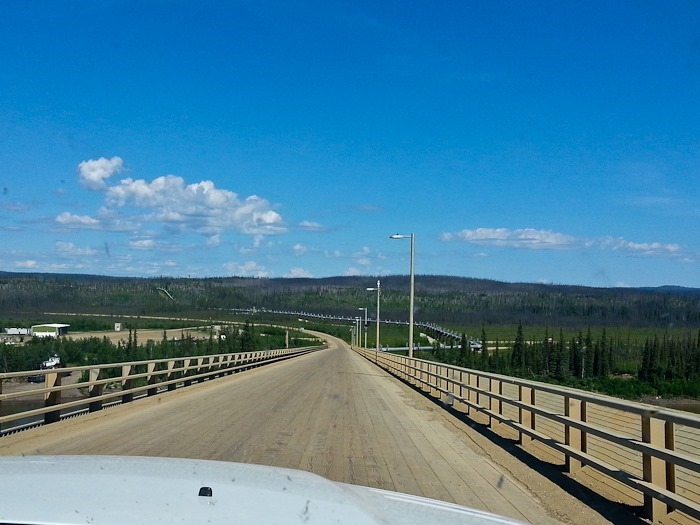
We crossed the Yukon River:
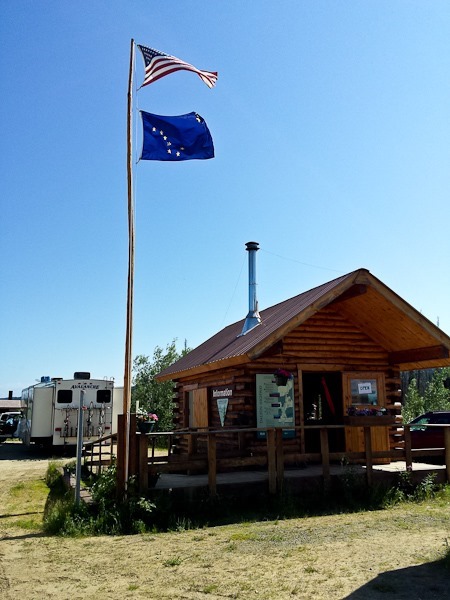
We passed under the pipeline and arrived at a BLM information hut:
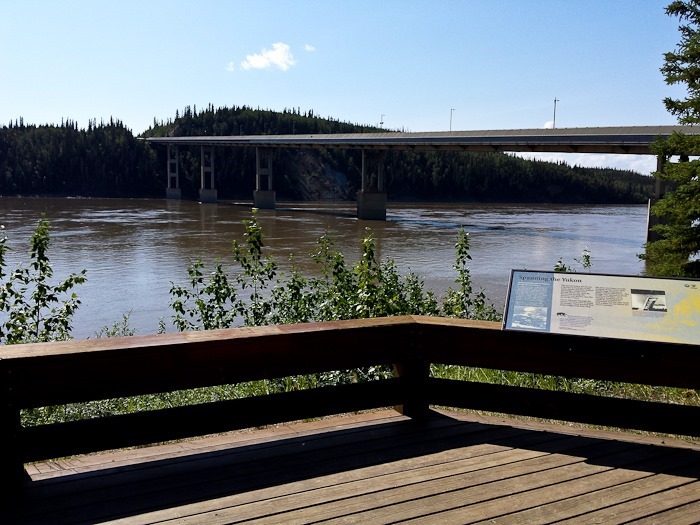
The visitor area had a nice view of the river:
We continued North, having to drive pretty slowly as the pavement kept transitioning to gravel and back. The pipeline paralleled the road:
Eventually, we crossed through 66.55’ North Latitude, where the sun doesn’t set on the summer solstice and doesn’t rise on the winter solstice. At our Northernmost destination, Prudhoe Bay, the sun doesn’t set for 75 days from May to August and likewise doesn’t rise for 75 days in the winter!
We continued another 60 miles North to Coldfoot, population 10. All the slowing for rough patches reduced our fuel economy to 7.8MPG, and the gas station at Yukon Crossing was out of fuel, so the truck was plenty thirsty by the time we reached Coldfoot:
We’re overnighting at Marion Campground, 4 miles North of Coldfoot. We’re doing this so we can leave the RV here tomorrow and drive just the truck the 250 mostly-gravel miles to Prudhoe Bay. It will be a 500 mile day over the most remote and unforgiving “highway” in Alaska.
The mosquitoes here are unbelievable! I broke out the mosquito head net we brought with us. After 30 seconds standing outside, I literally look like a bee keeper in a bad situation. I’m not kidding, it’s that bad!
Check out the trip map for today’s drive and our current location.
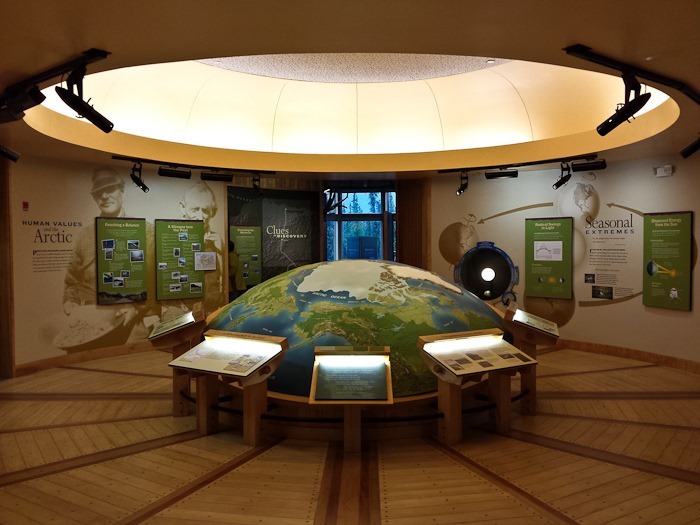
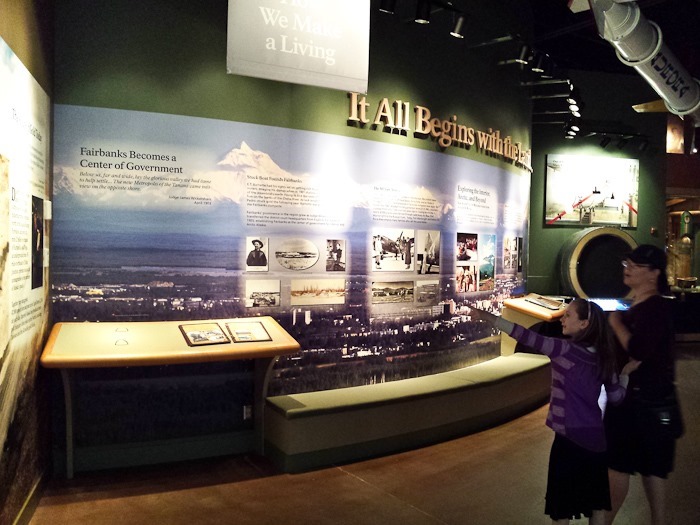
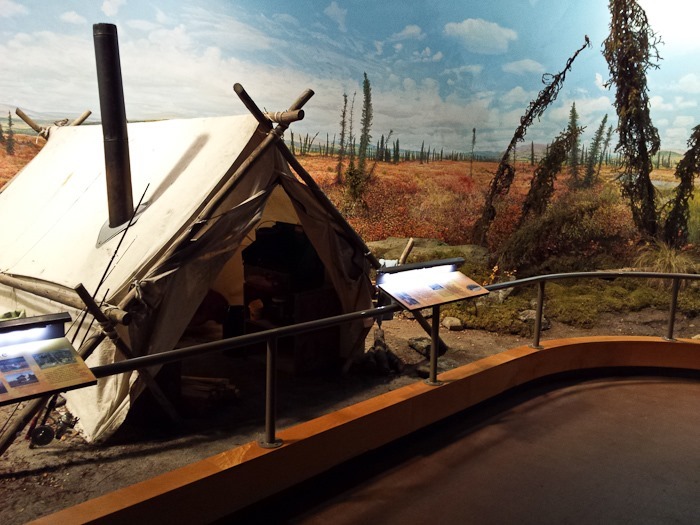
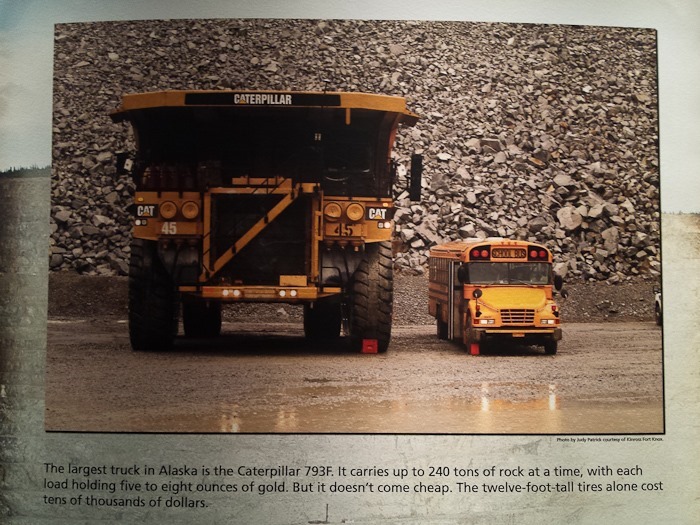
This morning, we drove West to Fairbanks. While we did see two moose on Thursday’s drive, today we did not see any. After reaching Fairbanks and having lunch, we went to the visitor center which had an extensive exhibit area:
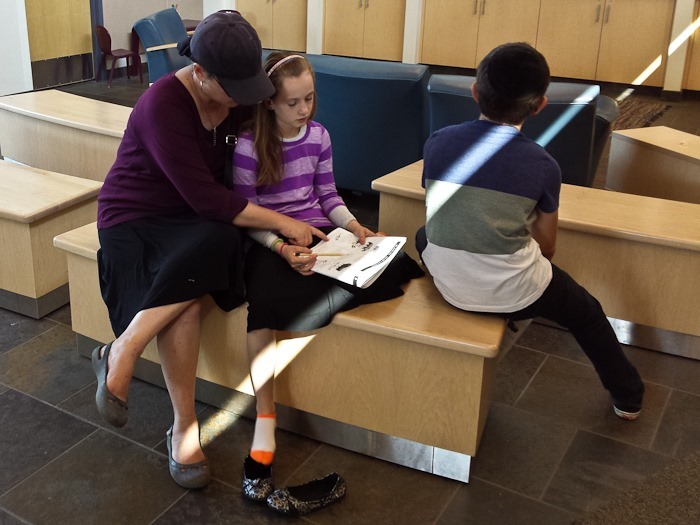
The kids completed their Junior Ranger books for the center and received their badges:
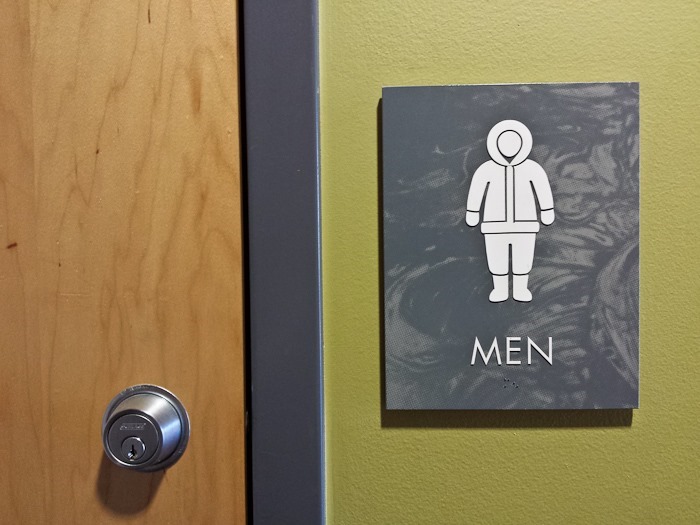
You know you’re in Alaska when…
From the visitor center, we went to Arctic Bowl and played a game. Here I am coaching B:
Not that I know what I’m doing myself:
M gives it a throw:
In the end, I narrowly avoided defeat by M, who had two strikes and a spare!
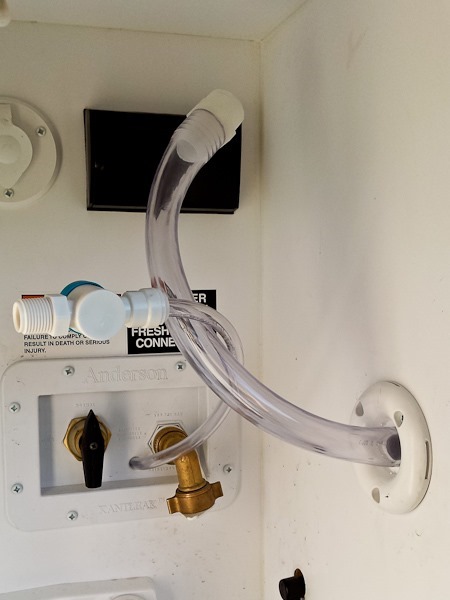
When we fill up the fresh water tank, water sometimes spills back into the “water closet” through the smaller overflow line or the larger vent line when we park at an angle, making a mess. I added hoses with shutoffs to these two holes so that this won’t happen anymore. I just have to remember to open them up again when we’re done driving for the day. This is only a problem when the tank is completely full:
Tomorrow, we will drive to Coldfoot, where we will leave the RV the following morning as we drive with just the truck to Prudhoe Bay, dip our toes in the Arctic Ocean, and drive back to Coldfoot in one day. The day after that, we will drive back down to Fairbanks. It’s a grueling 1,000 miles over 3 days, 75% of it on gravel roads, but we figure if we came this far, we might as well go as far North as we can by car. See the trip map for the driving legs to the Arctic as well as today’s drive and our current location.
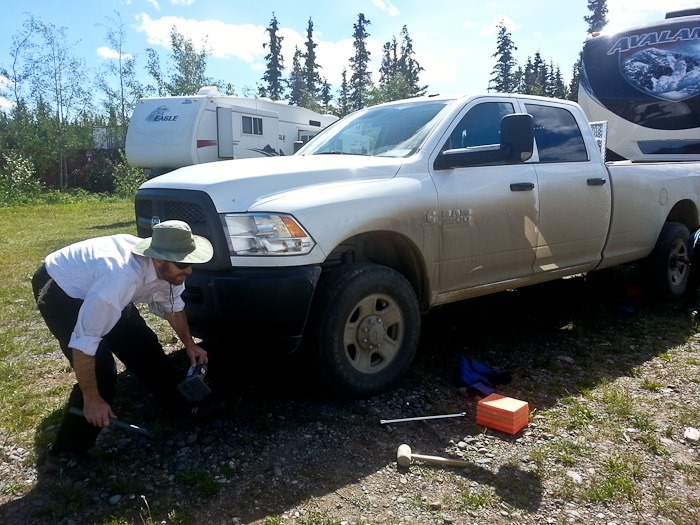
This morning, M and I rotated the truck’s tires with our brand new bottle jacks while Trish and B did some food shopping:
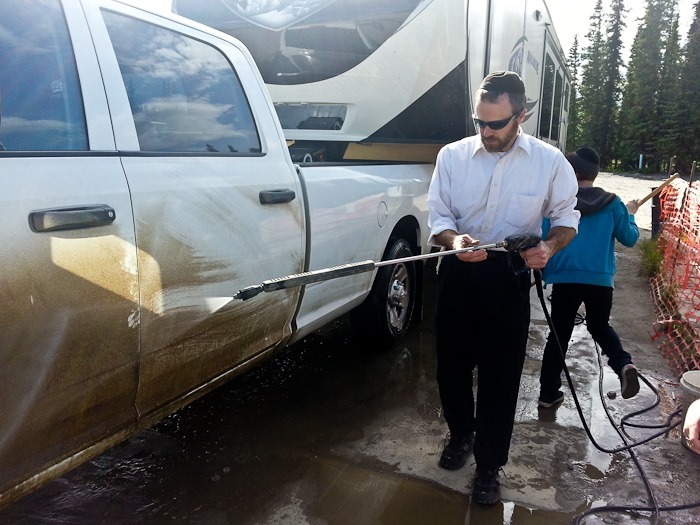
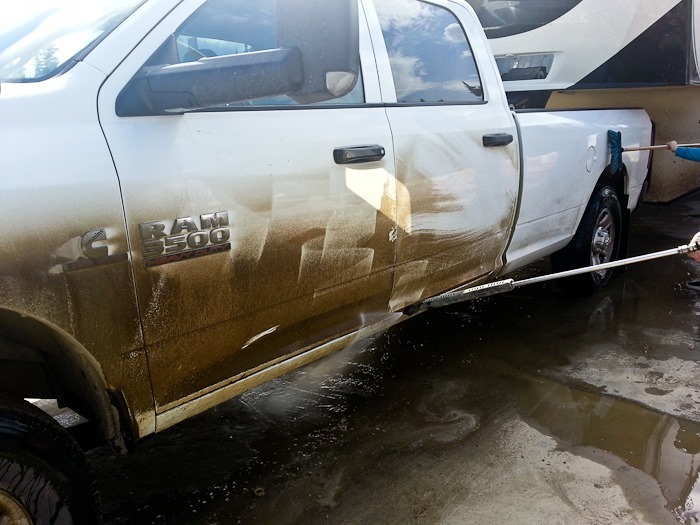
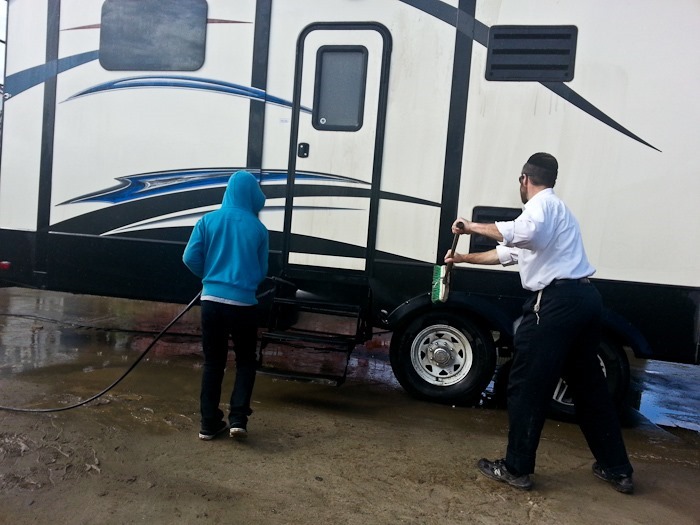
On our way out of Tok, we took advantage of the “free car wash with fill up” at the Tesoro station. After a couple hundred miles of dirt and gravel roads, we really needed it:
Continuing West, we crossed through 144.77 degrees West Longitude, the “Jewish International Dateline”. The secular international dateline is 180 degrees from Greenwich, England, but the most widely accepted international dateline in the Jewish world in 180 degrees from Jerusalem, which is at 144.77 degrees West, about halfway between Tok and Delta Junction. This means that even though it’s still Thursday on the secular calendar, it’s now Friday on the Jewish calendar. Shabbos starts tonight and ends early Saturday morning. Of course, if we continued West for another 45 degrees of latitude, we would cross the secular international dateline and then it would be Friday on all calendars.
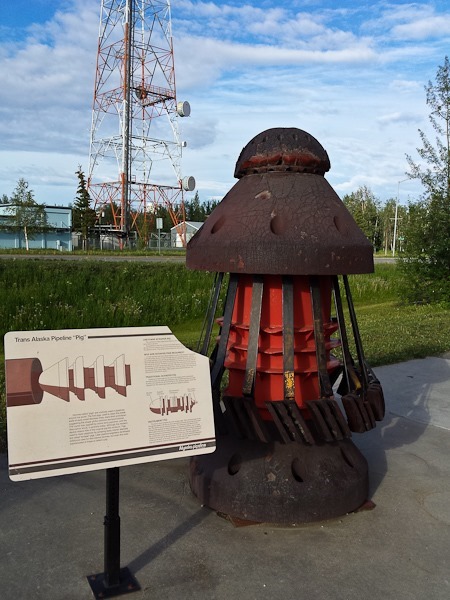
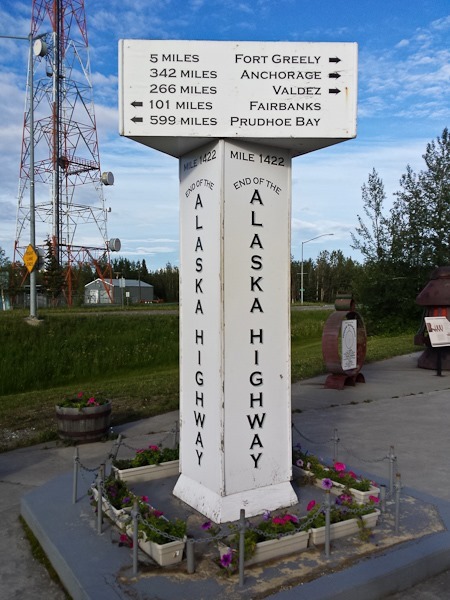
Continuing on, we arrived at Delta Junction, where the AlCan terminated at the pre-existing Richardson Highway. The visitor center there has a pig from the Alyeska Pipeline on display:
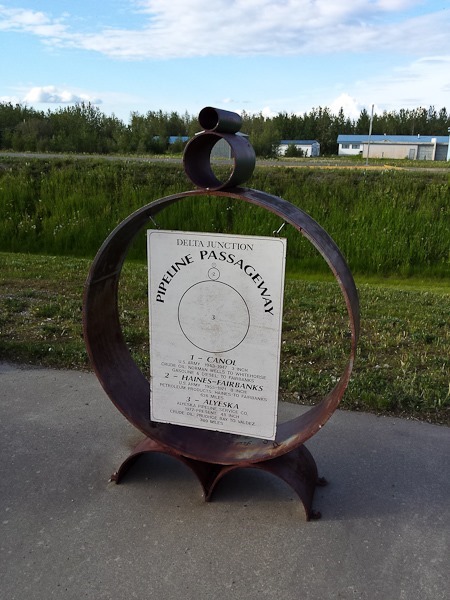
This display shows the various pipe diameters used to carry oil in Alaska. The largest one is the current pipeline from Prudhoe Bay to Valdez:
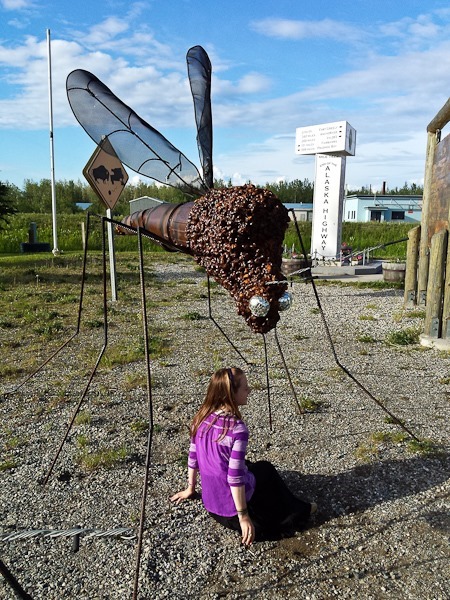
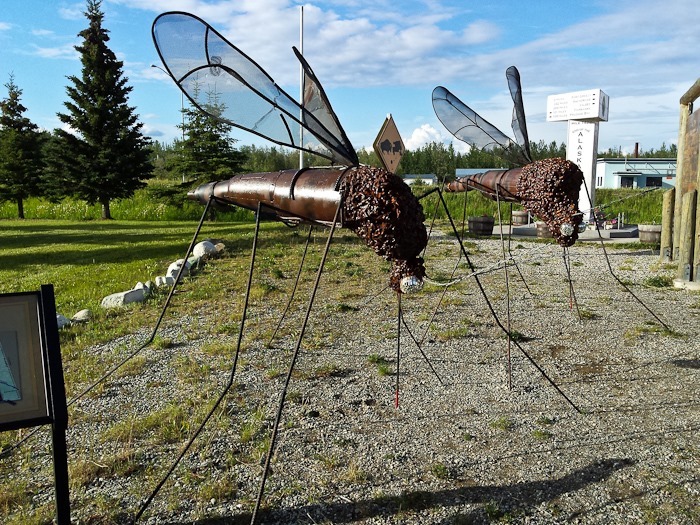
Mosquitos, they do grow them large here:
We planned to stop for Shabbos at Quartz Lake, but it was quite full for the 4th of July weekend, so we continued on for another 10 miles or so and stopped at a secluded pull-off. Good Shabbos from the Richardson Highway between Big Delta and Fairbanks! See the trip map for driving details and our current location.











 Facebook
 Instagram
 Email
Email